"The most toxic and dangerous type of radioactive waste created by the nuclear industry"
This is waste generated by nuclear power plants called 'high-level radioactive waste' (HLW), also known as 'spent' or 'irradiated' fuel. This waste contains plutonium, uranium, strontium, and cesium; and will be radioactive for millions of years.
It is not like the waste currently stored at the Waste Isolation Pilot Project (WIPP) or any other waste site that exists today in the U.S.: it is far worse.
Two companies are proposing to build waste facilities near Carlsbad and Hobbs for the most toxic and dangerous type of radioactive waste created by the nuclear industry.
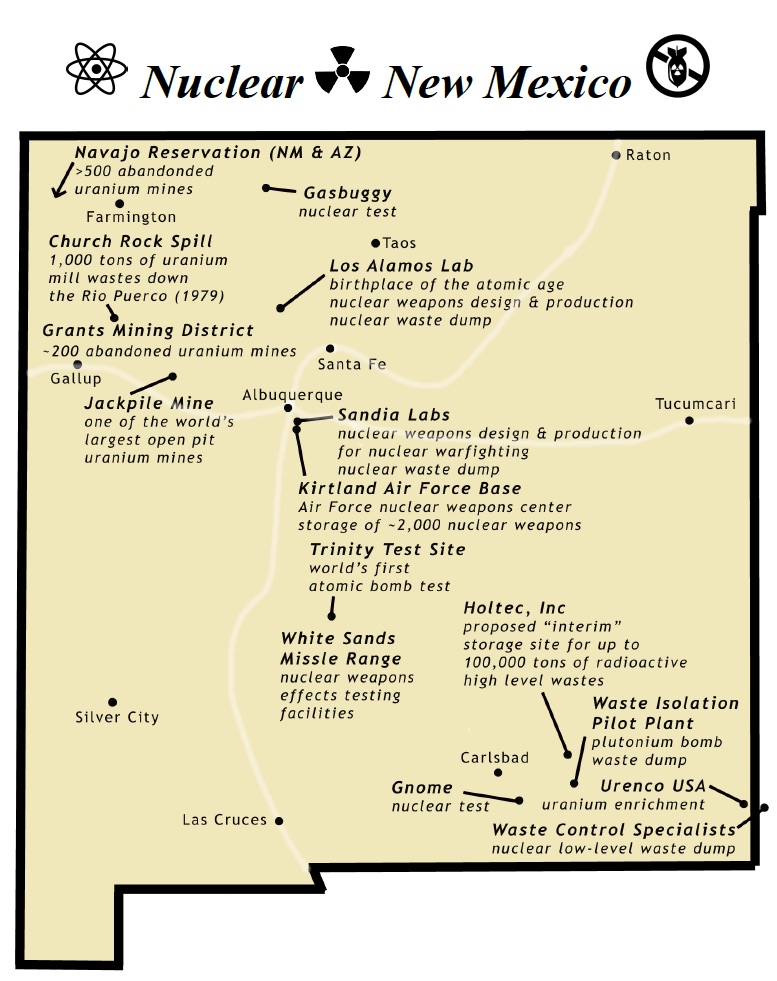
Holtec International is working with the Eddy-Lea Energy Alliance, LLC (ELEA) to apply for a license to build a Consolidated Interim Storage (CIS) facility approximately halfway between Carlsbad and Hobbs, and 16 miles north of WIPP.
The Nuclear Regulatory Commission (NRC) has declared the Holtec/ELEA application complete, NRC initiated a public comment period with 60 days for public comment. Note that transport of this waste poses risks to the environment and all life located near transportation routes.
Holtec proposal:
New CIS facility to store 100,000 metric tons of HLRW, with the potential to increase to 120,000 metric tons for 120 years
Shallow sub-surface burial system
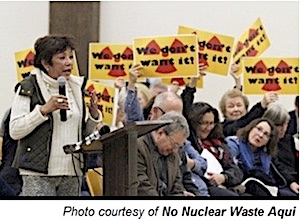
New Mexicans and Texans are fighting the attempted licensing of these two proposed CIS facilities - Waste Control Specialists near Andrews, Texas and Eddy Lee/Holtec International east of Carlsbad, New Mexico.
These sites and any transport to these sites are not only dangerous but environmentally unjust. These sites present clear examples of environmental racism.
New Mexico's demographic is largely Latino. There are many communities of color, especially in the southern part of the state where the sites are being proposed. People of color would be disproportionately affected if the Eddy Lee/Holtec CIS site were licensed and constructed.
New Mexico and Texas do not consent to either proposed CIS facility and are fighting to avoid the environmental injustice and the unnecessary shipment of irradiated high-level nuclear waste through their communities.
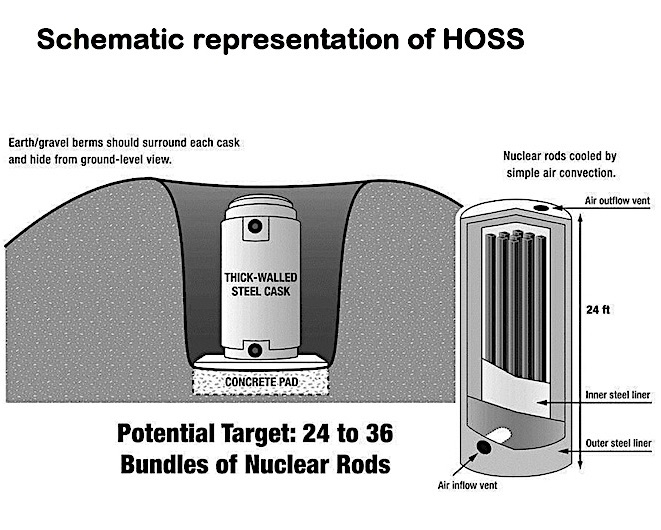
Hardened On-Site Storage (HOSS) is a community-based concept that aims to protect the public from the threats posed by the current vulnerable storage of commercial irradiated fuel.
History
For decades, high level radioactive waste has accumulated at reactor sites and continues to do so as nuclear reactors generate more waste. Without a credible plan to permanently isolate it, storage pools, where irradiated nuclear waste is currently stored until it becomes less hot, have been tightly packed and re-racked to accommodate all the waste.
Unfortunately, the pools and dry casks have no robust containment. If the cooling pumps stopped operating or the water in the pools drained out, temperatures would quickly increase, as happened in Fukushima Japan, and could result in a similar disaster.
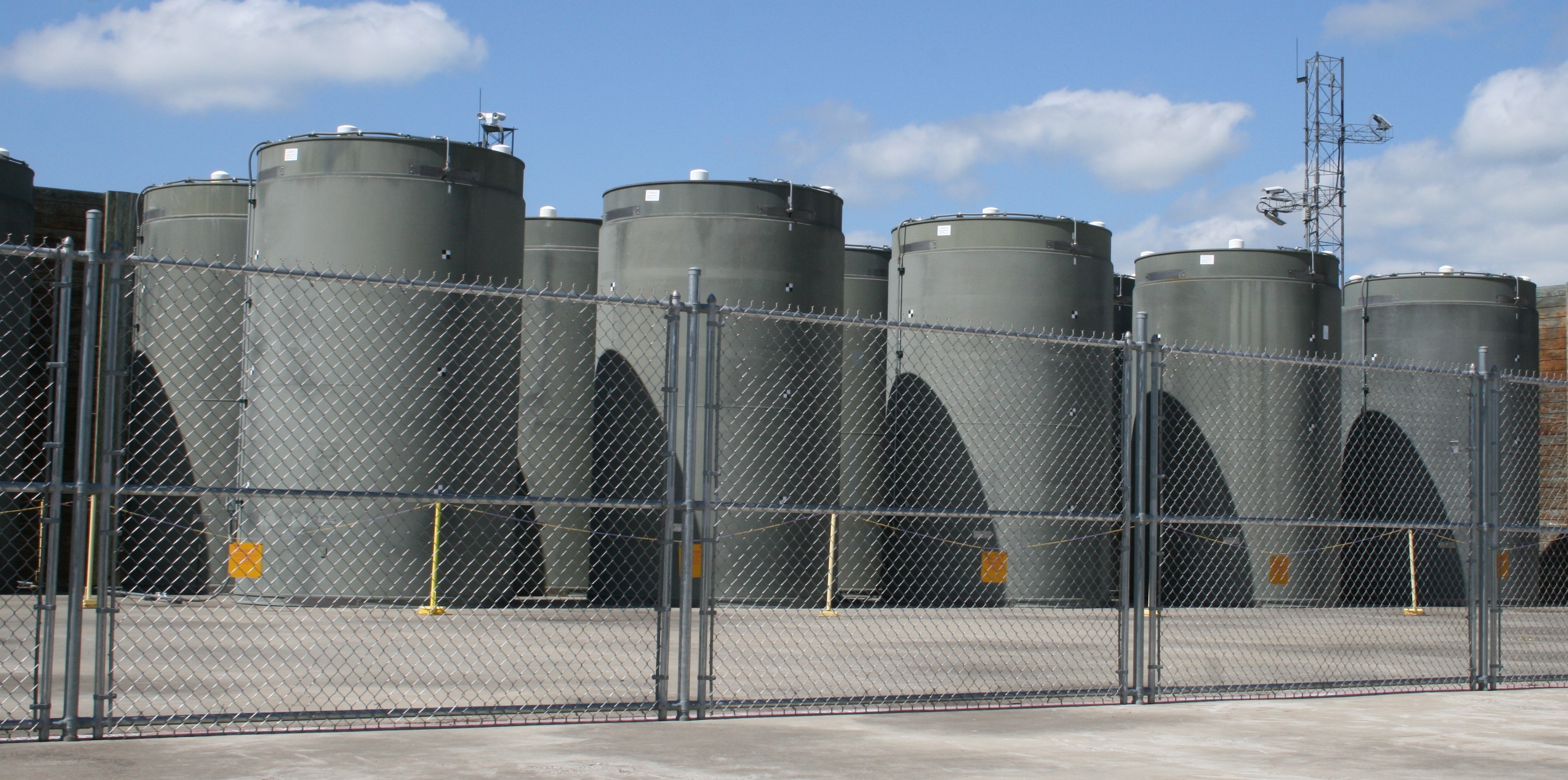
Current dry cask storage at reactor sites (pictured above) is extremely vulnerable. There is often nothing more than a chain-link fence and a short distance that separates the highly radioactive waste containers and public access.
Establishing interim hardened on-site storage (HOSS) is a top priority. Hardened on-site storage allows waste generators to store high level waste as close to the site of generation as possible, thereby exposing fewer people to radiation, as safely as possible.
Rather than storing dozens of vulnerable dry-casks next to each other in the open air, the HOSS Principles established by concerned citizens mandate:
Irradiated fuel must be stored as safely as possible as close to the site of generation as possible;
HOSS facilities must not be regarded as a permanent waste solution, and thus should not be constructed underground and the waste must be retrievable;
The facility must have real-time radiation and heat monitoring for early detection of problems with containers;
The overall objective of HOSS should be that the amount of releases projected in even severe attacks should be low enough that the storage system would be unattractive as a terrorist target;
Placement of individual canisters that makes detection difficult from outside the site boundary.
Hardened On-Site Storage (HOSS) is supported by organizations in all 50 states. The Principles of Securing Nuclear Waste at Nuclear Reactor Sites are posted here. It would provide better security at reactor sites with robust dry storage and community oversight, including real-time monitoring of heat and radiation. HOSS is rooted in values of community protection and environmental justice and will provide increased protection from human or natural disasters, like terrorist attacks and earthquakes
HOSS facilities are not permanent waste solutions, and therefore should not be constructed deep underground as the waste must be retrievable. However, they are a workable solution that will allow us to explore scientifically sound, and socially and environmentally just long-term management systems.
Nuclear Power Has No Place in a Green Energy Future
Because of: Time Delay, Success of Renewables, Huge Costs, Dangers, Weapons Connection, and Wastes
from Yahoo News, 21 Oct 21, ”…….Practical concerns also temper enthusiasm for a nuclear future. The next generation of reactors, heralded as a game changer by supporters, still haven’t been proven in the real world. Even if those technologies are as revolutionary as advertised, skeptics say it could take decades before they make a real difference in the global energy grid — too long if the worst outcomes of climate change are to be avoided.
Renewable energy technologies can be enough on their own
“The drawbacks to nuclear are compounded by the burgeoning success of renewables — both solar and wind are getting cheaper and more efficient, year after year. There is also a growing realisation that a combination of renewables, smart storage, energy efficiency and more flexible grids can now be delivered at scale and at speed — anywhere in the world.” — Jonathon Porritt, Guardian
The world doesn’t have time to wait for next-gen nuclear
“When it comes to averting the imminent effects of climate change, even the cutting edge of nuclear technology will prove to be too little, too late. Put simply, given the economic trends in existing plants and those under construction, nuclear power cannot positively impact climate change in the next ten years or more.” — Allison Macfarlane, Foreign Affairs
A major ramp-up in nuclear technologies isn’t economically feasible
“While nuclear power may have once been cheaper than wind or solar, the economics have since changed dramatically. Nuclear power plants are very expensive to build and the economics of nuclear power are getting steadily worse. By contrast, renewables continue to come down in price.” — Ian Lowe, Conversation
There’s no way to guarantee that nuclear plants will be safe
“People around the world have witnessed the Three Mile Island, Chernobyl and Fukushima accidents. It is more than enough to believe that a safe nuclear power plant is nothing but a myth.” — Jang Daul, Korea Times
More nuclear power could lead to more nuclear weapons
“Some nations — India and Pakistan, and in all probability Israel — became nuclear powers after originally seeking nuclear technology for research or to develop nuclear power. … This is important: The technology used to turn on lights or charge mobile phones shouldn’t need to involve national or international defence apparatus.” — Editorial, Nature
Nuclear waste is still a major problem
“Nuclear waste lasts for hundreds of thousands of years before they are half-decayed. Our United States government — perhaps the longest continuous government in the world — is only 232 years old. Who will be around to manage uranium wastes?” — David Ross, Courier-Journal
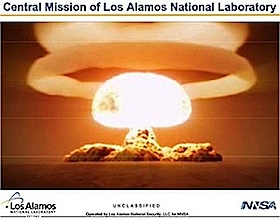
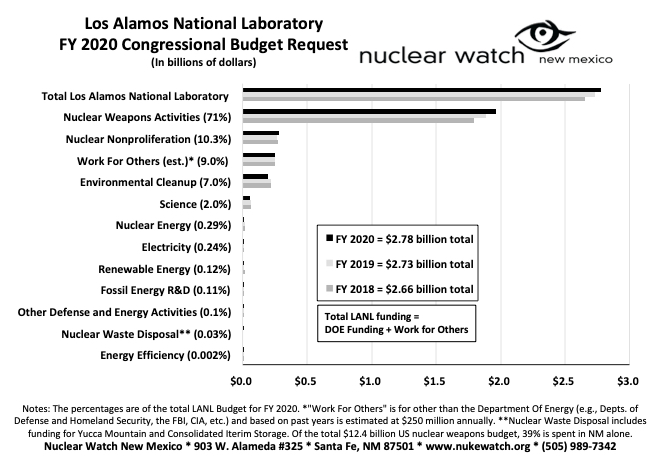
LANL’s Central Mission: Los Alamos Lab officials have recently claimed that LANL has moved away from primarily nuclear weapons to “national security”, but what truly remains as the Labs central mission? Here’s the answer from one of its own documents:
LANL’s “Central Mission”- Presented at: RPI Nuclear Data 2011 Symposium for Criticality Safety and Reactor Applications (PDF) 4/27/11
See the National Nuclear Security Administration’s brief press release below on a new facility for its Albuquerque Complex.
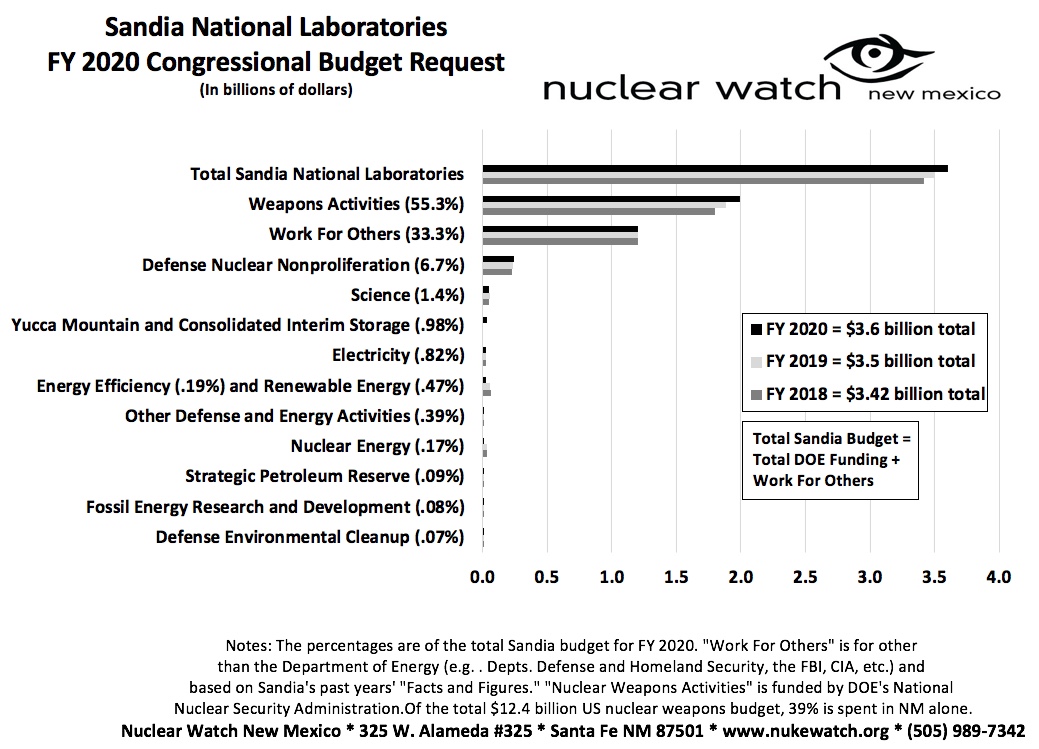
Nuclear weapons spending for NNSA’s Albuquerque Complex nearly doubled from $312 million in FY 2018 to $604.4 million in FY 2019. Within that, Directed Stockpile Work nearly tripled from $133.4 million in FY 2018 to $338.9 million in FY 2019. Directed Stockpile Work is the hands-on nuclear weapons work, the biggest single element of which is “Life Extension Programs” that extend the service lives of existing nuclear weapons by up to 60 years, while also endowing them with new military capabilities.
The NNSA’s FY 2019 budget request justifies the new 333,000 square feet, $202 million Albuquerque Complex Project as follows:
Justification
The NNSA Albuquerque Complex provides vital services to the agency. The Albuquerque Complex houses multiple organizations that fulfill unique and essential roles within the nuclear weapons enterprise by providing programmatic, technical support, legal, security, procurement, human resources, business and administrative functions that directly support the NNSA national security mission. The proximity of the Albuquerque Complex to two NNSA national laboratories and the Air Force Nuclear Weapons Center on Kirtland Air Force Base makes it an ideal location for an NNSA field installation. The Albuquerque Complex has supported the DOE/NNSA from this location for over 50 years, and there are no plans to eliminate or reduce the size or function of this office in the near future. NNSA has a long-term commitment at this installation, and it will remain the primary field support office for NNSA.
In the old days the DOE Albuquerque Office pretty much ran the DOE nuclear weapons complex, until it screwed up the Rocky Flats Plant so bad that DOE HQ in Washington, DC pulled most of its power away. DOE Albuquerque Office officials were likely one of the targets of the Rocky Flats grand jury, but in 1992 those indictments were quashed and sealed by the federal judge in Colorado.
It looks like power is flowing back to NNSA’s Albuquerque Complex. As the FY 2019 budget justification states, it is ideally located near two of the nation’s three nuclear weapons labs (Los Alamos and Sandia) and next door to the Air Force’s Nuclear Weapons Center (which, for example, handles many billions of dollars in contracts for the Air Force’s new nuclear weapons-related acquisitions, such as the Long Range Standoff cruise missile and future ICBMs).
* * *
National Nuclear Security Administration U.S Department of Energy
For Immediate Release
April 24, 2018
Contact: NNSA Public Affairs, (202) 586-7371
Albuquerque Complex Project authorized to begin construction
WASHINGTON – The Department of Energy’s National Nuclear Security Administration (DOE/NNSA) authorized the start of construction of the Albuquerque Complex Project on April 20.
The project will provide a modern, safe, and reliable workspace for approximately 1,200 employees in Albuquerque, New Mexico, who support NNSA’s vital national security missions.
“Our dedicated employees at sites across the country deserve high-quality workspace,” said Lisa E. Gordon-Hagerty, DOE Under Secretary for Nuclear Security and NNSA Administrator. “The Albuquerque Complex Project demonstrates NNSA’s commitment to achieving this goal and modernizing our infrastructure.”
Roughly 98 percent of NNSA’s combined federal and contractor workforce is located outside of the Washington, D.C. area.
The project will allow disposition of the current Albuquerque Complex, reducing NNSA’s total deferred maintenance by approximately $40 million. It will also replace the existing complex of 25 buildings with a single, state-of-the-art facility.
###
Established by Congress in 2000, NNSA is a semi-autonomous agency within the U.S. Department of Energy responsible for enhancing national security through the military application of nuclear science. NNSA maintains and enhances the safety, security, and effectiveness of the U.S. nuclear weapons stockpile without nuclear explosive testing; works to reduce the global danger from weapons of mass destruction; provides the U.S. Navy with safe and effective nuclear propulsion; and responds to nuclear and radiological emergencies in the U.S. and abroad. Visit www.energy.gov/nnsa for more information.
Click the image to view and download this large printable map of DOE sites, commercial reactors, nuclear waste dumps, nuclear transportation routes, surface waters near sites and transport routes, and underlying aquifers. This map was prepared by Deborah Reade for the Alliance for Nuclear Accountability.
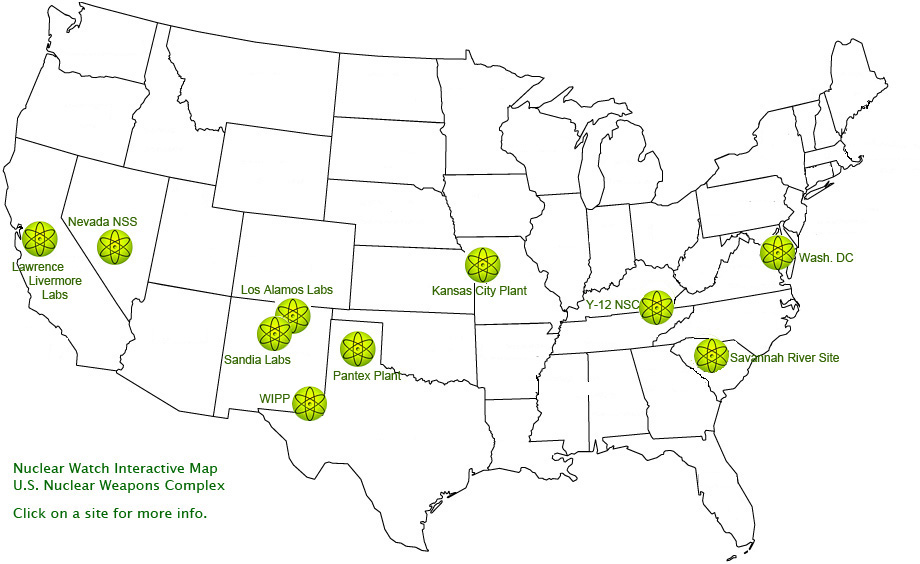
Nuclear Watch Interactive Map – U.S. Nuclear Weapons Complex
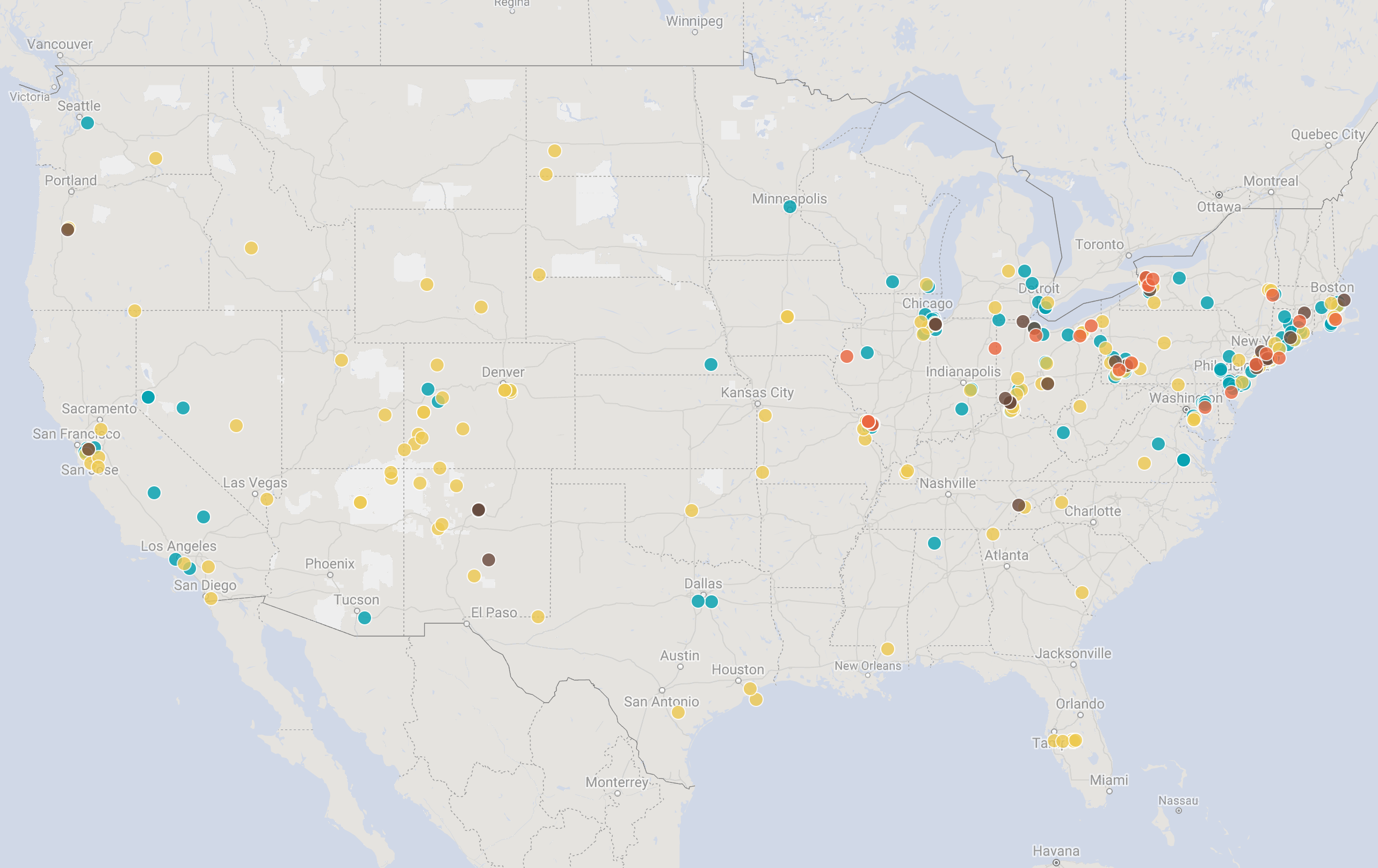
Waste Lands: America’s Forgotten Nuclear Legacy
The Wall St. Journal has compiled a searchable database of contaminated sites across the US. (view)
Related WSJ report: https://www.wsj.com
See the National Nuclear Security Administration’s brief press release below on a new facility for its Albuquerque Complex.
Nuclear weapons spending for NNSA’s Albuquerque Complex nearly doubled from $312 million in FY 2018 to $604.4 million in FY 2019. Within that, Directed Stockpile Work nearly tripled from $133.4 million in FY 2018 to $338.9 million in FY 2019. Directed Stockpile Work is the hands-on nuclear weapons work, the biggest single element of which is “Life Extension Programs” that extend the service lives of existing nuclear weapons by up to 60 years, while also endowing them with new military capabilities.
The NNSA’s FY 2019 budget request justifies the new 333,000 square feet, $202 million Albuquerque Complex Project as follows:
Justification
The NNSA Albuquerque Complex provides vital services to the agency. The Albuquerque Complex houses multiple organizations that fulfill unique and essential roles within the nuclear weapons enterprise by providing programmatic, technical support, legal, security, procurement, human resources, business and administrative functions that directly support the NNSA national security mission. The proximity of the Albuquerque Complex to two NNSA national laboratories and the Air Force Nuclear Weapons Center on Kirtland Air Force Base makes it an ideal location for an NNSA field installation. The Albuquerque Complex has supported the DOE/NNSA from this location for over 50 years, and there are no plans to eliminate or reduce the size or function of this office in the near future. NNSA has a long-term commitment at this installation, and it will remain the primary field support office for NNSA.
In the old days the DOE Albuquerque Office pretty much ran the DOE nuclear weapons complex, until it screwed up the Rocky Flats Plant so bad that DOE HQ in Washington, DC pulled most of its power away. DOE Albuquerque Office officials were likely one of the targets of the Rocky Flats grand jury, but in 1992 those indictments were quashed and sealed by the federal judge in Colorado.
It looks like power is flowing back to NNSA’s Albuquerque Complex. As the FY 2019 budget justification states, it is ideally located near two of the nation’s three nuclear weapons labs (Los Alamos and Sandia) and next door to the Air Force’s Nuclear Weapons Center (which, for example, handles many billions of dollars in contracts for the Air Force’s new nuclear weapons-related acquisitions, such as the Long Range Standoff cruise missile and future ICBMs).
* * *
National Nuclear Security Administration U.S Department of Energy
For Immediate Release
April 24, 2018
Contact: NNSA Public Affairs, (202) 586-7371
Albuquerque Complex Project authorized to begin construction
WASHINGTON – The Department of Energy’s National Nuclear Security Administration (DOE/NNSA) authorized the start of construction of the Albuquerque Complex Project on April 20.
The project will provide a modern, safe, and reliable workspace for approximately 1,200 employees in Albuquerque, New Mexico, who support NNSA’s vital national security missions.
“Our dedicated employees at sites across the country deserve high-quality workspace,” said Lisa E. Gordon-Hagerty, DOE Under Secretary for Nuclear Security and NNSA Administrator. “The Albuquerque Complex Project demonstrates NNSA’s commitment to achieving this goal and modernizing our infrastructure.”
Roughly 98 percent of NNSA’s combined federal and contractor workforce is located outside of the Washington, D.C. area.
The project will allow disposition of the current Albuquerque Complex, reducing NNSA’s total deferred maintenance by approximately $40 million. It will also replace the existing complex of 25 buildings with a single, state-of-the-art facility.
###
Established by Congress in 2000, NNSA is a semi-autonomous agency within the U.S. Department of Energy responsible for enhancing national security through the military application of nuclear science. NNSA maintains and enhances the safety, security, and effectiveness of the U.S. nuclear weapons stockpile without nuclear explosive testing; works to reduce the global danger from weapons of mass destruction; provides the U.S. Navy with safe and effective nuclear propulsion; and responds to nuclear and radiological emergencies in the U.S. and abroad. Visit www.energy.gov/nnsa for more information.
Important Documents & Articles Related to Nuclear Energy Production
Most Recent
Nothing Found
It seems we can’t find what you’re looking for. Perhaps searching can help.
See Also
Nuclear Watch Interactive Map – U.S. Nuclear Weapons Complex
Waste Lands: America’s Forgotten Nuclear Legacy
The Wall St. Journal has compiled a searchable database of contaminated sites across the US. (view)
Related WSJ report: https://www.wsj.com
LANL’s Central Mission: Los Alamos Lab officials have recently claimed that LANL has moved away from primarily nuclear weapons to “national security”, but what truly remains as the Labs central mission? Here’s the answer from one of its own documents:
LANL’s “Central Mission”- Presented at: RPI Nuclear Data 2011 Symposium for Criticality Safety and Reactor Applications (PDF) 4/27/11