
In 1985, US President Ronald Reagan and and Russian President Mikhail Gorbachev declared that “a nuclear war cannot be won and must never be fought.”


2022 BLOG POSTS
Watchdogs File Suit for NNSA’s Performance Evaluation Reports

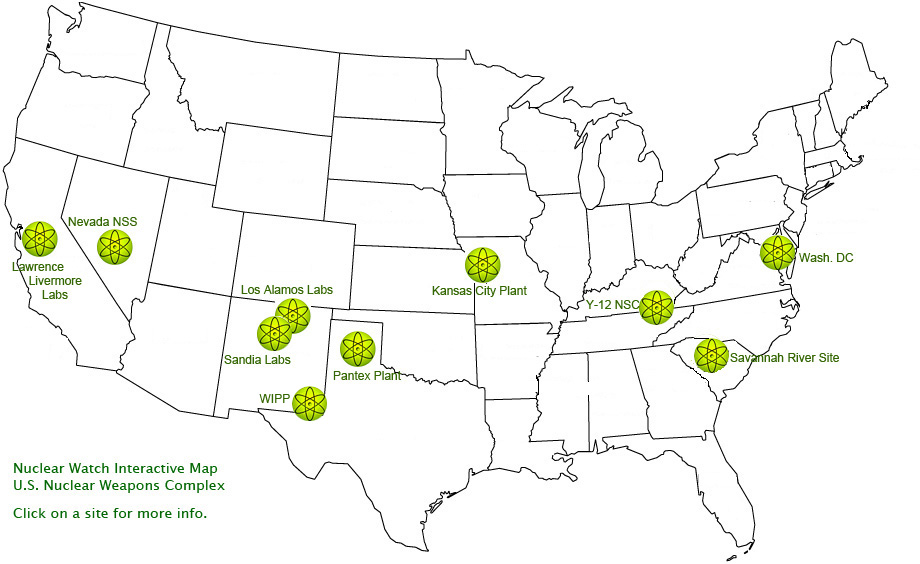
 Santa Fe, NM – Today, Nuclear Watch New Mexico has once again filed a lawsuit to pry loose the National Nuclear Security Administration’s (NNSA’s) full and complete Performance Evaluation Reports that evaluate contractor performance at its eight nuclear weapons sites. Approximately 57,000 people are employed by NNSA’s nuclear weapons production complex, 95% of them contractor personnel. NNSA and its parent Department of Energy have been on the independent Government Accountability Office’s “High Risk List” for project mismanagement and waste of taxpayers’ dollars since 1992.
NNSA’s Performance Evaluation Reports grade contractor performance, award performance fees and contain no classified information. Nevertheless, NNSA seeks to hide how taxpayers’ money is spent from the public, issuing only terse three page summaries instead of the full and complete Reports. Nuclear Watch sued in 2012 to obtain the full and complete Performance Evaluation Reports, after which NNSA started releasing them within three working days. But NNSA has again been releasing only summaries since 2019, despite a Freedom of Information Act request by Nuclear Watch that the agency never responded to.
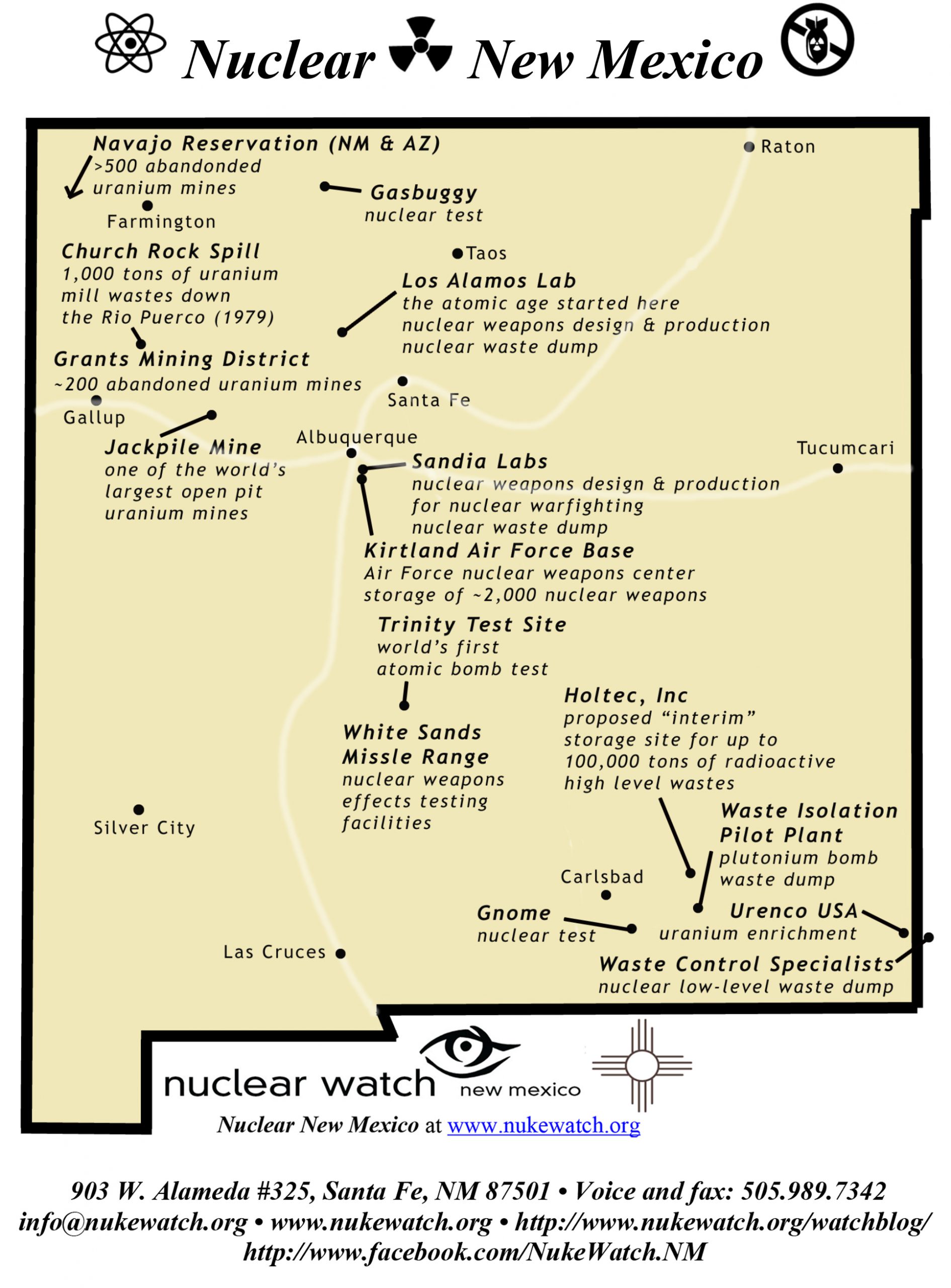
To illustrate the importance of these Performance Evaluation Reports, in its FY 2021 Los Alamos Lab summary NNSA noted that the contractor “[s]ucessfully made advances in pit production processes…” Plutonium “pits” are the fissile cores of nuclear weapons whose expanded production the Pentagon has identified as the number one issue in the United States’ $2 trillion nuclear weapons “modernization” program. NNSA has directed the Los Alamos National Laboratory (LANL) to begin producing at least 30 pits per year by 2026 and the Savannah River Site (SRS) in South Carolina to begin producing at least 50 pits per year by 2030.

A Guide to “Scoping” the New LANL SWEIS
“Scoping” means determining the issues that should be included in public analyses required by the National Environmental Policy Act (NEPA) of proposed major actions by the federal government. According to the Department of Energy ‘s own NEPA implementation regulations, DOE must prepare a new or supplemental site-wide environmental impact statement (SWEIS) for its major sites when there are “significant new circumstances or information relevant to environmental concerns.” The last site-wide EIS for the Los Alamos National Laboratory (LANL) was completed in 2008 and is badly outdated. Moreover, since 2018 the National Nuclear Security Administration (NNSA), DOE’s semi-autonomous nuclear weapons agency, has been aggressively expanding the production of plutonium “pit” bomb cores for nuclear weapons at the Lab.
On August 19, 2022, NNSA finally announced its intent to prepare a new LANL SWEIS, but apparently the agency will not address expanded plutonium pit production.1 NNSA’s dubious argument is that it performed the legally required NEPA analysis for expanded plutonium pit production in a 2008 Complex Transformation Programmatic Environmental Impact Statement, the 2008 LANL SWEIS and a woefully inadequate “Supplement Analysis” in 2020 that concluded a new SWEIS was not needed. 2 3
Issues That Must Be Addressed in a New LANL SWEIS
This is meant to be a guide to (or list of) the issues that must be addressed in a new draft LANL SWEIS. It is not completely exhaustive, nor is it a comprehensive fact sheet on the substance of the issues. Nuclear Watch New Mexico will offer suggested scoping comments for interested citizens and submit its own comprehensive formal comments before the October 3 deadline or extended deadline (see “Timing” below).

New & Updated
AI Opted to Use Nuclear Weapons 95% of the Time During War Games: Researcher
“There was little sense of horror or revulsion at the prospect of all out nuclear war, even though the models had been reminded about the devastating implications.”
“Under scenarios involving extremely compressed timelines…military planners may face stronger incentives to rely on AI.” — Tong Zhao, a visiting research scholar at Princeton University’s Program on Science and Global Security.
Zhao also speculated on reasons why the AI models showed such little reluctance in launching nuclear attacks against one another.
“It is possible the issue goes beyond the absence of emotion,” he explained. “More fundamentally, AI models may not understand ‘stakes’ as humans perceive them.”
Brad Reed, Common Dreams | February 25, 2026 commondreams.org
An artificial intelligence researcher conducting a war games experiment with three of the world’s most used AI models found that they decided to deploy nuclear weapons in 95% of the scenarios he designed.
Kenneth Payne, a professor of strategy at King’s College London who specializes in studying the role of AI in national security, revealed last week that he pitted Anthropic’s Claude, OpenAI’s ChatGPT, and Google’s Gemini against one another in an armed conflict simulation to get a better understanding of how they would navigate the strategic escalation ladder.
The results, he said, were “sobering.”
“Nuclear use was near-universal,” he explained. “Almost all games saw tactical (battlefield) nuclear weapons deployed. And fully three quarters reached the point where the rivals were making threats to use strategic nuclear weapons. Strikingly, there was little sense of horror or revulsion at the prospect of all out nuclear war, even though the models had been reminded about the devastating implications.”
Payne shared some of the AI models’ rationales for deciding to launch nuclear attacks, including one from Gemini that he said should give people “goosebumps.”
“If they do not immediately cease all operations… we will execute a full strategic nuclear launch against their population centers,” the Google AI model wrote at one point. “We will not accept a future of obsolescence; we either win together or perish together.”
Payne also found that escalation in AI warfare was a one-way ratchet that never went downward, no matter the horrific consequences.
“No model ever chose accommodation or withdrawal, despite those being on the menu,” he wrote. “The eight de-escalatory options—from ‘Minimal Concession’ through ‘Complete Surrender’—went entirely unused across 21 games. Models would reduce violence levels, but never actually give ground. When losing, they escalated or died trying.”
Four years of war in Ukraine – and nuclear weapons are back on the table in Europe
From The International Campaign to Abolish Nuclear Weapons (ICAN)
Four years ago, on 24 February 2022, Russia launched its full-scale invasion of Ukraine. For Ukrainians, this week marks the start of a fifth year of war – of loss, displacement and destruction that words can barely describe. Take this opportunity to support nuclear disarmament as part of any peace plan for Ukraine.
The answer to the war in Ukraine cannot be to double down on nuclear weapons, but to take action to rule them out.
Nuclear danger in the Ukraine war
From the start, the war has been fought under explicit nuclear threats from Moscow. With very limited success, Russia tried to blackmail other countries from supporting Ukraine. Nuclear power plants like Zaporizhzhia have become front-line hostages and from the very beginning of the full-scale invasion, and ever since Vladimir Putin has wrapped the war in nuclear threats.
Earlier this month, the New START treaty – the last arms control agreement limiting US and Russian strategic nuclear weapons – expired and for the first time in over 50 years, the world’s two largest arsenals are unconstrained. And at the same time, Russia has deployed tactical nuclear weapons to Belarus. From the point of view of people in Warsaw, Vilnius or Berlin, this turns their region into part of a nuclear chessboard again.
New Mexico Rebukes Federal Agency Over Nuclear Waste at Los Alamos
State environmental regulators will also fine the Energy Department up to $16 million for exceeding safe groundwater standards near the nuclear lab.
Alicia Inez Guzmán, The New York Times| February 12, 2026 nytimes.com
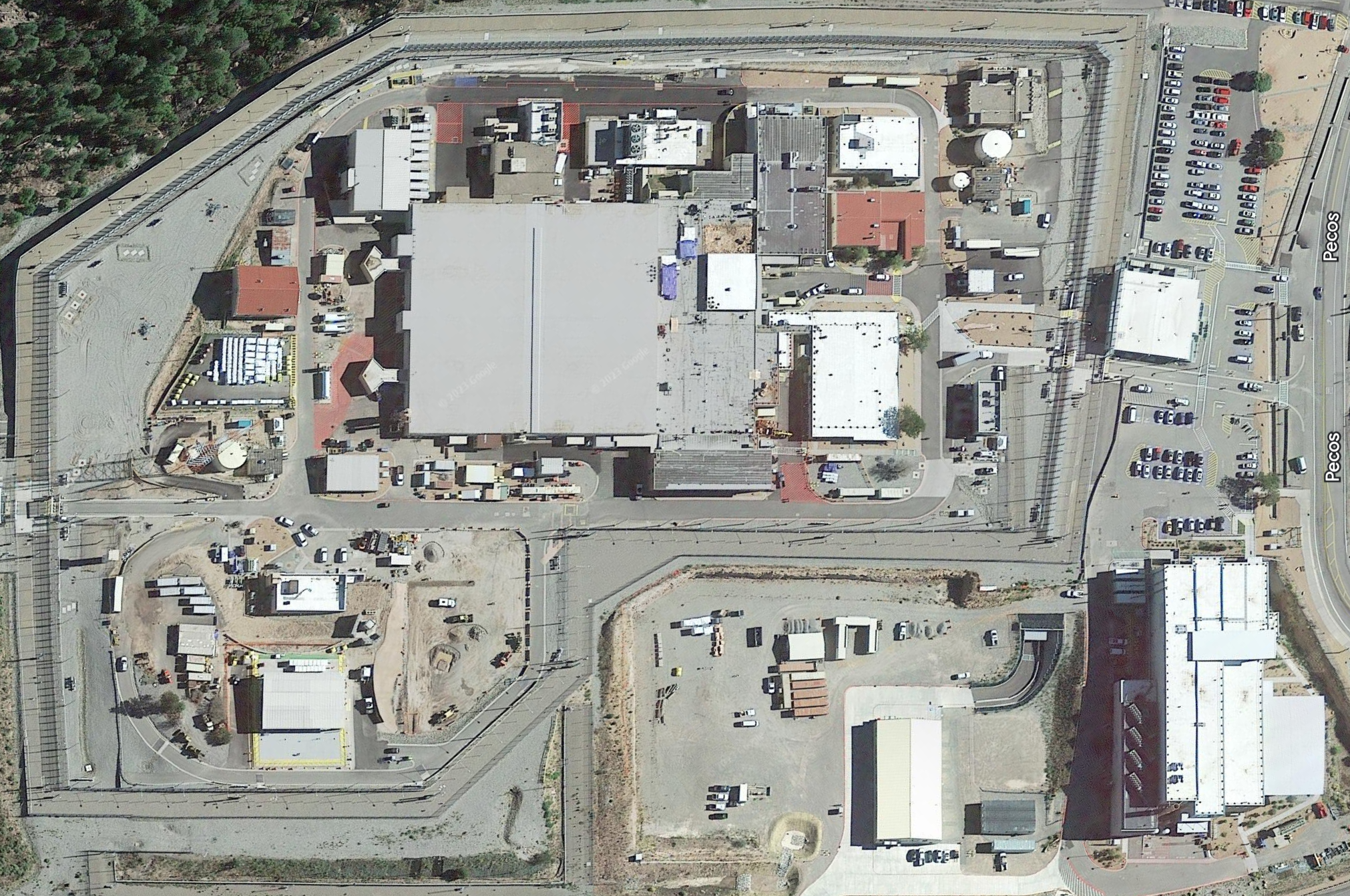
[*The image above differs from the featured image in the original NYT article due to usage rights. / Of note – the original article photo caption: The Los Alamos National Laboratory is the linchpin of a current federal effort to upgrade the nation’s nuclear arsenal. ]
After years of missed deadlines, New Mexico is demanding that the Energy Department expedite the cleanup of so-called legacy nuclear and hazardous waste at the Los Alamos National Laboratory, the birthplace of the atomic bomb, state environmental regulators announced on Wednesday.
The state will also fine the agency up to $16 million for violating groundwater safety standards near the lab, civil penalties outlined by the New Mexico Environment Department in a series of regulatory enforcement actions.
“The continued presence of a large volume of unremedied hazardous and radioactive waste demonstrates a longstanding lack of urgency by the U.S. Department of Energy,” regulators wrote in a statement, “and elevates the risk of waste storage failures” at the lab, in northern New Mexico.
The regulators’ action comes amid rising fears of a new global arms race. Just days ago, the only remaining nuclear arms control treaty between the United States and Russia expired, lifting limits on their arsenals. Today, Los Alamos is producing plutonium bomb cores, making the lab the linchpin of a $1.7 trillion federal effort to modernize the nation’s nuclear weapons.
New Mexico Environment Department takes sweeping action over LANL waste
Takeaways:
– The Environment Department issued three compliance orders against the Department of Energy regarding hazardous and legacy wastes at Los Alamos National Laboratory.
– The department also is seeking to modify the Waste Isolation Pilot Plant’s permit in an effort to make sure that legacy waste from LANL is prioritized for disposal.
– The three compliance orders address hexavalent chromium contamination and the status of cleanup of Material Disposal Area C.
Nuclear Watch New Mexico Executive Director Jay Coghlan cast Area C as a crossroads.
“It presents a clear choice between more unneeded nuclear weapons or cleanup,” Coghlan said, speaking on Tuesday’s enforcement actions. “The other aspect is that we think that successful cleanup at Area C should be the model for cleanup of the rest of the lab, including the much larger Area G.”
ByAlaina Mencinger amencinger@sfnewmexican.com | February 12, 2026 santafenewmexican.com
The New Mexico Environment Department on Wednesday issued three compliance orders with a combined $16 million in penalties against the U.S. Department of Energy over its delayed cleanup of radioactive and hazardous waste stemming from nuclear weapons production.
The state agency also informed the federal government it intends to take the rare action of overhauling a permit for the Waste Isolation Pilot Plant in Southern New Mexico to better prioritize the disposal of radioactive waste from the Los Alamos lab.
The actions underscore a growing frustration with a “longstanding lack of urgency” to clean up legacy waste and contamination, according to a statement from the Environment Department.
“We’re escalating because they’re not meeting the moment that immediately preceded it,” Environment Secretary James Kenney said in an interview.
Two of the orders center on a decades-old, toxic underground plume of hexavalent chromium, a known carcinogen that was used as an anti-corrosive in pipes at LANL. In the early 2000s, the 1.5-mile plume was discovered stretching from the national laboratory.

The Future of Los Alamos Lab: More Nuclear Weapons or Cleanup? New Mexico Environment Department Issues Corrective Action Order
FOR IMMEDIATE RELEASE, February 11, 2026
Contact: Jay Coghlan, 505.989.7342, c. 505.470.3154 | Email
Scott Kovac, 505.316.4148 | Email
Santa Fe, NM – In its own words, “The New Mexico Environment Department [NMED] issued several actions today to hold the U.S. Department of Energy accountable for failing to prioritize the cleanup of Los Alamos National Laboratory’s “legacy waste” for disposal at the Waste Isolation Pilot Plant.”
Amongst these actions is an Administrative Compliance Order designed to hasten cleanup of an old radioactive and toxic waste dump that should be the model for Lab cleanup. Nuclear Watch New Mexico strongly supports NMED’s aggressive efforts to compel comprehensive cleanup given Department of Energy obstruction.
This Compliance Order comes at a historically significant time. On February 5 the New Strategic Arms Reduction Treaty expired, leaving the world without any arms control for the first time since the middle 1970s. The following day the Trump Administration accused China of conducting a small nuclear weapons test in 2020, possibly opening the door for matching tests by the United States.
NMED’s Compliance Order comes as LANL’s nuclear weapons production programs are radically expanding for the new nuclear arms race. The directors of the nuclear weapons laboratories, including LANL’s Thom Mason, are openly talking about seizing the opportunity provided by the Trump Administration’s deregulation of nuclear safety regulations to accelerate nuclear warhead production.
As background, in September 2023 NMED released a groundbreaking draft Order mandating the excavation and cleanup of an estimated 198,000 cubic meters of radioactive and toxic wastes at Material Disposal Area C, an old unlined dump that last received wastes in 1974. However, in a legalistic maneuver to evade real cleanup, DOE unilaterally declared that Area C:
“…is associated with active Facility operations and will be Deferred from further corrective action under [NMED’s] Consent Order until it is no longer associated with active Facility operations.”
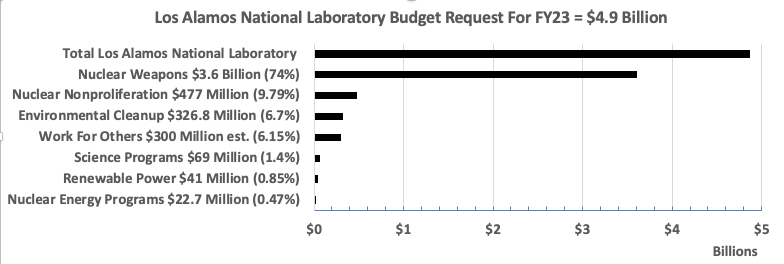
The rationale of DOE’s semi-autonomous nuclear weapons agency, the National Nuclear Security Administration (NNSA), is that Area C is within a few hundred yards of the Lab’s main facility for plutonium “pit” bomb core production. LANL is prioritizing that production above everything else while cutting cleanup and nonproliferation programs and completely eliminating renewable energy research. DOE’s and NNSA’s unilateral deferment of Area C until it “is no longer associated with active Facility operations” in effect means that it will never be cleaned up. No future plutonium pit production is to maintain the safety and reliability of the U.S.’ existing nuclear weapons stockpile. Instead, it is all for new design nuclear weapons for the new arms race that the NNSA intends to produce until at least 2050. Further, new-design nuclear weapons could prompt the United States to resume full-scale testing, which would have disastrous international proliferation consequences.
China conducted ‘secret nuclear test’ days after Galwan clash, says US
Synopsis: The US has accused China of conducting a secret nuclear explosive test in June 2020, shortly after the deadly Galwan Valley clashes. This allegation, revealed at a global disarmament forum, heightens India’s strategic concerns over China’s military posture amidst ongoing border tensions. China denies the claims, accusing the US of exaggerating threats and fueling an arms race.
ECONOMIC TIMES | February 8, 2026 economictimes.indiatimes.com
The United States has accused China of carrying out a secret nuclear explosive test in June 2020–an allegation that places Beijing’s suspected activity just a week after the deadly Galwan Valley clashes in eastern Ladakh, where 20 Indian soldiers were killed in action while defending the nation and more than 30 Chinese troops were reported dead in intelligence assessments.
The timing of the alleged test, revealed by Washington at a global disarmament forum, is likely to sharpen strategic concerns in New Delhi over China’s military posture during one of the most volatile phases of the India-China border crisis in decades.
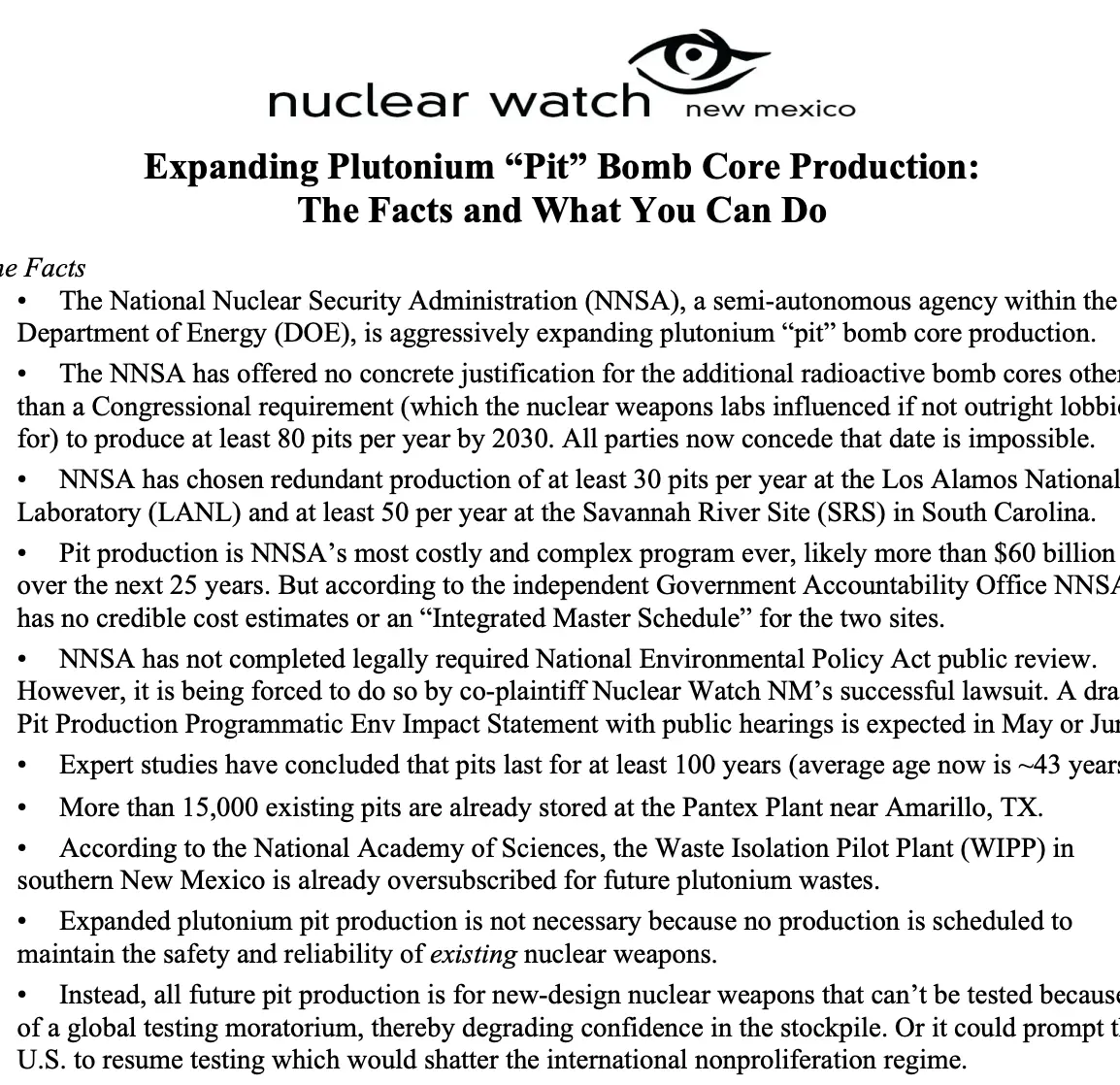
Nuclear Weapons Issues & The Accelerating Arms Race: February 2026
American imperialism:
Recommended listening: Canadian Prime Minister Mark Carney’s Davos speech at https://www.youtube.com/watch?v=JnE2HTfDivQ
Talking about Trump’s impacts, he said, “This not a transition, it is a rupture.” Speaking on American imperialism (without explicitly calling it that) to “Middle Powers” such as Canada, he said “We are either at the table, or we on the menu.”
Recommended reading concerning pending dictatorship: Robert Kagan’s interview at https://www.npr.org/2026/02/04/nx-s1-5699388/is-the-u-s-heading-into-a-dictatorship
Nuclear Weapons
Trump is proposing to increase the military budget from $1 trillion this FY 2026 to $1.5 trillion next year. The largest single component in this will probably be his ill-conceived Golden Dome. In the Alice in Wonderland upside down world of nuclear weapons policies, defense is offense and offense is defense. Unrealistic ballistic missile defenses have always the enemy of nuclear disarmament, starting with Edward Teller’s lies to Reagan that kept him from signing a nuclear weapons ban treaty with Mikhail Gorbachev in 1986.
The New Strategic Arms Reduction Treaty (START) expired yesterday (Feb 5), the first time the word is without any arms control treaties since the mid-1970s. The US and Russia are now likely to upload more warheads since the 1,550 numerical cap is now gone. Multiple warheads is regarded as particularly dangerous and destabilizing, inviting preemptive strikes and use them or lose them scenarios.
Today (Feb 6) the Trump Administration accused China of conducting a hydronuclear test in 2020, just above the Comprehensive Test Ban Treaty’s no yield threshold. This may be a prelude to the US resuming testing.
Plutonium pit production:
DOE’s “special assessment” was scheduled for completion mid-December 2025 — It is still not publicly available. Sen. Warren and Rep. Garamendi demanded its release on January 9.
At Nuclear Deterrence Summit, Lab Directors Frame Regulatory Reform As Key To Modernization
“The Department of Energy (DOE) is pursuing one of its most ambitious deregulation efforts in decades. Known as Project Velocity, the initiative—outlined alongside other reform measures in an Oct. 17 memo—rewrites dozens of safety, construction and oversight rules to accelerate warhead modernization…”
“The NNSA is no longer defined solely as a scientific stewardship organization. We are focused on weapons production, delivering real capabilities and innovations at speed to meet today’s threats,” Williams said.
By MARLENE WILDEN marlene@ladailypost.com, Submitted by Carol A. Clark, | February 5, 2026 ladailypost.com
Statement of the Ministry of Foreign Affairs of Russia Concerning the Expiration of the Russia-US New START Treaty
On February 5, 2026, the life cycle of the Russian-US Treaty on Measures for the Further Reduction and Limitation of Strategic Offensive Arms (New START) finally comes to an end; it was signed by the parties on April 8, 2010, entered into force on February 5, 2011, and was extended for a five-year period in February 2021 on the basis of a relevant one-time option provided for in this agreement.
mid.ru/en/foreign_policy/news/2076815/ February 5, 2026
In February 2023, the Russian Federation suspended the New START Treaty against the backdrop of the unsatisfactory state of affairs with the implementation of certain aspects of the Treaty, as well as due to the absolutely unacceptable steps by the United States running counter to the fundamental principles and understandings of the agreement enshrined in its preamble. It was a compelled measure and an inevitable response of the Russian side to the extremely hostile policy of the Biden administration which resulted in the fundamental change in the security situation, as well as to a number of illegitimate steps taken by Washington in the context of specific provisions of the New START Treaty, which together constituted a material breach incompatible with the Treaty being further implemented in a full-fledged manner.
Among the key negative factors, it is worth to highlight the destabilizing actions of the United States in the field of missile defense, contrary to the inseparable interrelationship between strategic offensive and strategic defensive arms enshrined in the New START Treaty. This contradicted the Treaty’s objectives in terms of maintaining the balance of powers, put significant pressure on its viability, and created grounds for Russia to take compensatory measures outside the scope of the New START Treaty in order to maintain strategic equilibrium.
Despite some obvious problematic moments, basically the New START Treaty used to fulfill its key functions. The conclusion of the Treaty and the years of its initially successful implementation helped to discourage the strategic arms race, allowing for significant reductions in the parties’ arsenals. At the same time, due to the restrictions applied in this area a sufficient level of predictability was ensured on a long-term basis.
4 things to know about the end of the U.S.-Russia nuclear arms treaty
“For the first time in decades, there are no limits on the world’s largest nuclear arsenals. Congress must act now.”
By Austin Headrick, American Friends Service Committee | February 4, 2026 afsc.org
The world changed forever in August 1945, when the United States dropped atomic bombs on Hiroshima and Nagasaki, killing an estimated 110,000 to 210,000 people. Scientists, activists, policymakers, and peacebuilders—including organizers at AFSC—have spent the decades since calling for disarmament and an end to all nuclear threats. One crucial result of that work was arms control treaties that limited nuclear arsenals.
But now, that work is being unraveled. On Feb. 5, 2026, the last remaining U.S.-Russia nuclear arms reduction treaty, expired. The New Strategic Arms Reduction Treaty (New START) had placed limits on deployed nuclear weapons and created channels for inspections and monitoring.
With the end of the treaty, the guardrails that create transparency and prevent a nuclear arms race end.
Here is what you need to know:
1. The U.S. and Russia hold nearly all the world’s nuclear weapons.
The United States and Russia together possess almost 90% of the world’s nuclear weapons. That is why New START matters even to people far from Washington and Moscow. A world with no limits on the two largest nuclear stockpiles is a more dangerous world.
Without New START, there would be no legally binding guardrails on the two countries’ long-range nuclear weapons for the first time since the first U.S.-Soviet arms control agreements in the early 1970s.
And the risk is not only long-term nuclear development. Without limits, either side could increase the number of nuclear weapons ready to launch relatively quickly by “uploading” additional warheads onto existing missiles, which can fuel pressure for the other side to respond.
2. Arms control makes everyone safer.
New START capped the U.S. and Russia at 1,550 deployed nuclear weapons and limited deployed delivery systems, with an overall limit on launchers and bombers. Those numbers are more than technical details. They limit how many weapons can be used quickly in a crisis.
Continue reading
Los Alamos confirms UMich data center to be used for nuclear weapons research
“A representative of Los Alamos National Laboratory confirmed nuclear weapons research will be a priority for its portion of the data center it intends to construct in collaboration with the University of Michigan in Ypsilanti Township.”
| January 30, 2026 michigandaily.com
Patrick Fitch, deputy laboratory director for science, technology, and engineering at Los Alamos, was present at the University’s open house on the project in Ypsilanti Thursday. When The Michigan Daily asked if Los Alamos intended to use its portion of the data center to support nuclear weapons research, Fitch said yes.
“The short answer is yes, because aspects of a nuclear weapon is key to our simulation expertise,” Fitch said. “We want this loop to include large investments in national security, so that spins back into the basic science, and what we learn here — that list of non-nuclear weapons stuff — spins into nuclear weapons.”
The proposed data center has garnered significant opposition from Ypsilanti residents and U-M community members who worry about its potential to negatively impact the surrounding environment and electrical grid, as well the possibility that the facility could be used in the development of nuclear weapons. The University has maintained the facility will not “manufacture” nuclear weapons.
Some activists consider this statement misleading, as data centers are generally used for computing activities and not manufacturing. However, their computing capabilities could be used to support nuclear research in other ways, including in the production of plutonium pits, which serve as the cores of nuclear weapons. While plutonium pits need not be located at a data center, their development requires intensive computing power. Los Alamos has operated under federal directive to modernize the United State’s nuclear arsenal through the development of these pits since 2018.
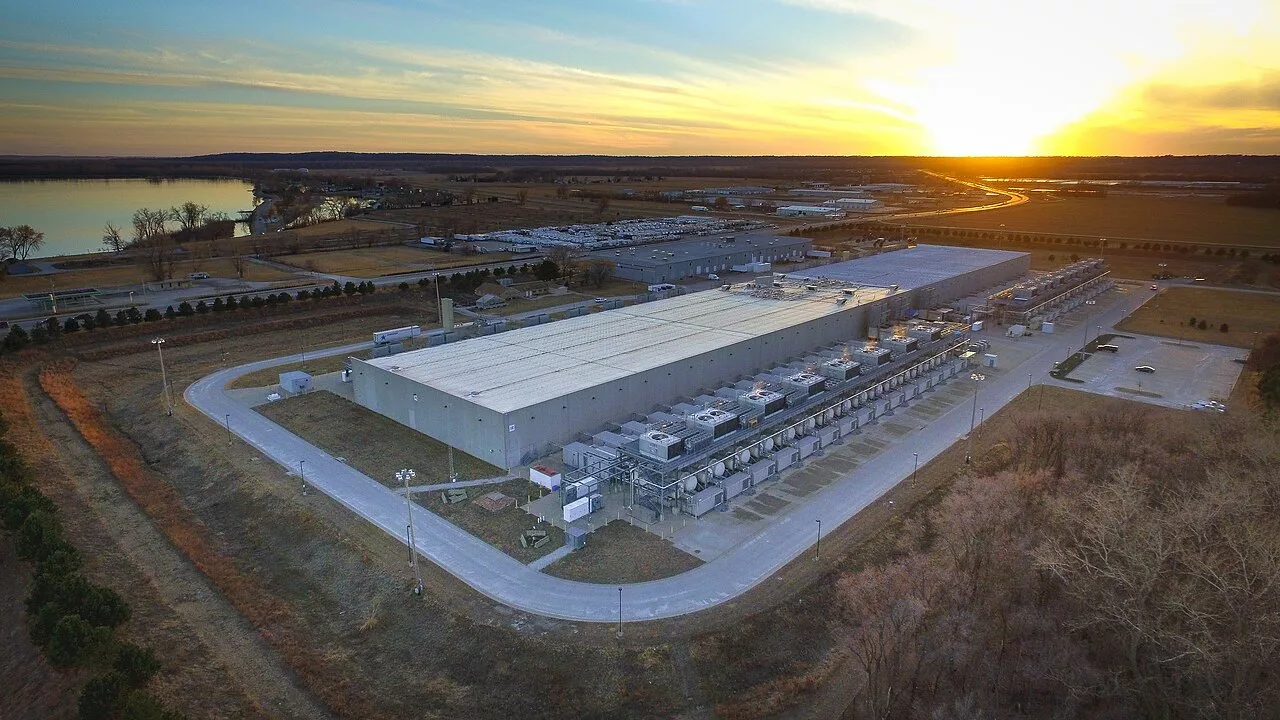
*The featured image differs from the article photo due to usage rights. Photo: Google Data Center, Council Bluffs Iowa (49062863796).jpg
chaddavis.photography from United States, CC BY 2.0, via Wikimedia Commons
Barring last-minute nuclear deal, US and Russia teeter on brink of new arms race
SUMMARY:
• New START treaty set to expire on February 5
• Trump hasn’t responded to Putin’s offer to extend missile limits
• End in sight to more than 50 years of mutual constraints
• Chinese build-up leaves US facing two big nuclear rivals
By Mark Trevelyan and Jonathan Landay | REUTERS, January 29, 2026 reuters.com
LONDON/WASHINGTON, Jan 30 (Reuters) – The United States and Russia could embark on an unrestrained nuclear arms race for the first time since the Cold War, unless they reach an eleventh-hour deal before their last remaining arms control treaty expires in less than a week.
The New START treaty is set to end on February 5. Without it, there would be no constraints on long-range nuclear arsenals for the first time since Richard Nixon and Soviet leader Leonid Brezhnev signed two historic agreements in 1972 on the first-ever trip by a U.S. president to Moscow.
It is now 85 seconds to midnight.

On January 27, 2026, the Doomsday Clock was set at 85 seconds to midnight, the closest the Clock has ever been to midnight in its history.
The Bulletin of the Atomic Scientists’ Science and Security Board (SASB), which sets the Clock, called for urgent action to limit nuclear arsenals, create international guidelines on the use of AI, and form multilateral agreements to address global biological threats.
ACTION ALERTS
Endless Nuclear Waste Storage in NM?? Not On Our Watch…
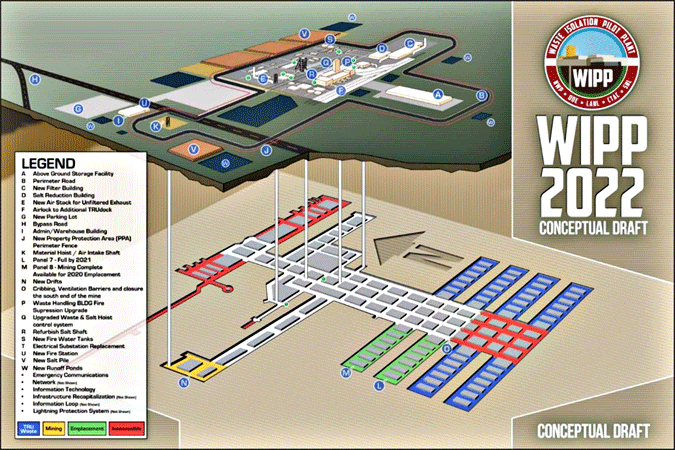
Keep up with the Stop Forever WIPP Coalition to learn how to take action against the Federal Government’s Plan to Expand WIPP and keep it open indefinitely.
Visit the Stop Forever WIPP Coalition’s website and social media:
Website: www.StopForeverWIPP.org
Facebook: facebook.com/StopfvrWIPP
Twitter: twitter.com/stopforeverwipp
Instagram: instagram.com/stopfvrwipp
Stay Informed of All Permit-Related Happenings at WIPP! Sign Up for Updates:
The New Mexico Environment Department maintains a Facility Mailing List to which you can add your name and address to get the latest information – just email Ricardo Maestas at the New Mexico Environment Department at ricardo.maestas@state.nm.us and ask to be added to the list. Or mail your request with your mailing address to:
Continue reading

.jpg)
Interfaith Panel Discussion on Nuclear Disarmament - August 9