
Material Area Disposal C (MDA C or Area C) at LANL
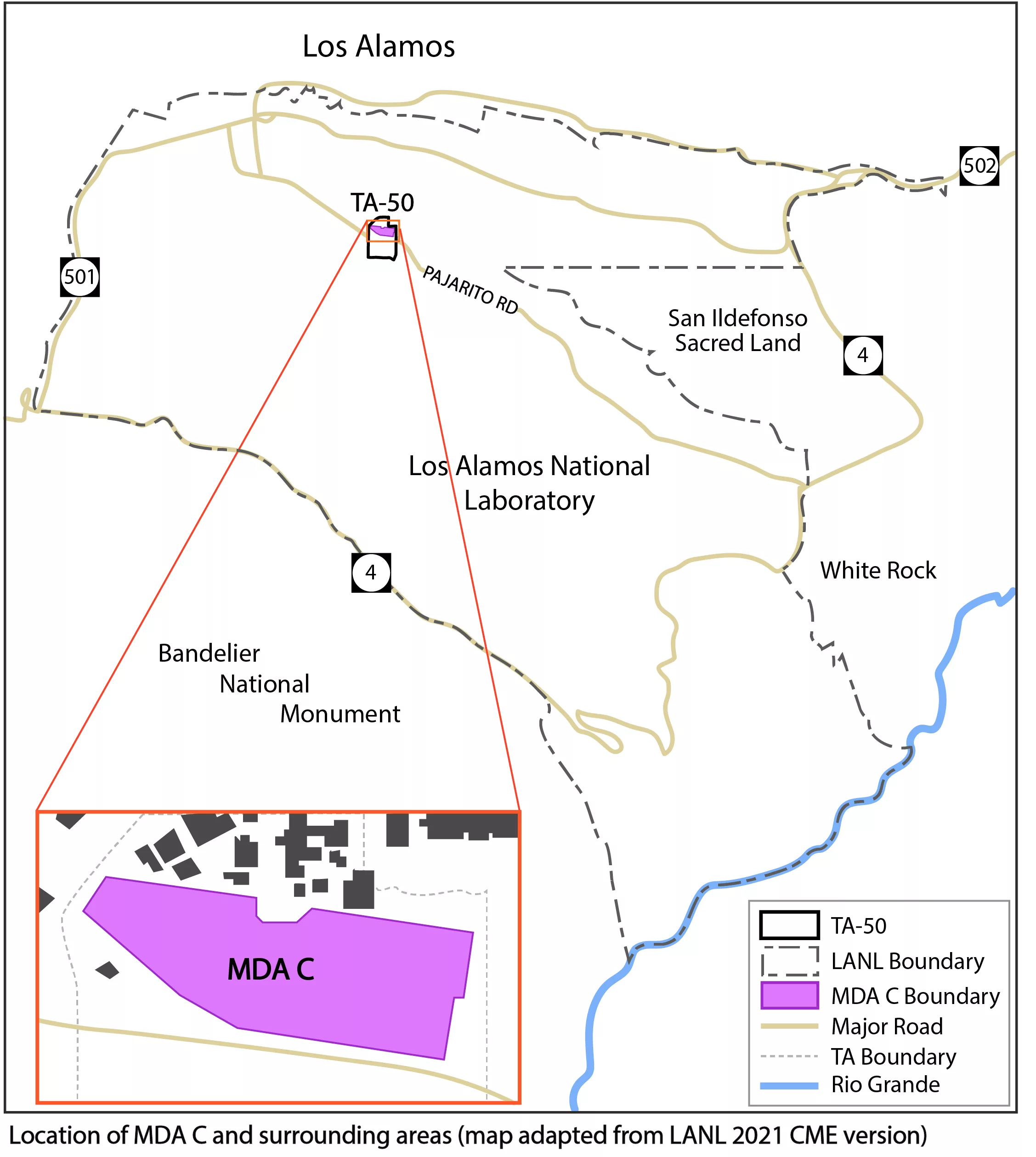
Area C, north of Pajarito Road near TA-50, became inactive April 8, 1974. Its history of use covers 26 years. There are seven pits within the area, one of which was reserved exclusively for the disposal of non-radioactive hazardous chemical wastes and 108 shafts; none of which are greater than 1m (3ft) in diameter and 7.6m (25ft) deep. Area C is the first burial ground for which detailed records were kept. Few Studies related to environmental monitoring have been conducted in Area C.
The history of Area C extends from may 7, 1948, the date the first pit was started, through April 18, 1974, the date the last shaft was filled and plugged with concrete. It is sometimes felt that the the last routine radioactive contaminated waste placed in area C, December 1958, marks the closing of area C and the opening of Area G. Neither idea is true. Area G pits had received non routine radioactive waste before that date and area C pits continued to receive non routine radioactive contained waste until Pit 6 was filled august 959 and Pit 5 was filled November or December 1964. Since quarterly and annual reports on solid radioactive waste disposal fail to mention Area C after 1968, it can be assumed that the area was not in regular use pats that time. The plugins of the last area C shaft, shaft 89, On April 1974, marked the formal closing of the area.
Type of Waste
During the pit history of Area C, hazardous chemicals and unconfined classified materials were buried with radioactive contaminated materials.
Hazardous Chemical Area in Area C
As pit use was phasing out in area C and beginning in area G, the idea of separate disposal for hazardous nonradioactive chemicals (which were responsible through the years for many fires in the disposal area) was accepted.
Potential environmental impacts:
Lies near Ten-Site Canyon New Mexico Environment Department's (NMED) Hazardous and Radioactive Material Bureau (HRMB) ranks this MDA as an area with a high probability of contaminant mobilization and a moderate to high potential of release to the groundwater.
Source:
NEW Dec. 2025 Area C Cleanup Fact Sheet:


Los Alamos Lab’s Future at a Crossroads: Cleanup or More Nuclear Weapons? NukeWatch Applauds NM State Rejection of Fake Cleanup
FOR IMMEDIATE RELEASE, September 18, 2023
Jay Coghlan – 505.989.7342, c 505.470.3154 | Email
Scott Kovac – c. 505.316.4148 | Email
Santa Fe, NM – In an important win for genuine cleanup at the Los Alamos National Laboratory (LANL), the New Mexico Environment Department (NMED) has rejected the Lab’s plans for so-called cleanup through “cap and cover.” LANL’s plan would leave existing radioactive and toxic wastes uncharacterized and forever buried in unlined pits and trenches as a permanent threat to groundwater. At issue is remediation of the Lab’s “Material Disposal Area C” waste dump that has 7 pits and 108 shafts of radioactive and toxic wastes. Area C is located in the heart of nuclear weapons production at LANL, contiguous to the Lab’s main plutonium facility which is expanding production of plutonium “pit” bomb cores.
In a September 7, 2023 “Public Notice of Statement of Basis,” the Environment Department ruled:
“For maximum protection of human health and the environment and to ensure that the drinking water resource can be conservatively protected, NMED has determined that the selected [cleanup] remedy for MDA C must consist of waste excavation, characterization, and appropriate disposal of the buried waste… Excavation will ensure that the source of contamination at MDA C is removed…”
New Mexico, Department of Energy at odds over cleanup halt at LANL waste site
In a December public meeting, the field office’s manager indicated approval from the Environment Department likely wasn’t needed to defer the study and cleanup of Area C. According to the compliance decree, “NMED approval is not required” in several cases to change the status of an area to deferred, as long as the Department of Energy complied with other requirements.
Environment Department spokesperson Drew Goretzka wrote in an email to The New Mexican a site can be deferred in one of four cases, including if it is involved in active operations and if the amount of time needed for deferment is assessed.
The department doesn’t agree those requirements have been met, Goretzka wrote, “resulting in a breach of the Consent Order.”
| January 9, 2026 santafenewmexican.com
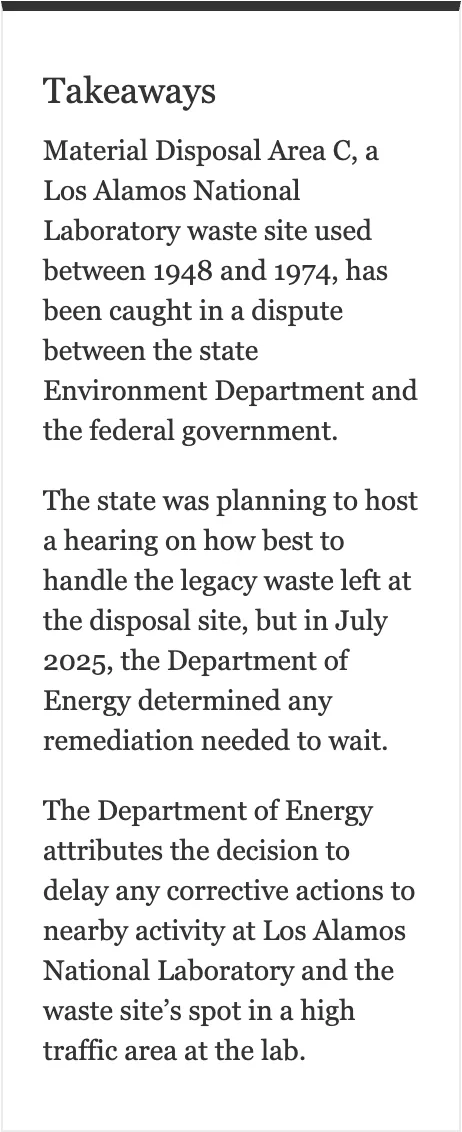 The U.S. Department of Energy has put cleanup of a hazardous waste disposal site at Los Alamos National Laboratory on hold, a decision that seems to have drawn the ire of the New Mexico Environment Department.
The state last year was planning to hold a public hearing in early 2026 on how to handle legacy waste left behind at Material Disposal Area C, according to a letter from an official in the Hazardous Waste Bureau.
The Department of Energy, however, had already made up its mind: Any corrective actions at the site would have to wait due to ramped-up operations near Area C. The public hearing is now on hold until the conflict over the deferment of corrective actions is settled, according to an Environment Department spokesperson.
The 11-acre waste site, in use from 1948 to 1974, is located within Technical Area 50 along Pajarito Road. Its six disposal pits were used for various types of waste, including radioactive materials and heavy metals.
New Mexico Environment Department takes sweeping action over LANL waste
Takeaways:
– The Environment Department issued three compliance orders against the Department of Energy regarding hazardous and legacy wastes at Los Alamos National Laboratory.
– The department also is seeking to modify the Waste Isolation Pilot Plant’s permit in an effort to make sure that legacy waste from LANL is prioritized for disposal.
– The three compliance orders address hexavalent chromium contamination and the status of cleanup of Material Disposal Area C.
Nuclear Watch New Mexico Executive Director Jay Coghlan cast Area C as a crossroads.
“It presents a clear choice between more unneeded nuclear weapons or cleanup,” Coghlan said, speaking on Tuesday’s enforcement actions. “The other aspect is that we think that successful cleanup at Area C should be the model for cleanup of the rest of the lab, including the much larger Area G.”
ByAlaina Mencinger amencinger@sfnewmexican.com | February 12, 2026 santafenewmexican.com
The New Mexico Environment Department on Wednesday issued three compliance orders with a combined $16 million in penalties against the U.S. Department of Energy over its delayed cleanup of radioactive and hazardous waste stemming from nuclear weapons production.
The state agency also informed the federal government it intends to take the rare action of overhauling a permit for the Waste Isolation Pilot Plant in Southern New Mexico to better prioritize the disposal of radioactive waste from the Los Alamos lab.
The actions underscore a growing frustration with a “longstanding lack of urgency” to clean up legacy waste and contamination, according to a statement from the Environment Department.
“We’re escalating because they’re not meeting the moment that immediately preceded it,” Environment Secretary James Kenney said in an interview.
Two of the orders center on a decades-old, toxic underground plume of hexavalent chromium, a known carcinogen that was used as an anti-corrosive in pipes at LANL. In the early 2000s, the 1.5-mile plume was discovered stretching from the national laboratory.
New Mexico Rebukes Federal Agency Over Nuclear Waste at Los Alamos
State environmental regulators will also fine the Energy Department up to $16 million for exceeding safe groundwater standards near the nuclear lab.
Alicia Inez Guzmán, The New York Times| February 12, 2026 nytimes.com
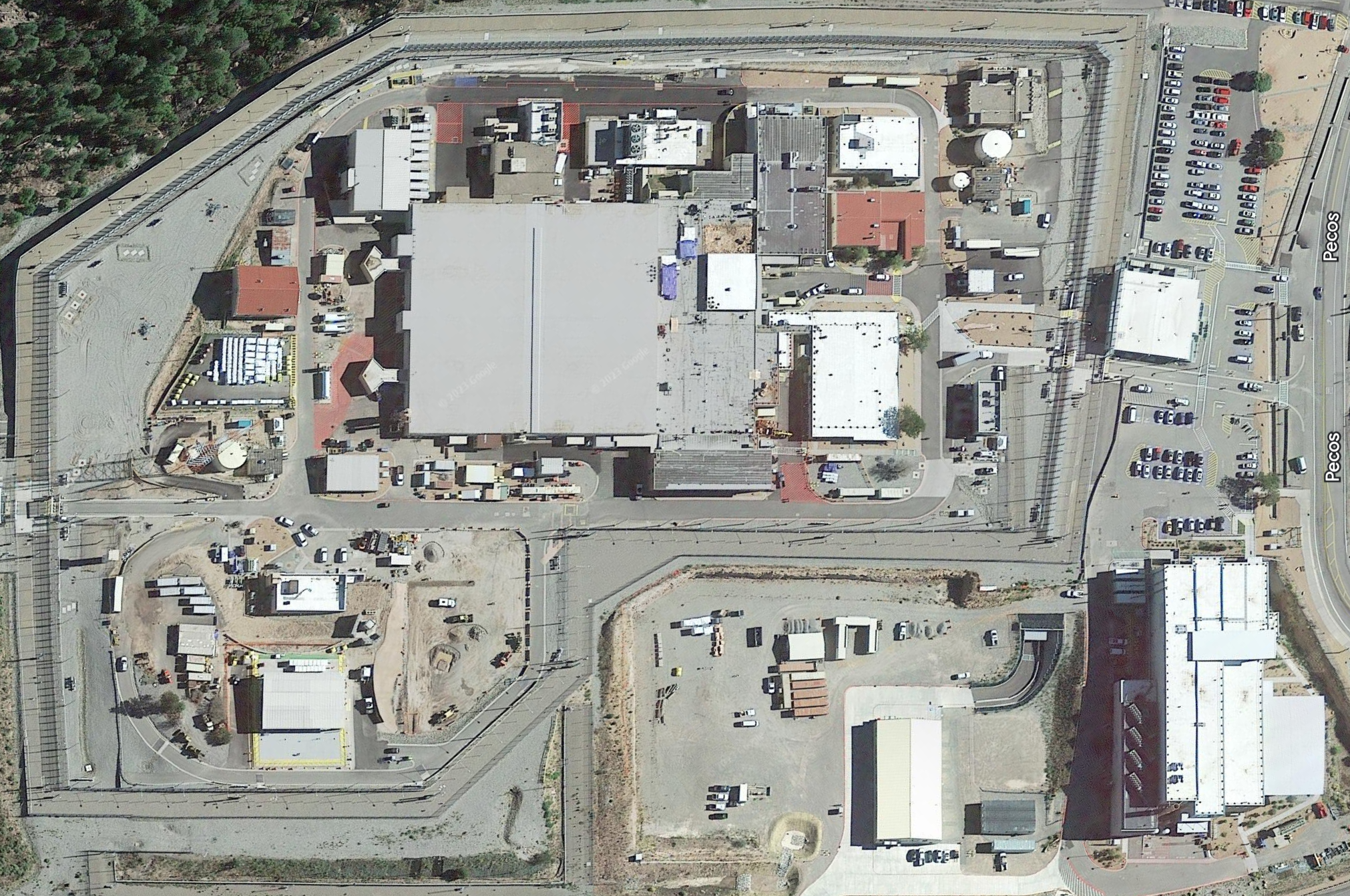
[*The image above differs from the featured image in the original NYT article due to usage rights. / Of note – the original article photo caption: The Los Alamos National Laboratory is the linchpin of a current federal effort to upgrade the nation’s nuclear arsenal. ]
After years of missed deadlines, New Mexico is demanding that the Energy Department expedite the cleanup of so-called legacy nuclear and hazardous waste at the Los Alamos National Laboratory, the birthplace of the atomic bomb, state environmental regulators announced on Wednesday.
The state will also fine the agency up to $16 million for violating groundwater safety standards near the lab, civil penalties outlined by the New Mexico Environment Department in a series of regulatory enforcement actions.
“The continued presence of a large volume of unremedied hazardous and radioactive waste demonstrates a longstanding lack of urgency by the U.S. Department of Energy,” regulators wrote in a statement, “and elevates the risk of waste storage failures” at the lab, in northern New Mexico.
The regulators’ action comes amid rising fears of a new global arms race. Just days ago, the only remaining nuclear arms control treaty between the United States and Russia expired, lifting limits on their arsenals. Today, Los Alamos is producing plutonium bomb cores, making the lab the linchpin of a $1.7 trillion federal effort to modernize the nation’s nuclear weapons.