
Most Recent
Pilgrim nuclear plant may release 1M gallons of radioactive water into bay. What we know
“Diane Turco, of Harwich, the director of Cape Downwinders, a citizen group that was at the forefront of the effort to close Pilgrim, called any option that included sending radioactive water into the bay “outrageous” and “criminal.” Turco said she has no confidence in the decommissioning process.
“The process has been to allow radioactivity into the environment,” she said. “The answer should be no you can’t do that.””
PLYMOUTH — One of the options being considered by the company that is decommissioning the closed Pilgrim Nuclear Power Station is to release around one million gallons of potentially radioactive water into Cape Cod Bay.
The option had been discussed briefly with state regulatory officials as one possible way to get rid of water from the spent fuel pool, the reactor vessel and other components of the facility, Holtec International spokesman Patrick O’Brien said in an interview Wednesday. It was highlighted in a report by state Department of Environmental Protection Deputy Regional Director Seth Pickering at Monday’s meeting of the Nuclear Decommissioning Citizens Advisory Panel in Plymouth.
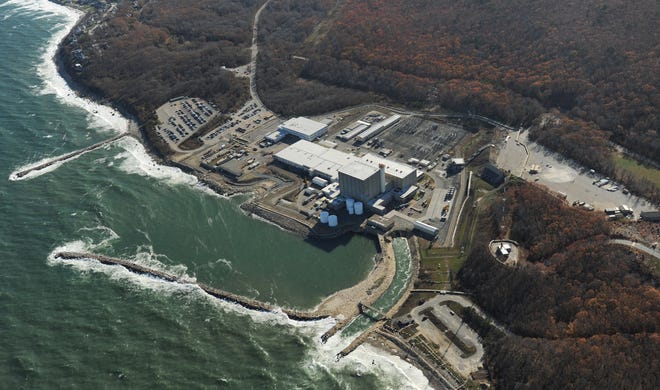
“We had broached that with the state, but we’ve made no decision on that,” O’Brien said.
As of mid-December, Holtec will complete the process of moving all the spent fuel rods into casks that are being stored on a concrete pad on the Pilgrim plant site in Plymouth. After that, O’Brien told the panel, the removal and disposal of other components in those areas of the facility will take place and be completed sometime in February.
U.S. ‘very bullish’ on new nuclear technology, Granholm says
“These advanced nuclear reactors, and the existing fleet, are safe,” Granholm says. “We have the gold standard of regulation in the United States.”
Actually…According to a UCS report, if federal regulators require the necessary safety demonstrations, it could take at least 20 years—and billions of dollars in additional costs—to commercialize such reactors, their associated fuel-cycle facilities, and other related infrastructure.
The Nuclear Regulatory Commission (NRC) may have to adapt some regulations when licensing reactor technologies that differ significantly in design from the current fleet. Lyman says that should not mean weakening public health and safety standards, finding no justification for the claim that “advanced” reactors will be so much safer and more secure that the NRC can exempt them from fundamental safeguards. On the contrary, because there are so many open questions about these reactors, he says they may need to meet even more stringent requirements.
GLASGOW, Scotland — In an interview at the U.N. Climate Change Conference, Secretary of Energy Jennifer Granholm told Yahoo News on Friday that the Biden administration is “very bullish” on building new nuclear reactors in the United States.
“We are very bullish on these advanced nuclear reactors,” she said. “We have, in fact, invested a lot of money in the research and development of those. We are very supportive of that.”
Nuclear energy is controversial among environmental activists and experts because while it does not create the greenhouse gas emissions that cause climate change, it has the potential to trigger dangerous nuclear meltdowns and creates radioactive nuclear waste [not a small issue].
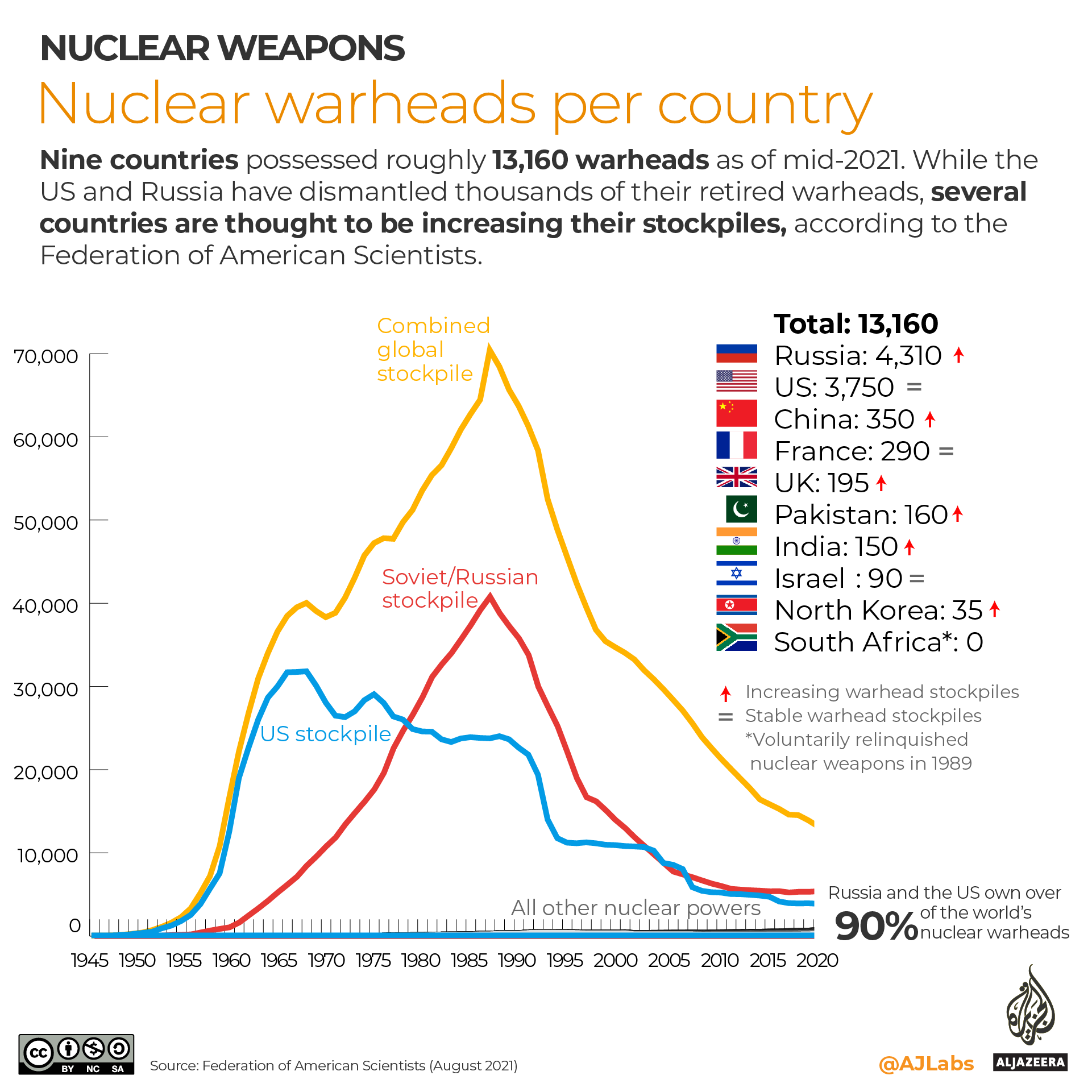
Al Jazeera Infographic: The World Nuclear Club
While 32 countries generate atomic energy, nine have nuclear weapons and seven countries have both.
Nuclear warheads per country
Nine countries possessed roughly 13,150 warheads as of August 2021, according to the Federation of American Scientists. More than 90 percent are owned by Russia and the US.
At the peak in 1986, the two rivals had nearly 65,000 nuclear warheads between them, making the nuclear arms race one of the most threatening events of the Cold War. While Russia and the US have dismantled thousands of warheads, several countries are thought to be increasing their stockpiles, most notably China.
According to the Pentagon’s 2021 annual report (pdf), China’s nuclear warhead stockpile is expected to more than triple and reach at least 1,000 by 2030.
The only country to voluntarily relinquish nuclear weapons is South Africa. In 1989, the government halted its nuclear weapons programme and in 1990 began dismantling its six nuclear weapons. Two years later, South Africa joined the Treaty on the Non-Proliferation of Nuclear Weapons (NPT) as a non-nuclear country.
With the 26th UN Climate Change Conference over, nations are making plans to move to green energy in a bid to tackle global warming.
But nuclear energy is a particular sticking point. While it is the largest source of low-carbon electricity in OECD countries, some nations have spoken out against the categorisation of nuclear energy as climate-friendly.
Across the globe, 34 countries harness the power of splitting atoms for generating electricity or for nuclear weapons. (Al Jazeera)
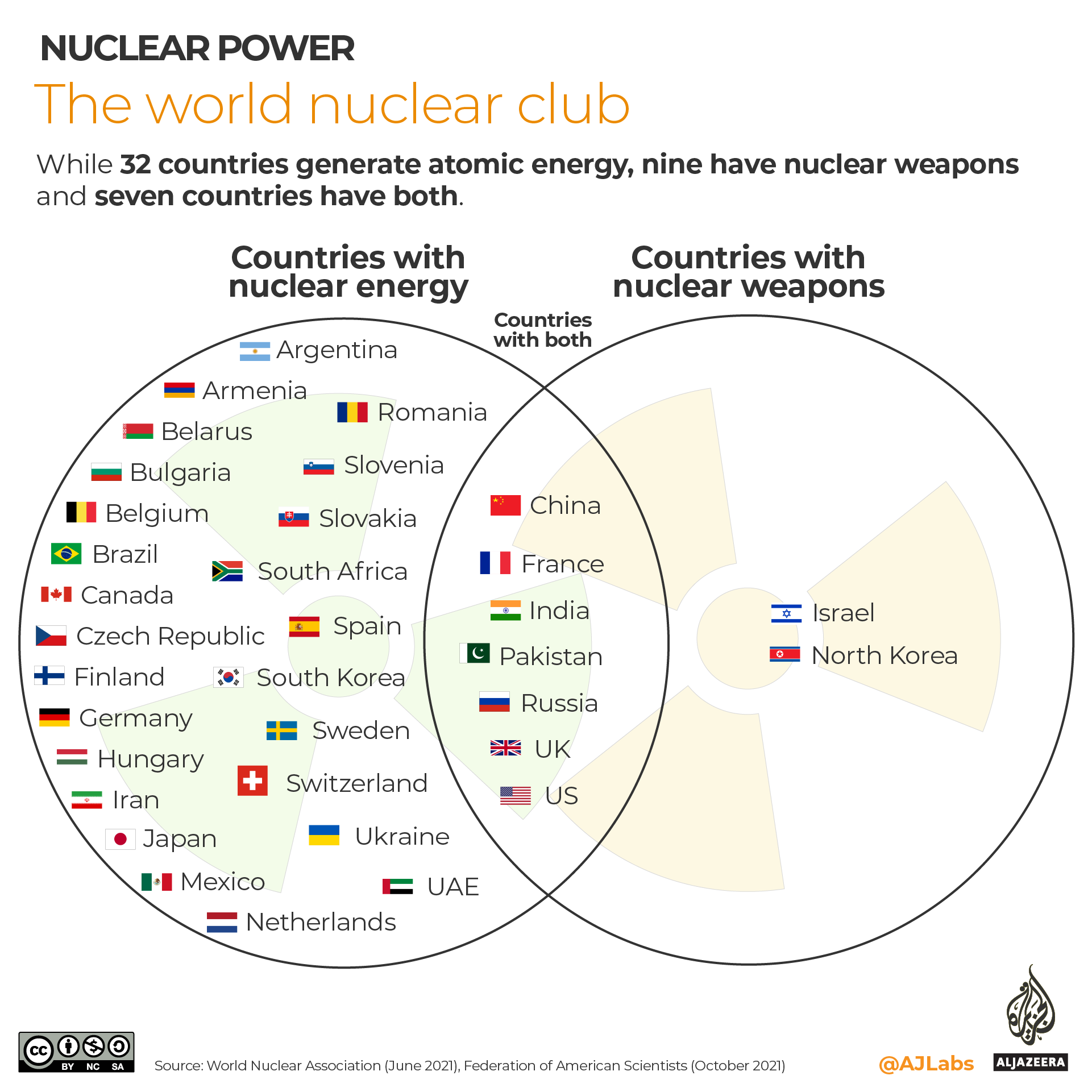
Global nuclear energy
Nuclear energy provides roughly 10 percent of the world’s electricity. Of the 32 countries with nuclear power reactors, more than half (18) are in Europe. France has the world’s highest proportion of its electricity – at 71 percent – coming from atomic power.
Up until 2011, Japan was generating some 30 percent of its electricity from nuclear reactors; however, following the Fukushima disaster, all nuclear power plants were suspended for safety inspections. As of 2020, just 5 percent of Japan’s electricity came from nuclear power, according to the World Nuclear Association.
Nuclear power constitutes some 20 percent of the United States’ electricity. About 60 percent of the country’s energy comes from fossil fuels, including coal, natural gas and petroleum, with the remaining 20 percent coming from renewable sources – wind, hydro and solar.
Nuclear Power Is COP26’s Quiet Controversy
“We have to get everything done in the next 25 years…The idea that you’re going to scale up a technology you don’t even have yet, and it’s going to be commercially viable [in that time], just seems to me like la la land.” — Tom Burke, co-founder of climate think tank E3G.
BY ALEJANDRO DE LA GARZA time.com
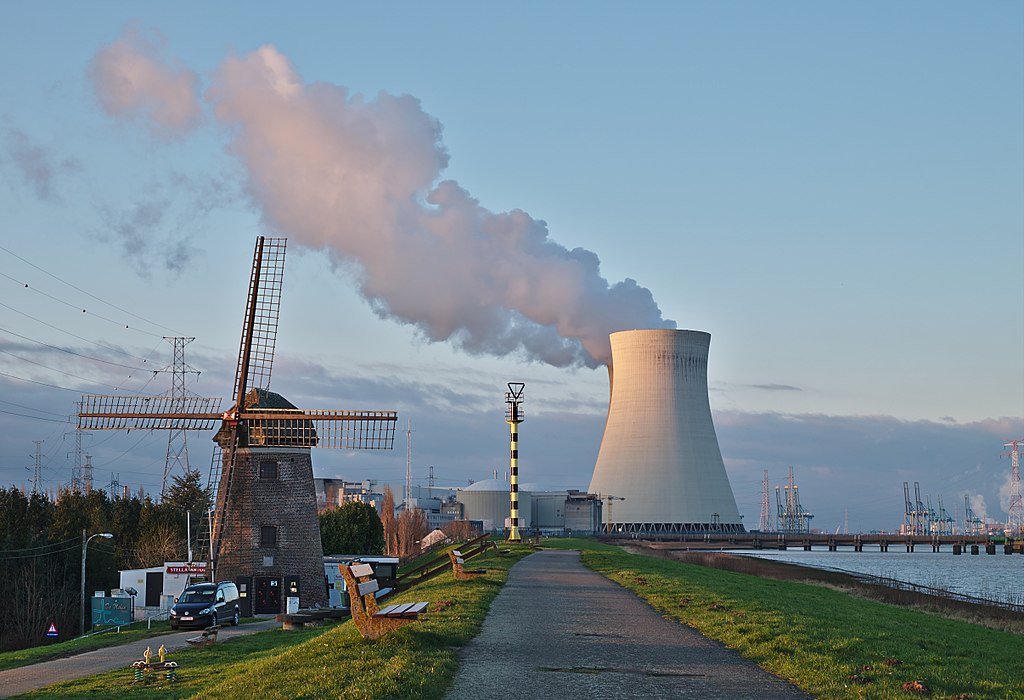
In the midst of the COP26 climate talks yesterday, U.S. and Romanian officials stepped aside for a session in the conference’s Blue Zone, establishing an agreement for U.S. company NuScale to build a new kind of modular nuclear power plant in the southeastern European country. The company’s plants—designed to be quickly scaled up or down based on need—are intended to be quicker and cheaper to build than the traditional kind, with some considering them to be a promising alternative for countries seeking to wean themselves off fossil fuels.
NuScale CEO John Hopkins sees the agreement as part of a broader recognition that nuclear power has a big role to play as the world decarbonizes. “I’ve seen a significant shift here,” Hopkins said, speaking to TIME from Glasgow yesterday. “It used to be the only thing really discussed was renewables, but I think people are starting to be a little more pragmatic and understand that nuclear needs to be in the mix.”
But others at COP26 aren’t convinced that NuScale’s small reactors can help avoid climate catastrophe. Some point to the fact that NuScale has yet to build a single commercial plant as evidence that the company is already too late to the party.

Jellyfish Keep Attacking Nuclear Power Plants
Jellyfish are continuing to clog the cooling pipes of nuclear power plants around the world.
Jellyfish are continuing to clog the cooling intake pipes of a nuclear power plant in Scotland, which has previously prompted a temporary shutdowns of the plant.
The Torness nuclear power plant has reported concerns regarding jellyfish as far back as 2011, when it was forced to shut down for nearly a week—at an estimated cost of $1.5 million a day—because of the free-swimming marine animals.
In a short comment to Motherboard, EDF energy, which runs the Torness plant, said that “jellyfish blooms are an occasional issue for our power stations,” but also said that media reports claiming the plant had recently been taken offline because of jellyfish are “inaccurate.” “[There were] no emergency procedures this or last week related to jellyfish or otherwise,” a spokesperson said.
Like many other seaside power plants, the Torness plant uses seawater to prevent overheating. While there are measures in place to prevent aquatic life from entering the intake pipes, according to the Bulletin of the Atomic Scientists, they are no match for the sheer number of jellyfish that come during so-called “jellyfish blooms.”
HIDDEN AGENDA: The unspoken argument for more nuclear power
Nuclear power is so slow and expensive that it doesn’t even matter whether or not it is ‘low-carbon’ (let alone ‘zero-carbon’). As the scientist, Amory Lovins, says, “Being carbon-free does not establish climate-effectiveness.” If an energy source is too slow and too costly, it will “reduce and retard achievable climate protection,” no matter how ‘low-carbon’ it is.
By Linda Pentz Gunter beyondnuclearinternational.org
 So here we are again at another COP (Conference of the Parties). Well, some of us are in Glasgow, Scotland at the COP itself, and some of us, this writer included, are sitting at a distance, trying to feel hopeful.
But this is COP 26. That means there have already been 25 tries at dealing with the once impending and now upon us climate crisis. Twenty five rounds of “blah, blah, blah” as youth climate activist, Greta Thunberg, so aptly put it.
So if some of us do not feel the blush of optimism on our cheeks, we can be forgiven. I mean, even the Queen of England has had enough of the all-talk-and-no-action of our world leaders, who have been, by and large, thoroughly useless. Even, this time, absent. Some of them have been worse than that.
Not doing anything radical on climate at this stage is fundamentally a crime against humanity. And everything else living on Earth. It should be grounds for an appearance at the International Criminal Court. In the dock.
Reactor at Japan’s nuclear power plant suspended over counter-terrorism demands: Reports
The third reactor at Japan’s Mihama nuclear power plant was suspended by the operator, the Kansai Electric Power company, over inability to enhance counter-terrorism infrastructure in time, the Japanese public broadcaster NHK reported on Sunday.
Tokyo [Japan], October 24 (ANI/Sputnik): The third reactor at Japan’s Mihama nuclear power plant was suspended by the operator, the Kansai Electric Power company, over inability to enhance counter-terrorism infrastructure in time, the Japanese public broadcaster NHK reported on Sunday.
All the required measures to strengthen security are expected to be completed in September 2022, and the reactor might resume operations in mid-October of that year, the outlet said, citing the operator.
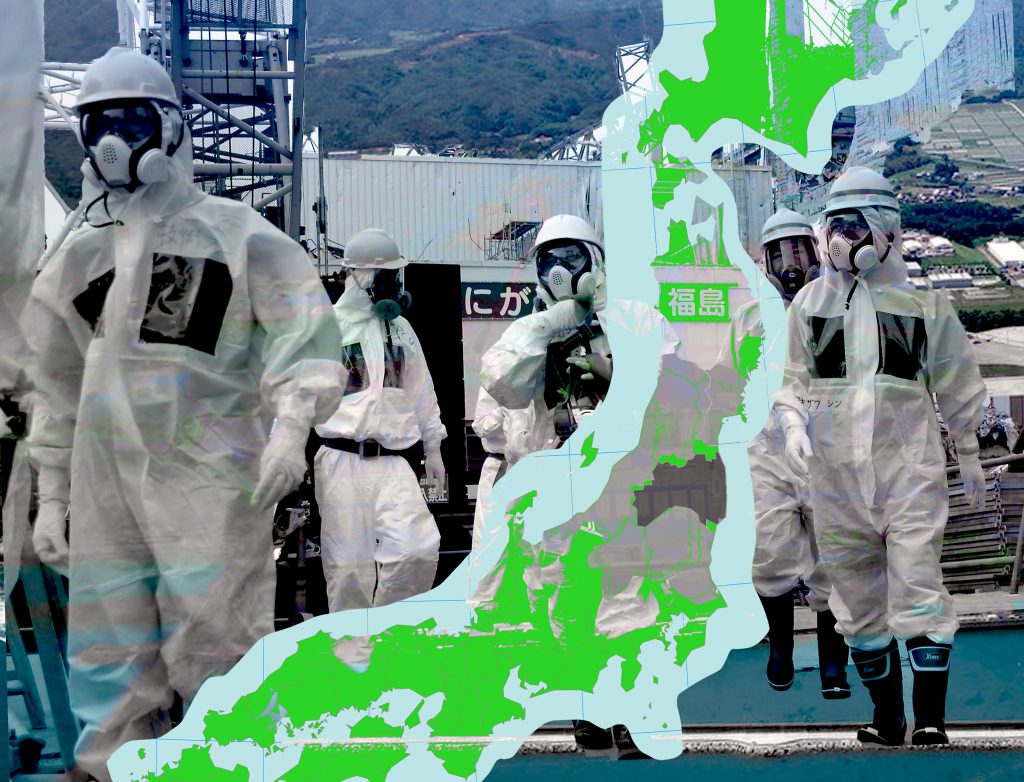
The reactor was restarted on June 23, 2021, after more than 40 years of work. The law limits the maximum lifespan of reactors to 40 years, but if additional requirements are met, a reactor can work more. Mihama’s third reactor was stopped for a decade after the Fukushima earthquake and tsunami, which in 2011 claimed over 15,000 lives, displaced thousands of people and caused a meltdown at the power plant. (ANI/Sputnik)
Carbon-Free Power Project: Don’t Continue To Delay The Inevitable
“Disclosure of these would go a long way toward improving the credibility of NuScale, UAMPS, and the community boards who are putting their own credibility on the line by subscribing to this project.
We must not forget that our ratepayer and taxpayer monies are being used to underwrite this ambitious project. We are owed transparency in return.”
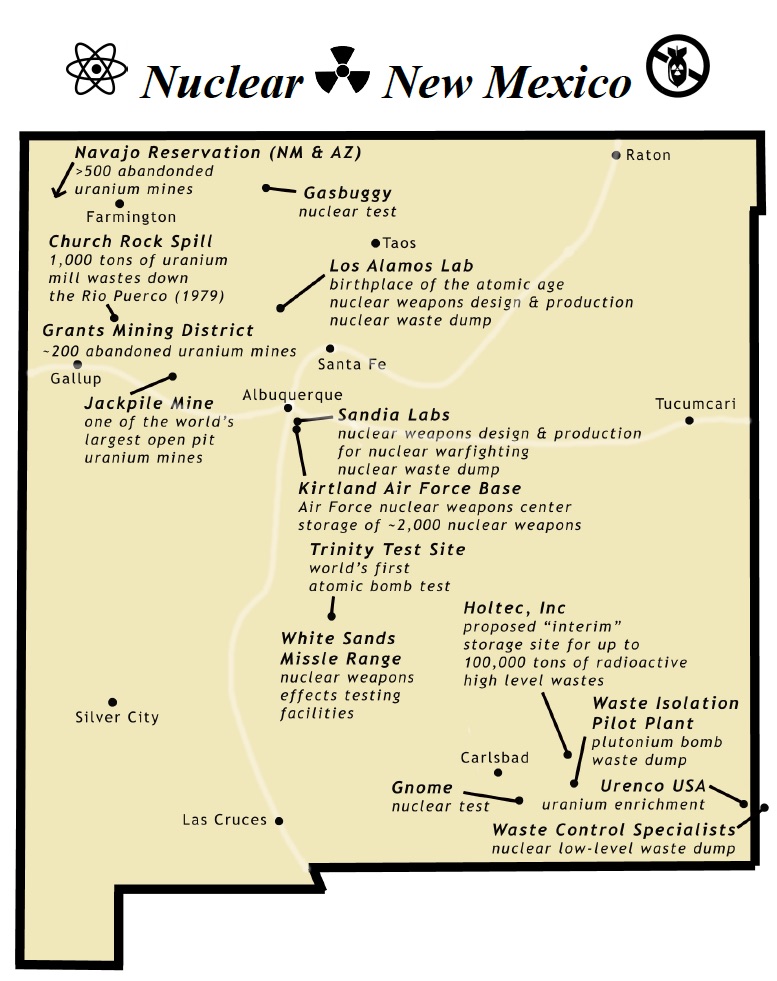
BY GEORGE CHANDLER, Los Alamos
Los Alamos County Councilors,
I hope you will choose to take this unexpected off-ramp rather than continue to delay the inevitable. The UAMPS CFPP project looks to be slowly dying, apparently because not enough communities believe it to be a viable project, or perhaps because of a lack of transparency. If you choose to continue, then you can make this a better project.
I submitted the questions below to the Utilities Board prior to their July 21 meeting. The Director of the Utilities Department asked CFPP to address these questions at the July 21 meeting, and Mr. Baker and Mr. Hughes did address most of them during their presentation and under questioning by Ms. Walker. Their responses were incomplete, contradictory, and generally unsatisfying. The three of most importance are the Economic Competitiveness Test (ECT), the work on the reactor core being done by Fromatome and Enfission, and the rather curious explanations of the 54% change in output with no design changes.
Eastern Idaho nuclear reactor project downsized
Others who support the project worry about its incomplete financial support. All but one council member that day voted to continue Idaho Fall’s 5 MW commitment. But two voiced direct concern over the project not having full subscriptions. Council member Jim Francis was the sole nay vote.
“If this project works out, it’ll be great. I just wish there was a slight bit more security,” he told the Post Register in a phone interview.
BY:
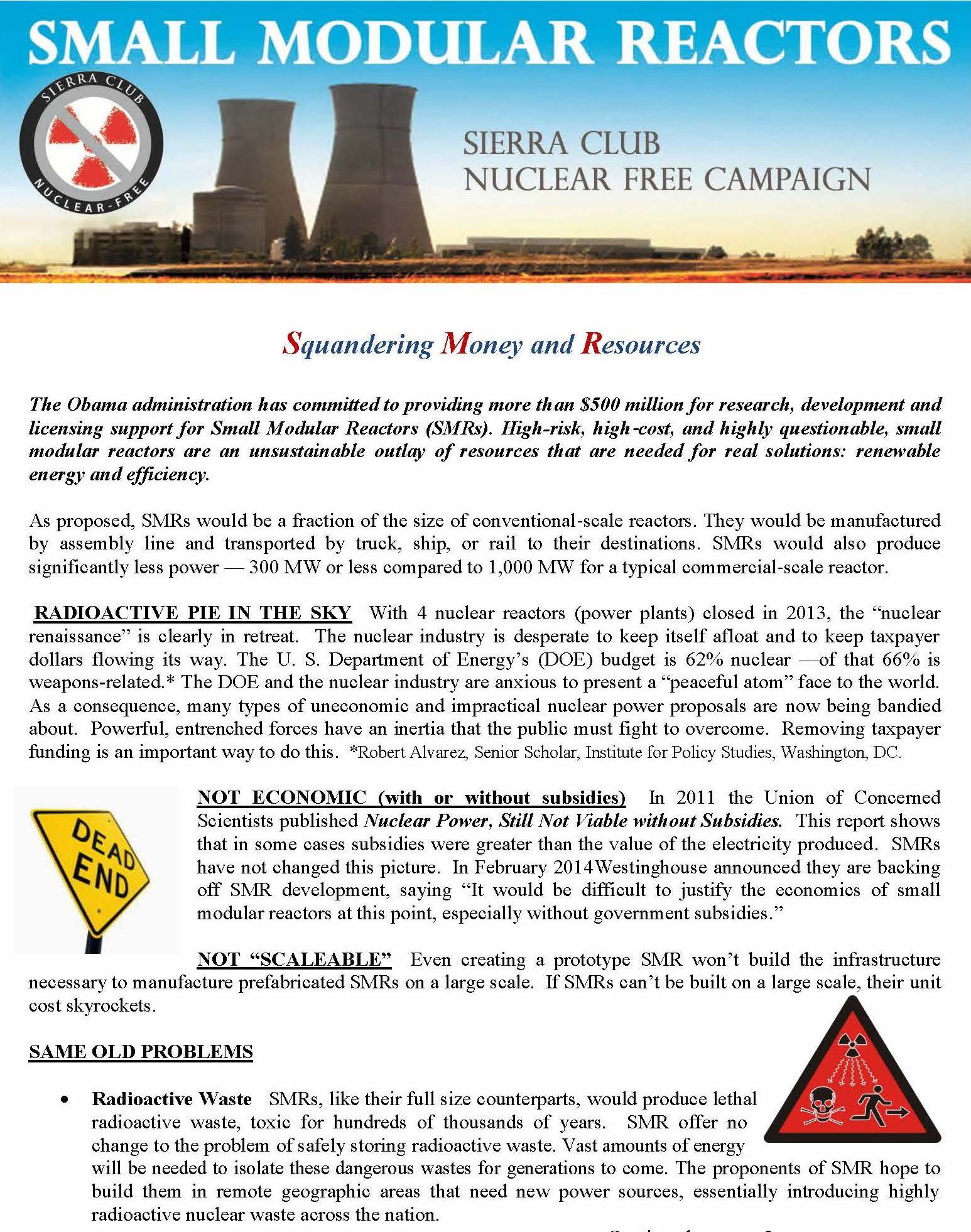
A project to build a first-of-its-kind nuclear reactor in eastern Idaho has been significantly downsized.
The initial plan for the Carbon-Free Power Project was to build 12 interconnected miniature nuclear reactor modules to produce a total of 600 megawatts. It would be the first small modular reactor in the United States. After the company tasked with manufacturing the plants said it could make the reactors more power-efficient, planners reduced the project down to six module reactors that could produce 462 MW total.
“After a lot of due diligence and discussions with members, it was decided a 6-module plant producing 462 MW would be just the right size for (Utah Associated Municipal Power Systems) members and outside utilities that want to join,” said LaVarr Webb, UAMPS spokesman.
The decision was made in late June, Webb said.
The project between UAMPS and Portland-based reactor producer NuScale received $1.4 billion from the U.S. Department of Energy last year. The reactor is planned to be built on the DOE’s 890-square mile desert site west of Idaho Falls at Idaho National Laboratory. The plant is expected to be running by 2029.
“A 6-module plant allows us to get to full subscription faster, but we would have reached full subscription regardless,” Webb said of the project’s ability to achieve full financial commitment from partners. “Before joining a next-generation, first-of-a-kind nuclear plant, utilities obviously want to be certain the plant is feasible and will be built. Now that we have made significant progress, including a large cost-share award from the Department of Energy, and NuScale has received design approval from the (Nuclear Regulatory Commission), we’re seeing more and more utilities express interest in the plant.”
So far, Webb said 28 participants have committed to a total of 103 MW. But, he said, “all are currently evaluating whether to increase or decrease” their commitments. He also said “a number of utilities outside of UAMPS are considering” making a commitment.
Nuclear Power Looks to Regain Its Footing 10 Years after Fukushima
Economics may play a stronger role than fear in steering nuclear power toward a slow decline.
“The pace of nuclear technologies’ progress could also be a factor in clean-energy strategies turning away from such power generation. Small modular reactors, along with other experimental designs, are not expected to begin commercial operations (or even testing) until the 2030s at the earliest, according to the DOE. This suggests that small reactors are unlikely to make a meaningful difference in reducing carbon emissions within the next 20 years. And at that point, they will have to compete in a future energy landscape that has been transformed even further by cheaper renewables and energy-storage technologies.”
“One imagines that solar will be more ingrained and cheaper, wind may be more ingrained and cheaper, the offshore wind will be developed, maybe batteries will be better developed, and storage will be better developed,” says Allison Macfarlane, who was chair of the NRC in 2012–2014. “That’s the market nuclear will have to compete in.”
By: | scientificamerican.com March 9, 2021
Nuclear power faces a wobbly future 10 years after an earthquake and tsunami triggered a triple reactor meltdown at the Fukushima Daiichi plant in Japan. But the industry’s unstable footing has less to do with the Fukushima accident—and more to do with how a natural gas glut and the rise of renewable power have transformed the global energy landscape.
Fukushima has certainly left its mark on the nuclear industry. When the Tohoku earthquake and tsunami occurred on March 11, 2011, there were 54 nuclear reactors in Japan. Since then about a third of them have been permanently shut down, and only nine have resumed operation.
“In Japan, [the accident is] still an outsize event,” says Edwin Lyman, director of nuclear power safety at the Union of Concerned Scientists. “It not only had direct and indirect environmental consequences that they’re still dealing with—and a price tag of hundreds of billions of dollars to clean it up—but also it shattered the confidence of the Japanese people in nuclear power, which the authorities had always assured them was totally safe.”
Additionally, the accident spurred regulatory reviews of nuclear power worldwide and accelerated a preexisting plan in Germany to completely phase out nuclear power by the end of 2022. Other countries, including Spain, Belgium and Switzerland, are in the process of doing so within the next 14 years.
Pilgrim nuclear plant may release 1M gallons of radioactive water into bay. What we know
“Diane Turco, of Harwich, the director of Cape Downwinders, a citizen group that was at the forefront of the effort to close Pilgrim, called any option that included sending radioactive water into the bay “outrageous” and “criminal.” Turco said she has no confidence in the decommissioning process.
“The process has been to allow radioactivity into the environment,” she said. “The answer should be no you can’t do that.””
PLYMOUTH — One of the options being considered by the company that is decommissioning the closed Pilgrim Nuclear Power Station is to release around one million gallons of potentially radioactive water into Cape Cod Bay.
The option had been discussed briefly with state regulatory officials as one possible way to get rid of water from the spent fuel pool, the reactor vessel and other components of the facility, Holtec International spokesman Patrick O’Brien said in an interview Wednesday. It was highlighted in a report by state Department of Environmental Protection Deputy Regional Director Seth Pickering at Monday’s meeting of the Nuclear Decommissioning Citizens Advisory Panel in Plymouth.
“We had broached that with the state, but we’ve made no decision on that,” O’Brien said.
As of mid-December, Holtec will complete the process of moving all the spent fuel rods into casks that are being stored on a concrete pad on the Pilgrim plant site in Plymouth. After that, O’Brien told the panel, the removal and disposal of other components in those areas of the facility will take place and be completed sometime in February.
U.S. ‘very bullish’ on new nuclear technology, Granholm says
“These advanced nuclear reactors, and the existing fleet, are safe,” Granholm says. “We have the gold standard of regulation in the United States.”
Actually…According to a UCS report, if federal regulators require the necessary safety demonstrations, it could take at least 20 years—and billions of dollars in additional costs—to commercialize such reactors, their associated fuel-cycle facilities, and other related infrastructure.
The Nuclear Regulatory Commission (NRC) may have to adapt some regulations when licensing reactor technologies that differ significantly in design from the current fleet. Lyman says that should not mean weakening public health and safety standards, finding no justification for the claim that “advanced” reactors will be so much safer and more secure that the NRC can exempt them from fundamental safeguards. On the contrary, because there are so many open questions about these reactors, he says they may need to meet even more stringent requirements.
GLASGOW, Scotland — In an interview at the U.N. Climate Change Conference, Secretary of Energy Jennifer Granholm told Yahoo News on Friday that the Biden administration is “very bullish” on building new nuclear reactors in the United States.
“We are very bullish on these advanced nuclear reactors,” she said. “We have, in fact, invested a lot of money in the research and development of those. We are very supportive of that.”
Nuclear energy is controversial among environmental activists and experts because while it does not create the greenhouse gas emissions that cause climate change, it has the potential to trigger dangerous nuclear meltdowns and creates radioactive nuclear waste [not a small issue].
Al Jazeera Infographic: The World Nuclear Club
While 32 countries generate atomic energy, nine have nuclear weapons and seven countries have both.
Nuclear warheads per country
Nine countries possessed roughly 13,150 warheads as of August 2021, according to the Federation of American Scientists. More than 90 percent are owned by Russia and the US.
At the peak in 1986, the two rivals had nearly 65,000 nuclear warheads between them, making the nuclear arms race one of the most threatening events of the Cold War. While Russia and the US have dismantled thousands of warheads, several countries are thought to be increasing their stockpiles, most notably China.
According to the Pentagon’s 2021 annual report (pdf), China’s nuclear warhead stockpile is expected to more than triple and reach at least 1,000 by 2030.
The only country to voluntarily relinquish nuclear weapons is South Africa. In 1989, the government halted its nuclear weapons programme and in 1990 began dismantling its six nuclear weapons. Two years later, South Africa joined the Treaty on the Non-Proliferation of Nuclear Weapons (NPT) as a non-nuclear country.
With the 26th UN Climate Change Conference over, nations are making plans to move to green energy in a bid to tackle global warming.
But nuclear energy is a particular sticking point. While it is the largest source of low-carbon electricity in OECD countries, some nations have spoken out against the categorisation of nuclear energy as climate-friendly.
Across the globe, 34 countries harness the power of splitting atoms for generating electricity or for nuclear weapons. (Al Jazeera)
Global nuclear energy
Nuclear energy provides roughly 10 percent of the world’s electricity. Of the 32 countries with nuclear power reactors, more than half (18) are in Europe. France has the world’s highest proportion of its electricity – at 71 percent – coming from atomic power.
Up until 2011, Japan was generating some 30 percent of its electricity from nuclear reactors; however, following the Fukushima disaster, all nuclear power plants were suspended for safety inspections. As of 2020, just 5 percent of Japan’s electricity came from nuclear power, according to the World Nuclear Association.
Nuclear power constitutes some 20 percent of the United States’ electricity. About 60 percent of the country’s energy comes from fossil fuels, including coal, natural gas and petroleum, with the remaining 20 percent coming from renewable sources – wind, hydro and solar.
Nuclear Power Is COP26’s Quiet Controversy
“We have to get everything done in the next 25 years…The idea that you’re going to scale up a technology you don’t even have yet, and it’s going to be commercially viable [in that time], just seems to me like la la land.” — Tom Burke, co-founder of climate think tank E3G.
BY ALEJANDRO DE LA GARZA time.com
In the midst of the COP26 climate talks yesterday, U.S. and Romanian officials stepped aside for a session in the conference’s Blue Zone, establishing an agreement for U.S. company NuScale to build a new kind of modular nuclear power plant in the southeastern European country. The company’s plants—designed to be quickly scaled up or down based on need—are intended to be quicker and cheaper to build than the traditional kind, with some considering them to be a promising alternative for countries seeking to wean themselves off fossil fuels.
NuScale CEO John Hopkins sees the agreement as part of a broader recognition that nuclear power has a big role to play as the world decarbonizes. “I’ve seen a significant shift here,” Hopkins said, speaking to TIME from Glasgow yesterday. “It used to be the only thing really discussed was renewables, but I think people are starting to be a little more pragmatic and understand that nuclear needs to be in the mix.”
But others at COP26 aren’t convinced that NuScale’s small reactors can help avoid climate catastrophe. Some point to the fact that NuScale has yet to build a single commercial plant as evidence that the company is already too late to the party.
Jellyfish Keep Attacking Nuclear Power Plants
Jellyfish are continuing to clog the cooling pipes of nuclear power plants around the world.
Jellyfish are continuing to clog the cooling intake pipes of a nuclear power plant in Scotland, which has previously prompted a temporary shutdowns of the plant.
The Torness nuclear power plant has reported concerns regarding jellyfish as far back as 2011, when it was forced to shut down for nearly a week—at an estimated cost of $1.5 million a day—because of the free-swimming marine animals.
In a short comment to Motherboard, EDF energy, which runs the Torness plant, said that “jellyfish blooms are an occasional issue for our power stations,” but also said that media reports claiming the plant had recently been taken offline because of jellyfish are “inaccurate.” “[There were] no emergency procedures this or last week related to jellyfish or otherwise,” a spokesperson said.
Like many other seaside power plants, the Torness plant uses seawater to prevent overheating. While there are measures in place to prevent aquatic life from entering the intake pipes, according to the Bulletin of the Atomic Scientists, they are no match for the sheer number of jellyfish that come during so-called “jellyfish blooms.”
HIDDEN AGENDA: The unspoken argument for more nuclear power
Nuclear power is so slow and expensive that it doesn’t even matter whether or not it is ‘low-carbon’ (let alone ‘zero-carbon’). As the scientist, Amory Lovins, says, “Being carbon-free does not establish climate-effectiveness.” If an energy source is too slow and too costly, it will “reduce and retard achievable climate protection,” no matter how ‘low-carbon’ it is.
By Linda Pentz Gunter beyondnuclearinternational.org
So here we are again at another COP (Conference of the Parties). Well, some of us are in Glasgow, Scotland at the COP itself, and some of us, this writer included, are sitting at a distance, trying to feel hopeful.
But this is COP 26. That means there have already been 25 tries at dealing with the once impending and now upon us climate crisis. Twenty five rounds of “blah, blah, blah” as youth climate activist, Greta Thunberg, so aptly put it.
So if some of us do not feel the blush of optimism on our cheeks, we can be forgiven. I mean, even the Queen of England has had enough of the all-talk-and-no-action of our world leaders, who have been, by and large, thoroughly useless. Even, this time, absent. Some of them have been worse than that.
Not doing anything radical on climate at this stage is fundamentally a crime against humanity. And everything else living on Earth. It should be grounds for an appearance at the International Criminal Court. In the dock.
Reactor at Japan’s nuclear power plant suspended over counter-terrorism demands: Reports
The third reactor at Japan’s Mihama nuclear power plant was suspended by the operator, the Kansai Electric Power company, over inability to enhance counter-terrorism infrastructure in time, the Japanese public broadcaster NHK reported on Sunday.
Tokyo [Japan], October 24 (ANI/Sputnik): The third reactor at Japan’s Mihama nuclear power plant was suspended by the operator, the Kansai Electric Power company, over inability to enhance counter-terrorism infrastructure in time, the Japanese public broadcaster NHK reported on Sunday.
All the required measures to strengthen security are expected to be completed in September 2022, and the reactor might resume operations in mid-October of that year, the outlet said, citing the operator.
The reactor was restarted on June 23, 2021, after more than 40 years of work. The law limits the maximum lifespan of reactors to 40 years, but if additional requirements are met, a reactor can work more. Mihama’s third reactor was stopped for a decade after the Fukushima earthquake and tsunami, which in 2011 claimed over 15,000 lives, displaced thousands of people and caused a meltdown at the power plant. (ANI/Sputnik)
Carbon-Free Power Project: Don’t Continue To Delay The Inevitable
“Disclosure of these would go a long way toward improving the credibility of NuScale, UAMPS, and the community boards who are putting their own credibility on the line by subscribing to this project.
We must not forget that our ratepayer and taxpayer monies are being used to underwrite this ambitious project. We are owed transparency in return.”
BY GEORGE CHANDLER, Los Alamos
Los Alamos County Councilors,
I hope you will choose to take this unexpected off-ramp rather than continue to delay the inevitable. The UAMPS CFPP project looks to be slowly dying, apparently because not enough communities believe it to be a viable project, or perhaps because of a lack of transparency. If you choose to continue, then you can make this a better project.
I submitted the questions below to the Utilities Board prior to their July 21 meeting. The Director of the Utilities Department asked CFPP to address these questions at the July 21 meeting, and Mr. Baker and Mr. Hughes did address most of them during their presentation and under questioning by Ms. Walker. Their responses were incomplete, contradictory, and generally unsatisfying. The three of most importance are the Economic Competitiveness Test (ECT), the work on the reactor core being done by Fromatome and Enfission, and the rather curious explanations of the 54% change in output with no design changes.
Eastern Idaho nuclear reactor project downsized
Others who support the project worry about its incomplete financial support. All but one council member that day voted to continue Idaho Fall’s 5 MW commitment. But two voiced direct concern over the project not having full subscriptions. Council member Jim Francis was the sole nay vote.
“If this project works out, it’ll be great. I just wish there was a slight bit more security,” he told the Post Register in a phone interview.
BY:
A project to build a first-of-its-kind nuclear reactor in eastern Idaho has been significantly downsized.
The initial plan for the Carbon-Free Power Project was to build 12 interconnected miniature nuclear reactor modules to produce a total of 600 megawatts. It would be the first small modular reactor in the United States. After the company tasked with manufacturing the plants said it could make the reactors more power-efficient, planners reduced the project down to six module reactors that could produce 462 MW total.
“After a lot of due diligence and discussions with members, it was decided a 6-module plant producing 462 MW would be just the right size for (Utah Associated Municipal Power Systems) members and outside utilities that want to join,” said LaVarr Webb, UAMPS spokesman.
The decision was made in late June, Webb said.
The project between UAMPS and Portland-based reactor producer NuScale received $1.4 billion from the U.S. Department of Energy last year. The reactor is planned to be built on the DOE’s 890-square mile desert site west of Idaho Falls at Idaho National Laboratory. The plant is expected to be running by 2029.
“A 6-module plant allows us to get to full subscription faster, but we would have reached full subscription regardless,” Webb said of the project’s ability to achieve full financial commitment from partners. “Before joining a next-generation, first-of-a-kind nuclear plant, utilities obviously want to be certain the plant is feasible and will be built. Now that we have made significant progress, including a large cost-share award from the Department of Energy, and NuScale has received design approval from the (Nuclear Regulatory Commission), we’re seeing more and more utilities express interest in the plant.”
So far, Webb said 28 participants have committed to a total of 103 MW. But, he said, “all are currently evaluating whether to increase or decrease” their commitments. He also said “a number of utilities outside of UAMPS are considering” making a commitment.
Nuclear Power Looks to Regain Its Footing 10 Years after Fukushima
Economics may play a stronger role than fear in steering nuclear power toward a slow decline.
“The pace of nuclear technologies’ progress could also be a factor in clean-energy strategies turning away from such power generation. Small modular reactors, along with other experimental designs, are not expected to begin commercial operations (or even testing) until the 2030s at the earliest, according to the DOE. This suggests that small reactors are unlikely to make a meaningful difference in reducing carbon emissions within the next 20 years. And at that point, they will have to compete in a future energy landscape that has been transformed even further by cheaper renewables and energy-storage technologies.”
“One imagines that solar will be more ingrained and cheaper, wind may be more ingrained and cheaper, the offshore wind will be developed, maybe batteries will be better developed, and storage will be better developed,” says Allison Macfarlane, who was chair of the NRC in 2012–2014. “That’s the market nuclear will have to compete in.”
By: | scientificamerican.com March 9, 2021
Nuclear power faces a wobbly future 10 years after an earthquake and tsunami triggered a triple reactor meltdown at the Fukushima Daiichi plant in Japan. But the industry’s unstable footing has less to do with the Fukushima accident—and more to do with how a natural gas glut and the rise of renewable power have transformed the global energy landscape.
Fukushima has certainly left its mark on the nuclear industry. When the Tohoku earthquake and tsunami occurred on March 11, 2011, there were 54 nuclear reactors in Japan. Since then about a third of them have been permanently shut down, and only nine have resumed operation.
“In Japan, [the accident is] still an outsize event,” says Edwin Lyman, director of nuclear power safety at the Union of Concerned Scientists. “It not only had direct and indirect environmental consequences that they’re still dealing with—and a price tag of hundreds of billions of dollars to clean it up—but also it shattered the confidence of the Japanese people in nuclear power, which the authorities had always assured them was totally safe.”
Additionally, the accident spurred regulatory reviews of nuclear power worldwide and accelerated a preexisting plan in Germany to completely phase out nuclear power by the end of 2022. Other countries, including Spain, Belgium and Switzerland, are in the process of doing so within the next 14 years.