A Tale of Two Consent Orders and What Is Needed
On March 1, 2005, after arduous negotiations and threats of litigation, the New Mexico Environment Department (NMED), Department of Energy (DOE), and Los Alamos National Laboratory (LANL) entered into a Consent Order specifying the schedule for investigation and cleanup of the Lab’s hundreds of contaminated sites.
In June 2016, NMED and LANL signed a new Consent Order that solved many of LANL’s problems by removing fines and enforceable schedules.
Read/Download the full fact sheet pdf HERE

Expanded Plutonium Pit Production for U.S. Nuclear Weapons
Plutonium pits are the radioactive cores or “triggers” of nuclear weapons. Their production has always been a chokepoint of resumed industrial-scale U.S. nuclear weapons production ever since a 1989 FBI raid investigating environmental crimes shut down the Rocky Flats Plant near Denver.Continue reading
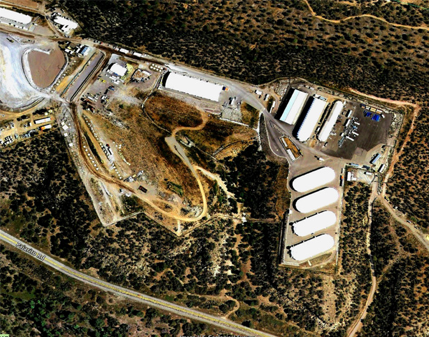
Clean Up Area G: Hundreds of Jobs Could Be Created that Protect the Environment
Summary
New Mexicans should push their politicians to vigorously lobby for comprehensive cleanup at the Los Alamos National Laboratory (LANL). Unlike nuclear weapons programs, cleanup would be a win-win that permanently protects the environment while creating hundreds of high paying jobs. Continue reading
Expanded Plutonium Pit Production at LANL Will Not Result in Significant Positive Effect On Job Creation and the Regional Economy
The National Nuclear Security Administration’s own documents have explicitly stated that expanded pit production would have no significant positive effect on job creation and the regional economy of northern New Mexico. Nuclear Watch argues that expanded plutonium pit production could actually have negative effect if it blocks other economic alternatives such as comprehensive cleanup, which could be the real job producer.Continue reading