
Atomic Histories & Nuclear Testing
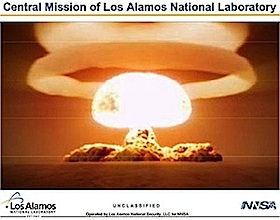
LANL’s Central Mission: Los Alamos Lab officials have recently claimed that LANL has moved away from primarily nuclear weapons to “national security”, but what truly remains as the Labs central mission? Here’s the answer from one of its own documents:
LANL’s “Central Mission”- Presented at: RPI Nuclear Data 2011 Symposium for Criticality Safety and Reactor Applications (PDF) 4/27/11
LANL Prioritizes Plutonium “Pit” Bomb Core Production Over Safety
FOR IMMEDIATE RELEASE, November 6, 2025
Contact: Jay Coghlan, 505.989.7342, c. 505.470.3154 | Email
Contact: Scott Kovac, 505.316.4148 | Email
Santa Fe, NM – The independent Defense Nuclear Facilities Safety Board recently released its Review of the Los Alamos Plutonium Facility Documented Safety Analysis. It concluded that:
“While LANL facility personnel continue to make important upgrades to the Plutonium Facility’s safety systems, many of those projects have encountered delays due to inconsistent funding and other reasons. DOE and LANL should consider prioritizing safety-related infrastructure projects to ensure that the Plutonium Facility safety strategy adequately protects the public, as the facility takes on new and expansive national security missions.” (Page 24)
In early October 2024, the Department of Energy’s semi-autonomous National Nuclear Security Administration (NNSA) announced with great fanfare that the Los Alamos Lab had produced its first “diamond stamped” plutonium pit for the nuclear weapons stockpile. Tens of billions of taxpayers’ dollars have been sunk into LANL’s long delayed and over budget pit production program. Given no further announcements, it is not currently known whether or not the Lab is meeting its congressionally required production goals. Endemic nuclear safety problems have long been an intractable issue, at one point even forcing a three-year halt to plutonium operations at LANL’s Plutonium Facility-4 (“PF-4”).
In its recent Review, the Safety Board reported:
“The [2009] Plutonium Facility safety basis described very large potential [radioactive] dose consequences to the public following seismic events…. DOE committed to upgrade and seismically qualify the ventilation system, with a particular focus on a specific ventilation subsystem…”
“As the only facility in the DOE complex that can process large quantities of plutonium in many forms, [PF-4] represents a unique capability for the nation’s nuclear deterrent. The Board has long advocated for the use of safety-related active confinement systems in nuclear facilities for the purposes of confining radioactive materials…Passive confinement systems are not necessarily capable of containing hazardous materials with confidence because they allow a quantity of unfiltered air contaminated with radioactive material to be released from an operating nuclear facility following certain accident scenarios. Safety related active confinement ventilation systems will continue to function during an accident, thereby ensuring that radioactive material is captured by filters before it can be released into the environment… (Page 2, bolded emphases added)
NukeWatch Compilation of the DOE/NNSA FY 2020 Budget Request – VIEW
Nothing Found
It seems we can’t find what you’re looking for. Perhaps searching can help.
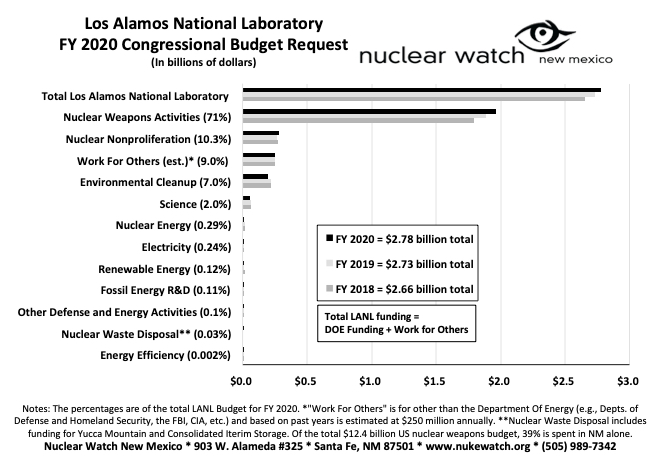
LANL FY 2020 Budget Request – VIEW
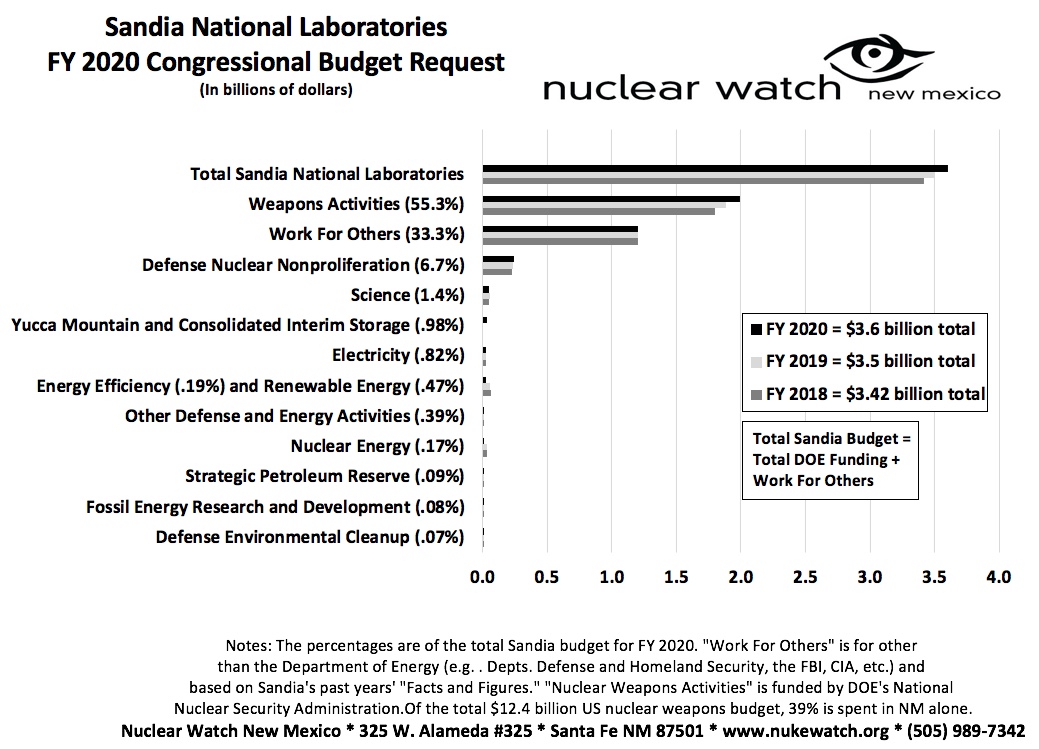
Sandia FY 2020 Budget Request – VIEW
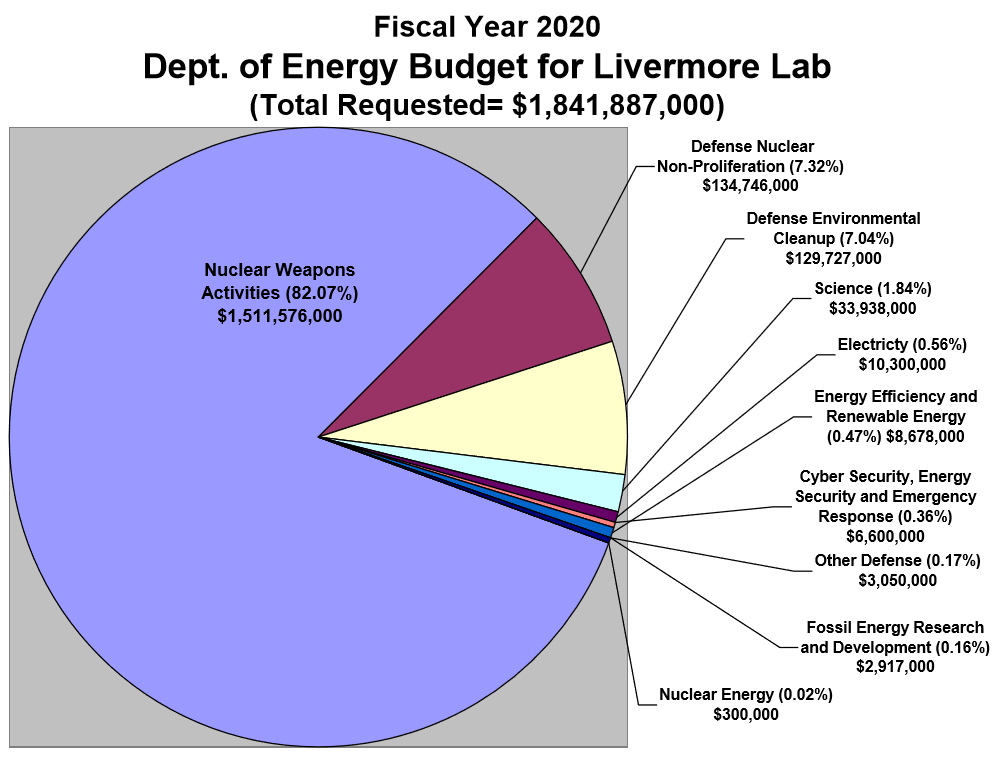
Livermore Lab FY 2020 Budget Chart – Courtesy TriValley CAREs – VIEW
UPF Lawsuit Documents & Resources
| Memo from David Jackson on Seismic Risks at UPF
Memo from Robert Alvarez on Inadequacy of Existing DOE/NNSA UPF & Y-12 Site Analyses
2019 November 12, 2019
|

| 2017
September 2017 September 28, 2017 September 28. 2017 September 28. 2017 |

[embeddoc url="https://nukewatch.org/wp-content/uploads/2020/02/UPF-Fact-sheet-6.17.pdf" download="all" viewer="google"]
Declarations
Nothing Found
It seems we can’t find what you’re looking for. Perhaps searching can help.

