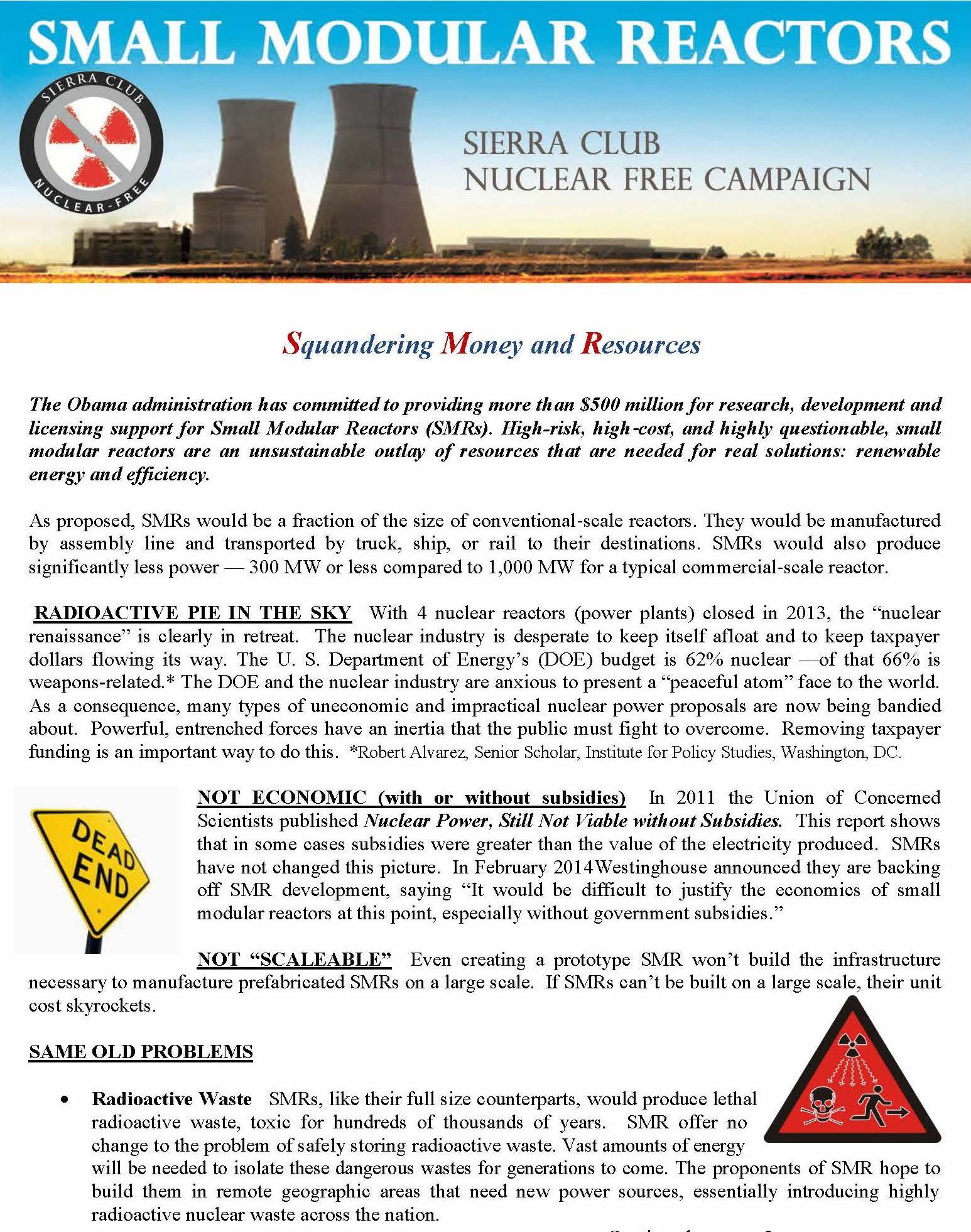
"The most toxic and dangerous type of radioactive waste created by the nuclear industry"
This is waste generated by nuclear power plants called 'high-level radioactive waste' (HLW), also known as 'spent' or 'irradiated' fuel. This waste contains plutonium, uranium, strontium, and cesium; and will be radioactive for millions of years.
It is not like the waste currently stored at the Waste Isolation Pilot Project (WIPP) or any other waste site that exists today in the U.S.: it is far worse.
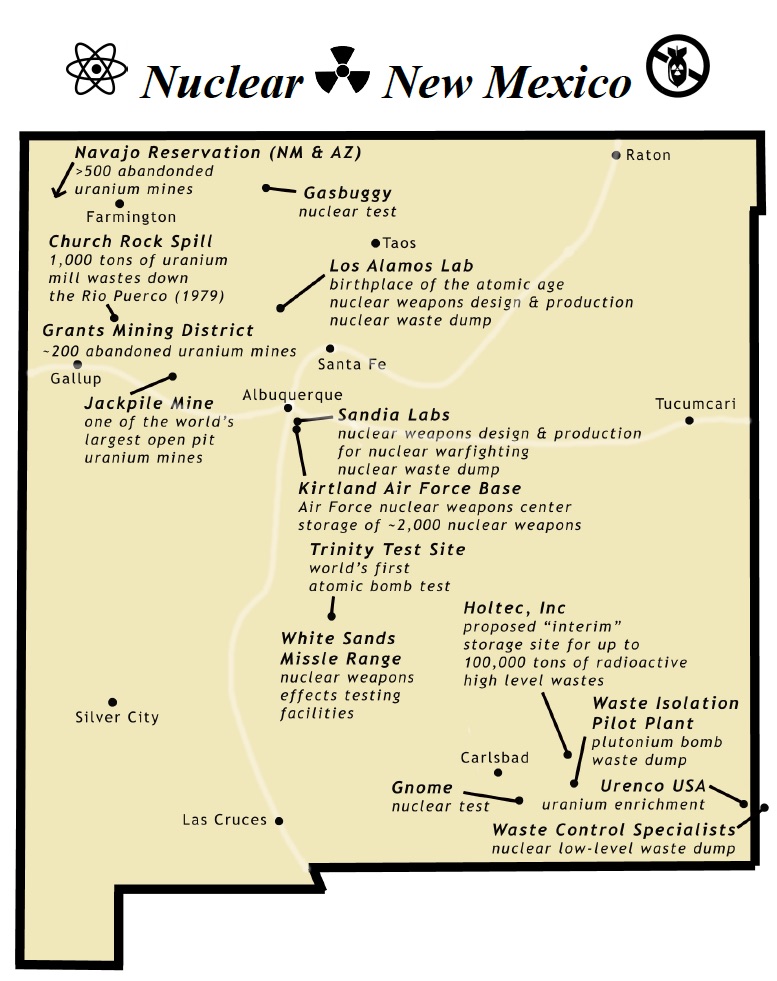
Two companies are proposing to build waste facilities near Carlsbad and Hobbs for the most toxic and dangerous type of radioactive waste created by the nuclear industry.
Holtec International is working with the Eddy-Lea Energy Alliance, LLC (ELEA) to apply for a license to build a Consolidated Interim Storage (CIS) facility approximately halfway between Carlsbad and Hobbs, and 16 miles north of WIPP.
The Nuclear Regulatory Commission (NRC) has declared the Holtec/ELEA application complete, NRC initiated a public comment period with 60 days for public comment. Note that transport of this waste poses risks to the environment and all life located near transportation routes.
Holtec proposal:
New CIS facility to store 100,000 metric tons of HLRW, with the potential to increase to 120,000 metric tons for 120 years
Shallow sub-surface burial system
New Mexicans and Texans are fighting the attempted licensing of these two proposed CIS facilities - Waste Control Specialists near Andrews, Texas and Eddy Lee/Holtec International east of Carlsbad, New Mexico.
These sites and any transport to these sites are not only dangerous but environmentally unjust. These sites present clear examples of environmental racism.
New Mexico's demographic is largely Latino. There are many communities of color, especially in the southern part of the state where the sites are being proposed. People of color would be disproportionately affected if the Eddy Lee/Holtec CIS site were licensed and constructed.
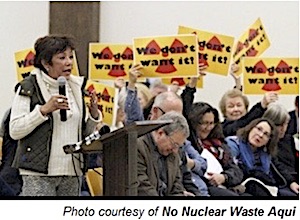
New Mexico and Texas do not consent to either proposed CIS facility and are fighting to avoid the environmental injustice and the unnecessary shipment of irradiated high-level nuclear waste through their communities.
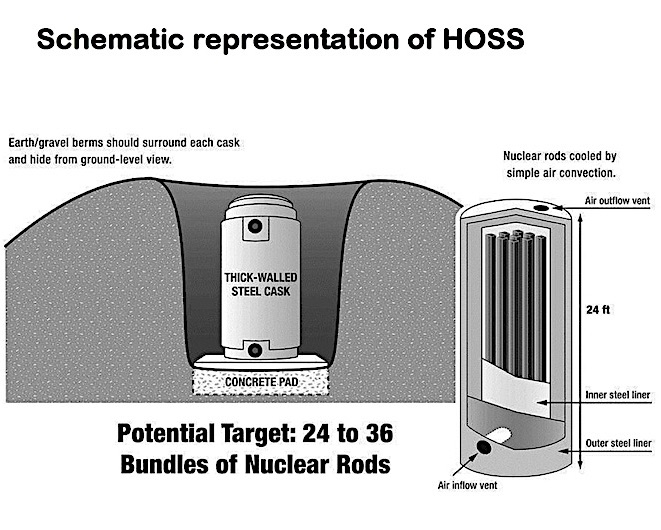
Hardened On-Site Storage (HOSS) is a community-based concept that aims to protect the public from the threats posed by the current vulnerable storage of commercial irradiated fuel.
History
For decades, high level radioactive waste has accumulated at reactor sites and continues to do so as nuclear reactors generate more waste. Without a credible plan to permanently isolate it, storage pools, where irradiated nuclear waste is currently stored until it becomes less hot, have been tightly packed and re-racked to accommodate all the waste.
Unfortunately, the pools and dry casks have no robust containment. If the cooling pumps stopped operating or the water in the pools drained out, temperatures would quickly increase, as happened in Fukushima Japan, and could result in a similar disaster.
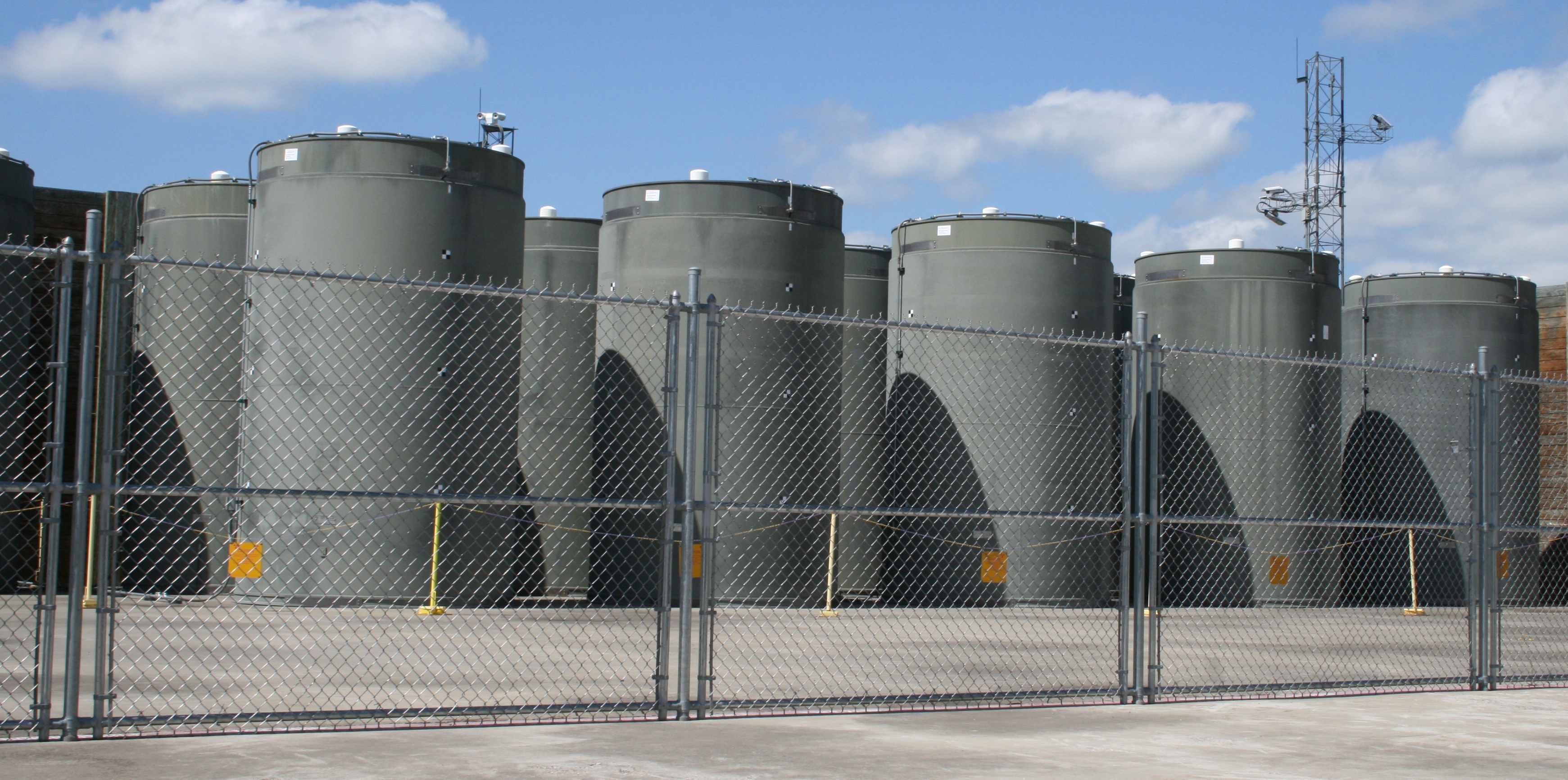
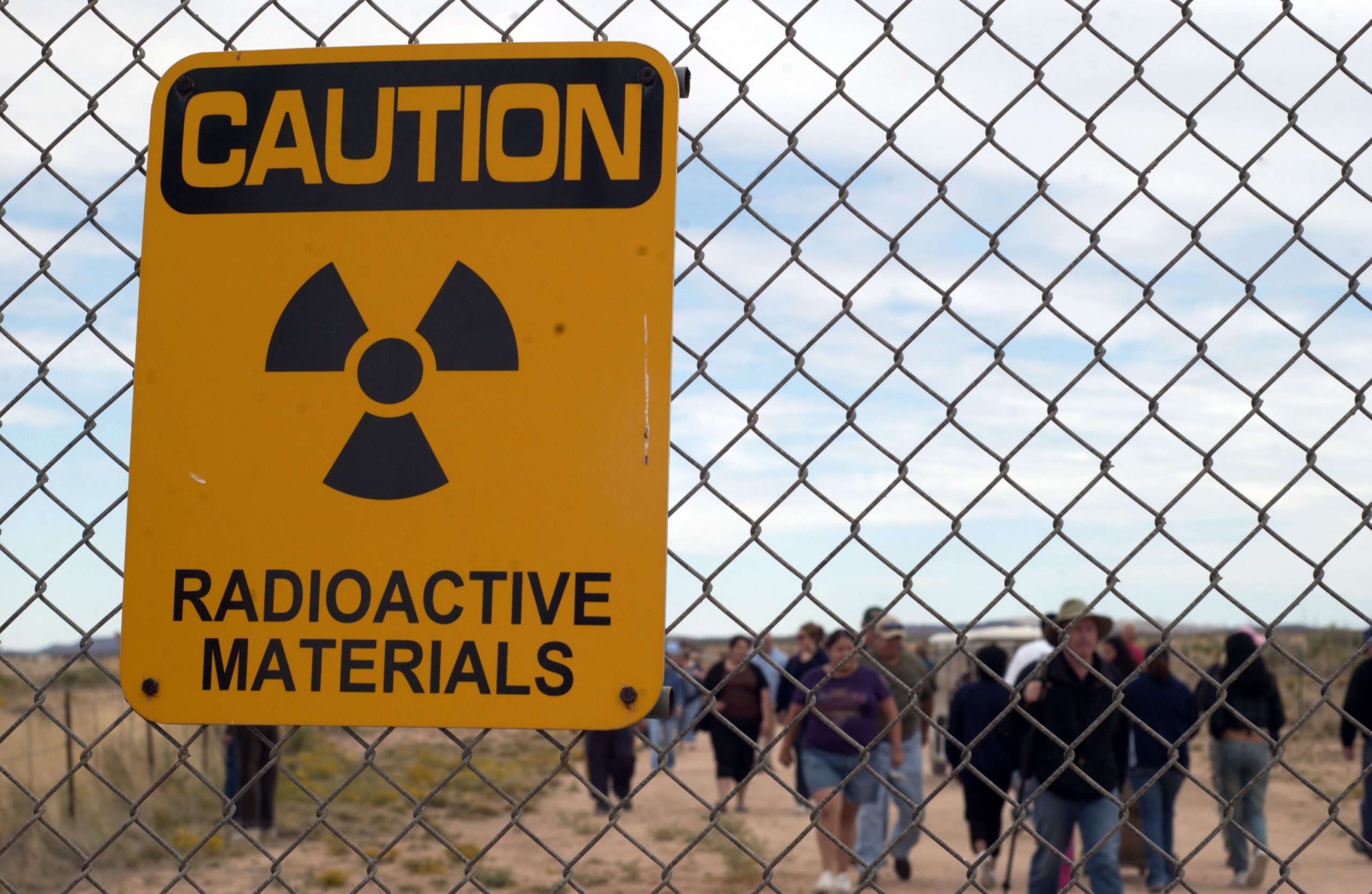
Current dry cask storage at reactor sites (pictured above) is extremely vulnerable. There is often nothing more than a chain-link fence and a short distance that separates the highly radioactive waste containers and public access.
Establishing interim hardened on-site storage (HOSS) is a top priority. Hardened on-site storage allows waste generators to store high level waste as close to the site of generation as possible, thereby exposing fewer people to radiation, as safely as possible.
Rather than storing dozens of vulnerable dry-casks next to each other in the open air, the HOSS Principles established by concerned citizens mandate:
Irradiated fuel must be stored as safely as possible as close to the site of generation as possible;
HOSS facilities must not be regarded as a permanent waste solution, and thus should not be constructed underground and the waste must be retrievable;
The facility must have real-time radiation and heat monitoring for early detection of problems with containers;
The overall objective of HOSS should be that the amount of releases projected in even severe attacks should be low enough that the storage system would be unattractive as a terrorist target;
Placement of individual canisters that makes detection difficult from outside the site boundary.
Hardened On-Site Storage (HOSS) is supported by organizations in all 50 states. The Principles of Securing Nuclear Waste at Nuclear Reactor Sites are posted here. It would provide better security at reactor sites with robust dry storage and community oversight, including real-time monitoring of heat and radiation. HOSS is rooted in values of community protection and environmental justice and will provide increased protection from human or natural disasters, like terrorist attacks and earthquakes
HOSS facilities are not permanent waste solutions, and therefore should not be constructed deep underground as the waste must be retrievable. However, they are a workable solution that will allow us to explore scientifically sound, and socially and environmentally just long-term management systems.
Nuclear Power Has No Place in a Green Energy uture
Because of: Time Delay, Success of Renewables, Huge Costs, Dangers, Weapons Connection, and Wastes
from Yahoo News, 21 Oct 21, ”…….Practical concerns also temper enthusiasm for a nuclear future. The next generation of reactors, heralded as a game changer by supporters, still haven’t been proven in the real world. Even if those technologies are as revolutionary as advertised, skeptics say it could take decades before they make a real difference in the global energy grid — too long if the worst outcomes of climate change are to be avoided.
Renewable energy technologies can be enough on their own
“The drawbacks to nuclear are compounded by the burgeoning success of renewables — both solar and wind are getting cheaper and more efficient, year after year. There is also a growing realisation that a combination of renewables, smart storage, energy efficiency and more flexible grids can now be delivered at scale and at speed — anywhere in the world.” — Jonathon Porritt, Guardian
The world doesn’t have time to wait for next-gen nuclear
“When it comes to averting the imminent effects of climate change, even the cutting edge of nuclear technology will prove to be too little, too late. Put simply, given the economic trends in existing plants and those under construction, nuclear power cannot positively impact climate change in the next ten years or more.” — Allison Macfarlane, Foreign Affairs
A major ramp-up in nuclear technologies isn’t economically feasible
“While nuclear power may have once been cheaper than wind or solar, the economics have since changed dramatically. Nuclear power plants are very expensive to build and the economics of nuclear power are getting steadily worse. By contrast, renewables continue to come down in price.” — Ian Lowe, Conversation
There’s no way to guarantee that nuclear plants will be safe
“People around the world have witnessed the Three Mile Island, Chernobyl and Fukushima accidents. It is more than enough to believe that a safe nuclear power plant is nothing but a myth.” — Jang Daul, Korea Times
More nuclear power could lead to more nuclear weapons
“Some nations — India and Pakistan, and in all probability Israel — became nuclear powers after originally seeking nuclear technology for research or to develop nuclear power. … This is important: The technology used to turn on lights or charge mobile phones shouldn’t need to involve national or international defence apparatus.” — Editorial, Nature
Nuclear waste is still a major problem
“Nuclear waste lasts for hundreds of thousands of years before they are half-decayed. Our United States government — perhaps the longest continuous government in the world — is only 232 years old. Who will be around to manage uranium wastes?” — David Ross, Courier-Journal
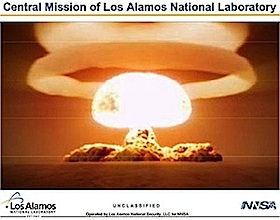
LANL’s Central Mission: Los Alamos Lab officials have recently claimed that LANL has moved away from primarily nuclear weapons to “national security”, but what truly remains as the Labs central mission? Here’s the answer from one of its own documents:
LANL’s “Central Mission”- Presented at: RPI Nuclear Data 2011 Symposium for Criticality Safety and Reactor Applications (PDF) 4/27/11
Contact: Jay Coghlan, Nuclear Watch New Mexico, 505.989.7342, c. 505.470.3154 | Email Sophia Stroud, Nuclear Watch New Mexico, 505.231.9736 | Email
Santa Fe, NM – In response to Freedom of Information Act requests, the Department of Energy’s semi-autonomous National Nuclear Security Administration (NNSA) has released a new study entitled Plutonium Aging: Executive Summary (Unclassified) by long-time scientific advisors to the U.S. government called the JASONs. The key “High-Level Finding” of this new report is:
“The Pu [plutonium] in the stockpile appears to be aging slowly. The degradation issues that have been observed do not call into question present weapons performance.”
Plutonium “pits” are the all-important radioactive cores or “triggers” of nuclear weapons. The NNSA has repeatedly claimed that potential aging effects drive the need for the aggressive expansion of plutonium pit production, which is the agency’s most expensive and complex program ever. The Pentagon has stated that expanded pit production is one of the most critical issues in its $2 trillion “modernization” program to keep nuclear weapons forever.
However, the independent Government Accountability Office (GAO) has repeatedly stated that the NNSA has no credible costs estimates and no “Integrated Master Schedule” for simultaneous production at the Los Alamos National Laboratory (LANL) in northern New Mexico and the Savannah River Site (SRS) in South Carolina. In fact, DOE and NNSA have been on the GAO’s “High Risk List” for project mismanagement and waste of taxpayers’ dollars since 1991. At more than $30 billion, the plutonium pit plant at SRS is on track to become the most expensive building in U.S. history. A comparable amount will be spent at LANL on facility upgrades and related projects, for which the NNSA fails to keep total aggregated costs.
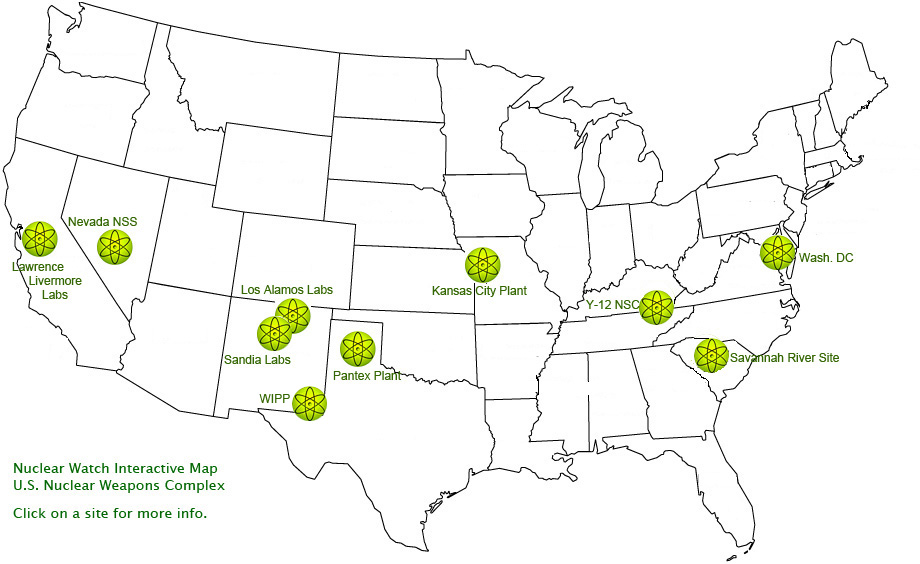
Click the image to view and download this large printable map of DOE sites, commercial reactors, nuclear waste dumps, nuclear transportation routes, surface waters near sites and transport routes, and underlying aquifers. This map was prepared by Deborah Reade for the Alliance for Nuclear Accountability.
Nuclear Watch Interactive Map – U.S. Nuclear Weapons Complex
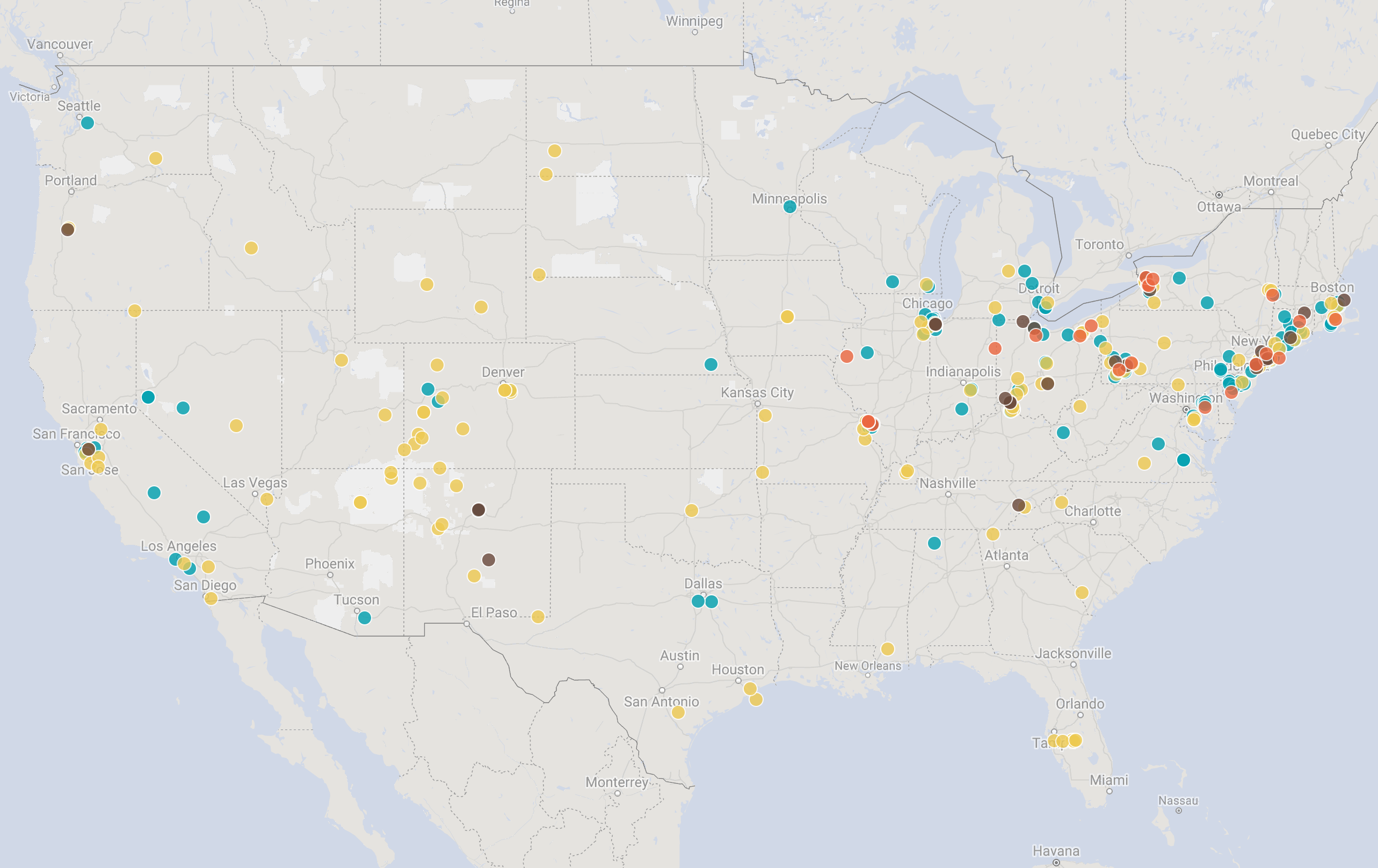
Waste Lands: America’s Forgotten Nuclear Legacy
The Wall St. Journal has compiled a searchable database of contaminated sites across the US. (view)
Related WSJ report: https://www.wsj.com
“Because of how the Energy Department presented the breakthrough in a news conference headlined by Energy Secretary Jennifer Granholm, news coverage has largely glossed over its implications for monitoring the country’s nuclear weapons stockpile. Instead, even many serious news outlets focused on the possibility of carbon-free, fusion-powered electricity generation—even though the NIF achievement has, at best, a distant and tangential connection to power production.”
This week’s headlines have been full of reports about a “major breakthrough” in nuclear fusion technology that, many of those reports misleadingly suggested, augurs a future of abundant clean energy produced by fusion nuclear power plants. To be sure, many of those reports lightly hedged their enthusiasm by noting that (as The Guardian put it) “major hurdles” to a fusion-powered world remain.
Indeed, they do.
The fusion achievement that the US Energy Department announced this week is scientifically significant, but the significance does not relate primarily to electricity generation. Researchers at Lawrence Livermore National Laboratory’s National Ignition Facility, or NIF, focused the facility’s 192 lasers on a target containing a small capsule of deuterium–tritium fuel, compressing it and inducing what is known as ignition.
“In a year when a nuclear-armed state invaded a non-nuclear armed state, a meeting of nearly all countries in the world failed to condemn Russia’s threats to use nuclear weapons in the context of its invasion, and failed to take any steps that would advance nuclear disarmament.”
After four weeks of meetings, the 10th Nuclear Non-Proliferation Treaty Review Conference has failed. Despite the final draft outcome document being significantly weakened throughout the negotiations, Russia refused to accept the final version and the conference ended without an agreement.
The document had many problems. In a year when a nuclear-armed state invaded a non-nuclear armed state, a meeting of nearly all countries in the world failed to condemn Russia’s threats to use nuclear weapons in the context of its invasion, and failed to take any steps that would advance nuclear disarmament. It has failed to address the urgency of the moment.
“None of this waste we’re talking about is in New Mexico…If it actually were a good thing, if it were safe, Holtec or anybody else wouldn’t be thinking about trying to find someplace else.” Don Hancock, nuclear waste program director at the Southwest Research and Information Center
After being rejected by Texas and Utah, the federal government has now picked New Mexico to house the nation’s spent nuclear fuel, but the governor said the state will not be a “dumping ground.”
The U.S. Nuclear Regulatory Commission (NRC) announced last week it intends to issue a license to Holtec International, to locate a toxic waste storage facility in Lea County. Holtec has proposed to transport high-level nuclear waste from the East Coast across the country via rail lines to a facility slated for the state’s southeast corner.
The UK’s nuclear plants could be on the frontlines of any conflict with Russia and would be vulnerable to an attack in any future conflict: “If a nuclear power plant was hit by a missile in the UK, Europe or Ukraine, there could be catastrophic widespread radioactive contamination.” – Dr. Paul Dorfman, Associate Fellow, Science Policy Research Unit (SPRU), Sussex Business School, University of Sussex.
The war in Ukraine has put civilian nuclear plants on the frontline of a military conflict for the first time in history, Dr Paul Dorfman has claimed that the conflict in Ukraine has shown that the UK’s own civilian nuclear infrastructure is at risk of attack, and likely cannot be defended.
Dr Dorfman is Associate Fellow, Science Policy Research Unit (SPRU), Sussex Business School, University of Sussex. He has worked with both the Government as well as European Governments on various areas of nuclear policy.
Following the shelling at Zaporizhzhia nuclear power plant in Ukraine, the largest in Europe, Dr Dorfman said he “didn’t sleep for a few days”.
Dr Dorfman warned that if a nuclear reactor was attacked it could be “catastrophic”. He warned of a “nightmare scenario” which could range from a core meltdown to a widespread release of radioactive material.
“Mutually Assured Destruction” has been the MO of the world’s nuclear powers for decades. If Russia points a giant nuclear warhead toward the U.S., we would gear up to point an even more massive missile their way, and then, in theory, Russia shrugs its shoulders and says, “Eh, not worth it.” They would be completely “deterred” from advancing a nuclear attack based on the reality that doing this would mean the entire country, continent, and, ultimately the entire world, would become obliterated as we know it; the cost and the risk greatly outweigh any benefit. Supposedly. According to this thesis, the existence of nuclear weapons makes the cost of war seem frighteningly high and thus “discourage[s] states from starting any wars that might lead to the use of such weapons” (Kenneth Waltz, “The Spread of Nuclear Weapons: More May Better,”) The idea that nuclear weapons make conventional war safer is widely used as framing for why we need nukes at all, with one specific reason being spread wide and far that nuclear weapons can still be the equalizer against an adversary’s superior conventional forces.
Four executives of the utility or the company that was building the reactors have been indicted or have pleaded guilty to criminal charges in the failure.
COLUMBIA, S.C. (AP) — A South Carolina judge has approved a second round of refunds for customers of a utility that poured billions of dollars into two nuclear power plants that never produced a watt of power.
About $61 million is being set aside for Dominion Energy South Carolina after the utility sold a number of properties as part of the settlement of a class-action lawsuit by 1.1 million of its customers over the never completed plants at the V.C. Summer Nuclear Station near Columbia.
“Some scholars, including Kenneth Waltz, have gone so far as arguing that we should allow nuclear weapons proliferation as a method of promoting peace. However, this deterrence-based approach does not take into account the possibility of accidental and unauthorized nuclear explosions, or of nuclear terrorism, two very real menaces.”
An anti-nuclear weapons protest in front of the White House. Photo taken by Matthew S.
You cannot go around saying to people that there is a 100% chance that they’re gonna die. You know? It’s just nuts. —President Orlean, “Don’t Look Up,” 20:40
This line is from the new Netflix sensation, “Don’t Look Up,” a movie starring Leonardo Dicaprio and Jennifer Lawrence in the role of two astronomers trying to raise awareness about a comet on a collision course with Earth. “Don’t Look Up” has prompted the interest of many because of its not-so-hidden political commentary on the apathy surrounding climate change, however, few seem to realize the relevance of the movie’s message for another, even less recognized issue: nuclear disarmament.
Indeed, the extent to which nuclear weapons still threaten our lives today is little understood. Despite being one of the most socially engaged and politically minded generations across a range of topics, few Gen Zers really consider the nuclear issue with the urgency it demands.
“By taking the lead of the toxic alliance between fossil gas and nuclear (energy) at a European level, Emmanuel Macron clearly sides with the polluters’ camp. Nuclear is not a green energy: it produces radioactive waste that piles up across the country”
PARIS (Reuters) – Demonstrators unfurled a banner declaring “Gas & nuclear are not green” outside France’s foreign ministry on Tuesday in protest at a government drive to label nuclear energy and fossil gas as sectors for climate-friendly investment.
One of the about 20 protesters, wearing a mask of President Emmanuel Macron, chained himself to a gas bottle and a nuclear barrel outside the ministry’s headquarters in Paris. Another held a banner that read “Macron shame on you.”
The European Union is preparing a rulebook on climate friendly investments, which from next year will define which activities can be labelled as green in sectors including transport and buildings.
The EU’s aim is to restrict the green investment label to climate-friendly activities, steer cash into low-carbon projects and stop companies or investors making unsubstantiated environmental claims.
PLYMOUTH (CBS) – The company managing the shutdown of the Pilgrim Nuclear Plant now says it will not release contaminated water into Cape Cod Bay in 2022 as planned.
But in a statement on Monday, they promised to store the water on site through 2022 and search for other options to get rid of it.
“We appreciate and understand the public’s questions and concerns and remain committed to an open, transparent process on the decommissioning of Pilgrim Station focused on the health and safety of the public, the environment, and on-site personnel,” Holtec said in a statement.
The only real sources of clean, renewable energy are wind and solar, not nuclear, a reader writes.
I cannot disagree more with the assertion by Sen. Dick Durbin in a recent Sun-Times op-ed that nuclear power is a necessary and viable way to combat climate change.
Electricity production by nuclear power is not, and can never be made, safe and economical.
When nuclear power plants were first touted in the 1950s as a new and safe method for producing electricity, it was said the electricity would be “too cheap to meter.” This is pure nonsense! If it was so safe, why weren’t any power plants built and put on line until passage of the Price-Anderson Act? The law has been amended a number of times and greatly limits the liability of operators of nuclear power plants.
Anything paid out beyond the limits set in Price-Anderson would take years of lawsuits.
Sen. Durbin wrote “It is past time for Congress to step up and develop a comprehensive, consent-based plan to store nuclear waste.” That’s an understatement. Nuclear waste is stored within a half-mile of Lake Michigan at the now-closed Zion nuclear power plant. Why is it close to the source of our drinking water? Because there is nowhere to ship it! Plans to ship such waste to a depository in Yucca Mountain in the southwest fell through when some improperly stored barrels burst into flames, releasing large amounts of high-level radioactive material.
Who does the senator think will agree to a “consent-based plan” when there is no known method of safely storing these dangerous materials for thousands of years, the time it takes for radioactive decay to make it safe for the environment?
Sen. Durbin argued that “we must ensure the nuclear fleet remains safe and economical,” but nuclear power has never been economical. As far as I know, the last time a permit was approved for a new nuclear plant was during the Obama administration. That plant in Georgia is only about half complete, although it was to be finished by now and the cost is already double the initial estimate.
The current “fleet,” as Sen. Durbin called them, of nuclear power plants were designed and engineered to last about 30 to 40 years. Most of our country’s plants are near that age. Their internal systems are constantly bombarded by radioactive particles, making the metal in the systems more brittle and prone to failure every year. Subsidizing them is a waste of taxpayer money and a dangerous gamble with our lives.
I hope Sen. Durbin changes his mind. The real carbon-free sources of electricity are renewables: wind and solar.
Nuclear Watch Interactive Map – U.S. Nuclear Weapons Complex
Waste Lands: America’s Forgotten Nuclear Legacy
The Wall St. Journal has compiled a searchable database of contaminated sites across the US. (view)
Related WSJ report: https://www.wsj.com
LANL’s Central Mission: Los Alamos Lab officials have recently claimed that LANL has moved away from primarily nuclear weapons to “national security”, but what truly remains as the Labs central mission? Here’s the answer from one of its own documents:
LANL’s “Central Mission”- Presented at: RPI Nuclear Data 2011 Symposium for Criticality Safety and Reactor Applications (PDF) 4/27/11



 After being rejected by Texas and Utah, the federal government has now picked New Mexico to house the nation’s spent nuclear fuel, but the governor said the state will not be a “dumping ground.”