High Detections of Plutonium in Los Alamos’ Acid Canyon
Full Video Recording: NukeWatch and Dr. Michael Ketterer Present Results from Recent Sampling for Plutonium Contamination Around the Los Alamos National Lab |
Dr. Michael Ketterer's Presentation of Results Showing High Detections of Plutonium in Los Alamos Neighborhood |
|---|---|
|
Results from Recent Sampling for Plutonium Contamination Around the Los Alamos National Lab  |
|
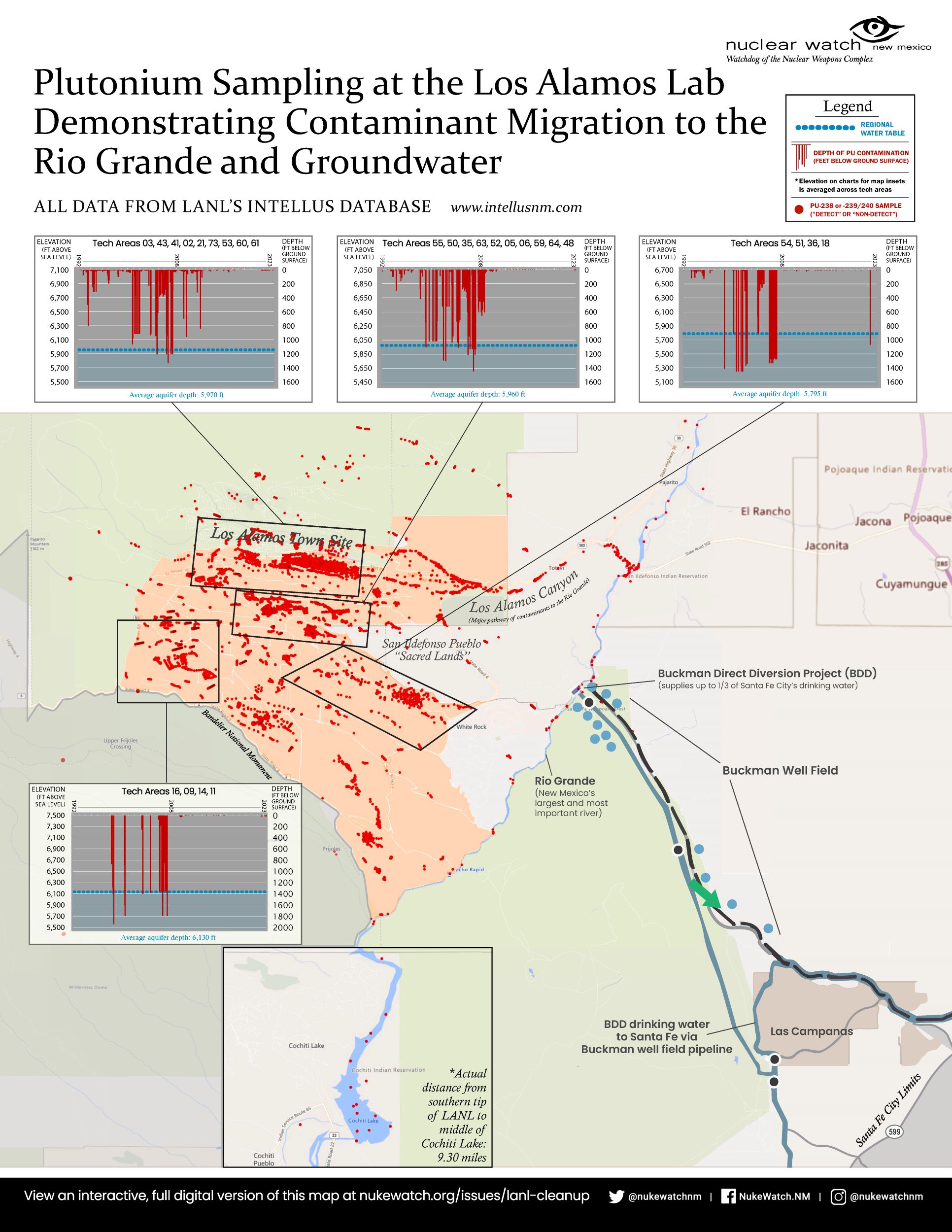
Mapping Plutonium Sampling at Los Alamos National Laboratory
Updates
A nuclear legacy in Los Alamos
After three cleanups, independent analysis shows 80-year-old plutonium persists in Acid Canyon and beyond
By Alicia Inez Guzmán, Searchlight New Mexico | August 15, 2024 searchlightnm.org
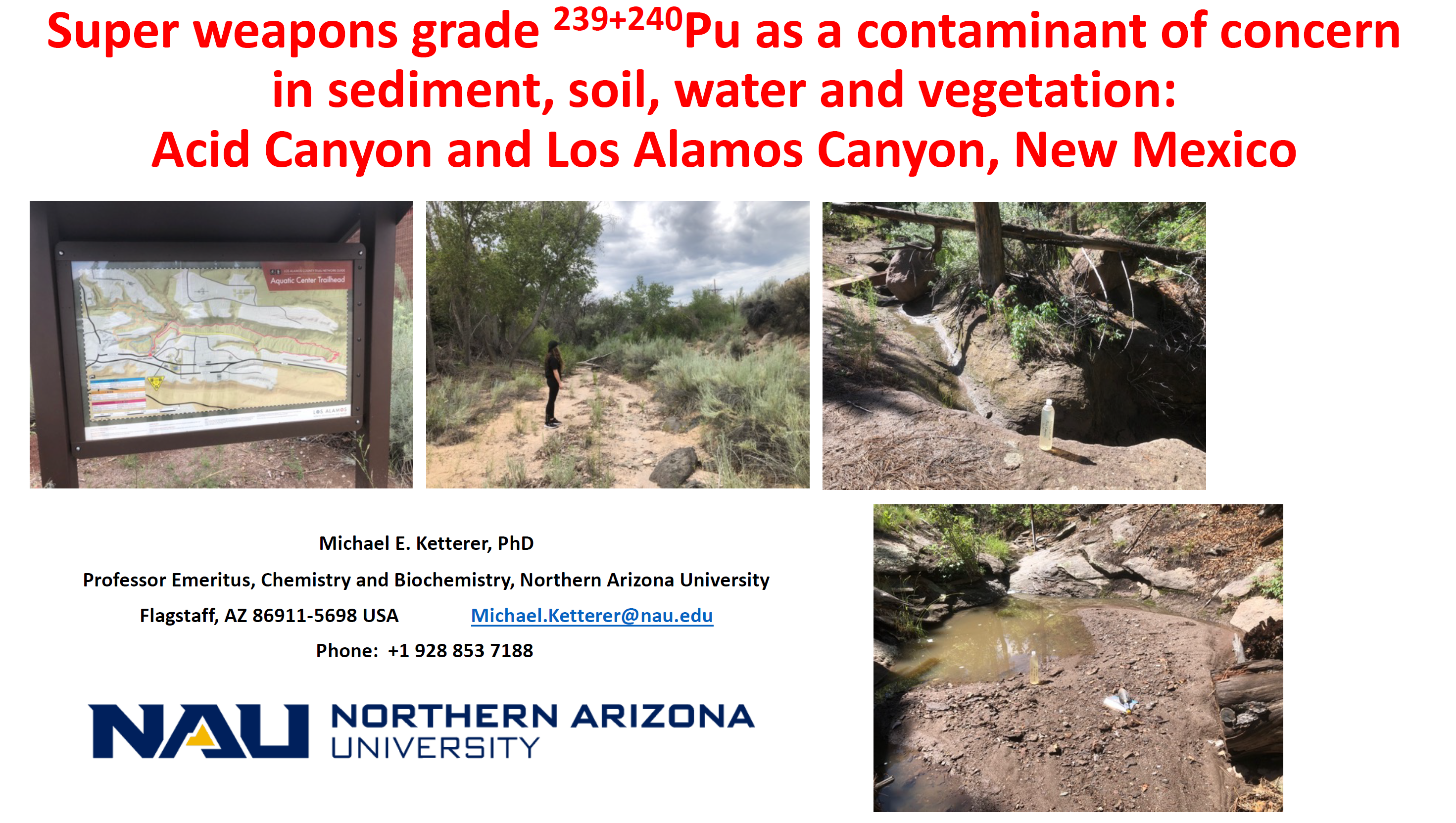
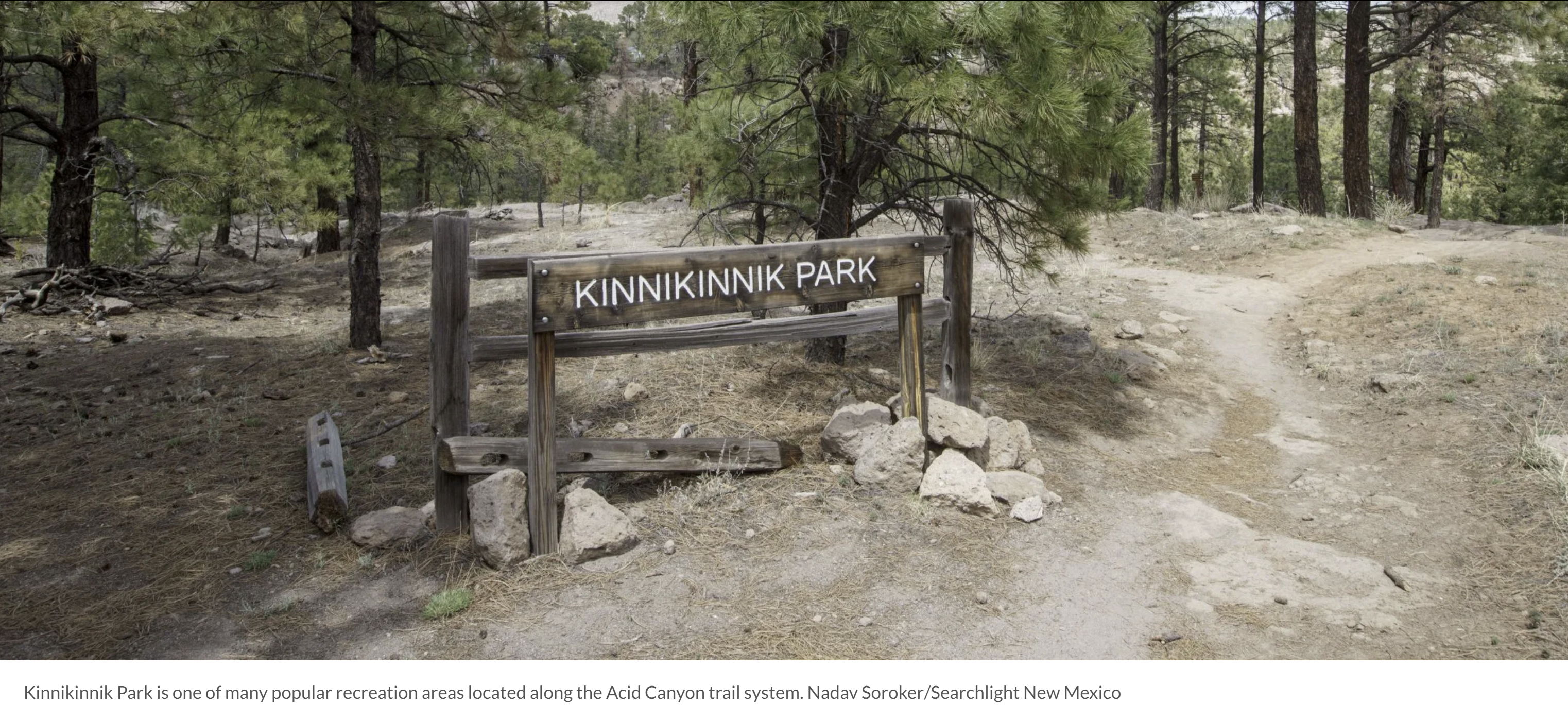
The world’s oldest documented plutonium contamination may not lie not in the Chihuahuan Desert at the Trinity Site, where the first-ever atomic bomb ripped open the skies and melted the sand into green glass. Rather, that distinction more likely goes to Los Alamos’s Acid Canyon, according to an independent study by Michael Ketterer, professor emeritus of chemistry and biochemistry at Northern Arizona University.
Ketterer announced these findings at an online press conference held by Nuclear Watch New Mexico on Aug. 15, after collecting and analyzing soil, water and plant samples in Acid Canyon, a popular hiking area in the middle of town. Beginning in 1943, the year the Manhattan Project came to Los Alamos, workers released radioactive waste into the canyon. Three remediations would follow, but as Ketterer’s analysis found, “a super weapons-grade” plutonium persists in the soil, water and plant life in and around Los Alamos, representing some of the earliest ever made.
One thought came to his mind as he analyzed samples from the area, collected last month:
“I’ve never seen anything like this in any samples anywhere,” he told Searchlight New Mexico in an interview.

Summary: The State of New Mexico should again demonstrate the political will it successfully displayed in 2005 when it compelled the federal Department of Energy to agree to an enforceable Consent Order governing cleanup at the Los Alamos National Laboratory. At the Lab’s request the Martinez Administration eviscerated that Consent Order with more than 150 milestone extensions. Further, in a process riddled with conflicts of interest, it negotiated a revised 2016 Consent Order that subordinated cleanup to the budget that DOE wants. The need to protect New Mexico’s environment and precious water resources should drive the Lab’s cleanup budget, not DOE’s planned budget of expanded nuclear weapons research and production. The incoming Biden Administration could offer new opportunity to renegotiate a Consent Order that is in the Land of Enchantment’s best interests. The present New Mexico State Administration should pursue that opportunity.
Why renegotiate the 2016 Consent Order?
• In June 2016 the New Mexico Environment Department (NMED), the Department of Energy (DOE) and Los Alamos National Security, LLC (then the Lab’s contractor) signed a revised Consent Order governing cleanup at the Los Alamos National Laboratory (LANL). The new Consent Order was an unfortunate step backwards in compelling comprehensive, genuine cleanup at the Lab.
• The State of New Mexico should have kept the original, enforceable 2005 Consent Order that it fought so hard for under the Richardson Administration (including successfully defending itself against DOE lawsuits), modified as needed for cleanup schedules and a final compliance date.
• Under Gov. Martinez, the revised 2016 Consent Order was a giveaway by NMED to DOE and the Lab, surrendering the strong enforceability of the old Consent Order. As documented below, it is clearly the reverse of the 2005 Consent Order, whose underlying goal was to make DOE and LANL get more money from Congress for accelerated cleanup.
• The inevitable outcome is slow cleanup with no plans for comprehensive cleanup. DOE proposed a 46% cut to LANL cleanup funding in FY 2021. In contrast, funding for LANL’s nuclear weapons research and production programs that caused the need for cleanup to begin with has doubled over the last decade. The planned expansion of those programs will result in more contamination and radioactive and hazardous wastes.
• The incoming Biden Administration could possibly offer better opportunity for renegotiating a Consent Order with DOE that is in New Mexico’s best interests.