
In 1985, US President Ronald Reagan and and Russian President Mikhail Gorbachev declared that “a nuclear war cannot be won and must never be fought.”


2022 BLOG POSTS
Watchdogs File Suit for NNSA’s Performance Evaluation Reports

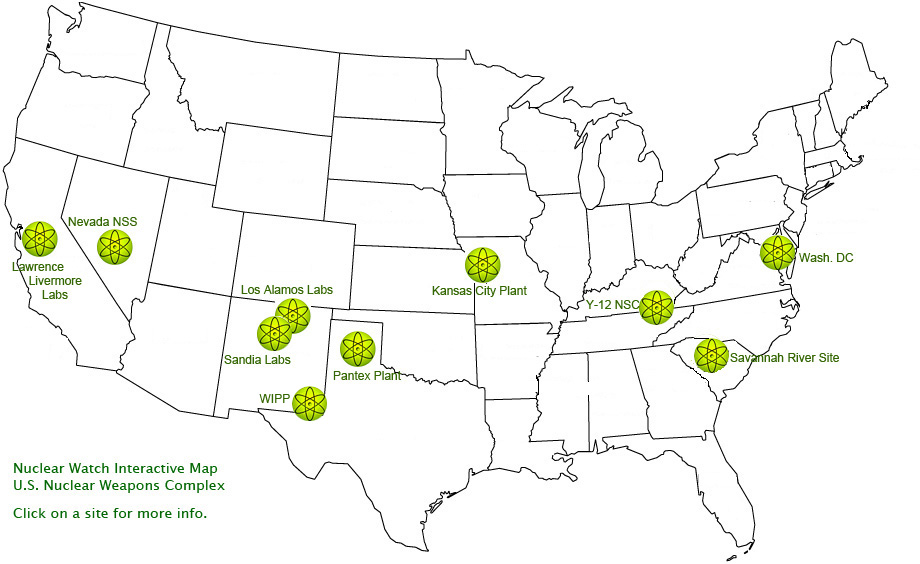
 Santa Fe, NM – Today, Nuclear Watch New Mexico has once again filed a lawsuit to pry loose the National Nuclear Security Administration’s (NNSA’s) full and complete Performance Evaluation Reports that evaluate contractor performance at its eight nuclear weapons sites. Approximately 57,000 people are employed by NNSA’s nuclear weapons production complex, 95% of them contractor personnel. NNSA and its parent Department of Energy have been on the independent Government Accountability Office’s “High Risk List” for project mismanagement and waste of taxpayers’ dollars since 1992.
NNSA’s Performance Evaluation Reports grade contractor performance, award performance fees and contain no classified information. Nevertheless, NNSA seeks to hide how taxpayers’ money is spent from the public, issuing only terse three page summaries instead of the full and complete Reports. Nuclear Watch sued in 2012 to obtain the full and complete Performance Evaluation Reports, after which NNSA started releasing them within three working days. But NNSA has again been releasing only summaries since 2019, despite a Freedom of Information Act request by Nuclear Watch that the agency never responded to.
To illustrate the importance of these Performance Evaluation Reports, in its FY 2021 Los Alamos Lab summary NNSA noted that the contractor “[s]ucessfully made advances in pit production processes…” Plutonium “pits” are the fissile cores of nuclear weapons whose expanded production the Pentagon has identified as the number one issue in the United States’ $2 trillion nuclear weapons “modernization” program. NNSA has directed the Los Alamos National Laboratory (LANL) to begin producing at least 30 pits per year by 2026 and the Savannah River Site (SRS) in South Carolina to begin producing at least 50 pits per year by 2030.

A Guide to “Scoping” the New LANL SWEIS
“Scoping” means determining the issues that should be included in public analyses required by the National Environmental Policy Act (NEPA) of proposed major actions by the federal government. According to the Department of Energy ‘s own NEPA implementation regulations, DOE must prepare a new or supplemental site-wide environmental impact statement (SWEIS) for its major sites when there are “significant new circumstances or information relevant to environmental concerns.” The last site-wide EIS for the Los Alamos National Laboratory (LANL) was completed in 2008 and is badly outdated. Moreover, since 2018 the National Nuclear Security Administration (NNSA), DOE’s semi-autonomous nuclear weapons agency, has been aggressively expanding the production of plutonium “pit” bomb cores for nuclear weapons at the Lab.
On August 19, 2022, NNSA finally announced its intent to prepare a new LANL SWEIS, but apparently the agency will not address expanded plutonium pit production.1 NNSA’s dubious argument is that it performed the legally required NEPA analysis for expanded plutonium pit production in a 2008 Complex Transformation Programmatic Environmental Impact Statement, the 2008 LANL SWEIS and a woefully inadequate “Supplement Analysis” in 2020 that concluded a new SWEIS was not needed. 2 3
Issues That Must Be Addressed in a New LANL SWEIS
This is meant to be a guide to (or list of) the issues that must be addressed in a new draft LANL SWEIS. It is not completely exhaustive, nor is it a comprehensive fact sheet on the substance of the issues. Nuclear Watch New Mexico will offer suggested scoping comments for interested citizens and submit its own comprehensive formal comments before the October 3 deadline or extended deadline (see “Timing” below).

New & Updated
If you’re already afraid, just wait until you hear about Manhattan Project 2.0
“Executive Order 14302, “Reinvigorating the Nuclear Industrial Base”, further endangers the safety of nuclear workers and the wider public by providing the nuclear industry with Cold War-era plutonium-239 harvested from dismantled nuclear warheads. Because the U.S. doesn’t currently have enough uranium for Manhattan Project 2.0, Oklo, Standard Nuclear, Exodys Energy, SHINE Technologies and Flibe Energy plan to convert plutonium into SMR fuel.
Plutonium is highly toxic if inhaled and requires special ventilation to handle. Other countries that have attempted to use plutonium have found converting it not worth the expense. It’s also highly sought after for bomb-making and requires heightened security measures. With a half-life of more than 24,000 years, managing plutonium is not a short-term commitment.”
By: Kristen Thomason Baptist News | August 10, 2026 baptistnews.com
Summers spent at my grandparents’ house in Tennessee were hot and humid. With enough cousins piled into the porch swing, you could stir up a bit of a breeze. But when that was no longer effective, we would retreat to the air-conditioned splendor of the American Museum of Science and Energy in Oak Ridge and stroll through exhibits like “Wildcatting for Oil” and “Atoms for Autos.”
Among these varied installations, however, pride of place was given to documenting Oak Ridge’s role as the secret headquarters for the Manhattan Project and source of the Hiroshima bomb’s enriched uranium. Most of the 30,000 covert workers on that project only discovered the truth of what they had been helping to build on Aug. 6, 1945, when they awoke to the headline “Oak Ridge Attacks Japan.”
Eighty years later, on May 23, 2025, President Donald Trump signed a series of executive orders to further the Department of Energy’s “Manhattan Project 2.0.” And just like the original, the second iteration of the Manhattan Project has plenty of secrets of its own.
The executive orders came at the behest of tech giants like Amazon, Meta, Google and Microsoft, who want cheap, abundant nuclear power to run their AI data centers. And according to the United Nations, these data centers will have doubled their voracious consumption of electricity and water by 2030.

NNSA Releases New Plutonium Life Study – Key Finding: Plutonium Aging Not Affecting Existing Nuclear Weapons
FOR IMMEDIATE RELEASE, August 10, 2026
Contact: Jay Coghlan, Nuclear Watch New Mexico, 505.989.7342, c. 505.470.3154 | Email
Sophia Stroud, Nuclear Watch New Mexico, 505.231.9736 | Email
Santa Fe, NM – In response to Freedom of Information Act requests, the Department of Energy’s semi-autonomous National Nuclear Security Administration (NNSA) has released a new study entitled Plutonium Aging: Executive Summary (Unclassified) by long-time scientific advisors to the U.S. government called the JASONs. The key “High-Level Finding” of this new report is:
“The Pu [plutonium] in the stockpile appears to be aging slowly. The degradation issues that have been observed do not call into question present weapons performance.”
Plutonium “pits” are the all-important radioactive cores or “triggers” of nuclear weapons. The NNSA has repeatedly claimed that potential aging effects drive the need for the aggressive expansion of plutonium pit production, which is the agency’s most expensive and complex program ever. The Pentagon has stated that expanded pit production is one of the most critical issues in its $2 trillion “modernization” program to keep nuclear weapons forever.
However, the independent Government Accountability Office (GAO) has repeatedly stated that the NNSA has no credible costs estimates and no “Integrated Master Schedule” for simultaneous production at the Los Alamos National Laboratory (LANL) in northern New Mexico and the Savannah River Site (SRS) in South Carolina. In fact, DOE and NNSA have been on the GAO’s “High Risk List” for project mismanagement and waste of taxpayers’ dollars since 1991. At more than $30 billion, the plutonium pit plant at SRS is on track to become the most expensive building in U.S. history. A comparable amount will be spent at LANL on facility upgrades and related projects, for which the NNSA fails to keep total aggregated costs.
Today, August 6, 2026, is the 81st Anniversary of the U.S. Atomic Bombing of Hiroshima.
Recommended Reading: John Hersey and the horrors of Hiroshima
The American journalist’s account of the Hiroshima bombing and its aftermath, told through the eyes of Japanese survivors, forced the world to reckon with the terrifying power of nuclear weapons.
Iain MacGregor August 5, 2026 engelsbergideas.com
The New START treaty – enforced since 2011 and the last remaining arms‑control agreement between the United States and Russia – expired in February 2026 with nothing to replace it. The final legal barrier limiting the world’s two largest nuclear arsenals was removed, ushering in what analysts describe as a period of Great Power uncertainty. China, meanwhile, is rapidly expanding and modernising its nuclear forces, with its stockpile more than doubling in just five years and further growth expected throughout the decade.
In the Middle East, the erosion of nuclear restraint has accelerated sharply. Recent US-Israeli attacks have pushed Iran closer than ever to abandoning the Nuclear Non‑Proliferation Treaty (NPT): Tehran still possesses enough enriched uranium to place it within short technical reach of multiple nuclear warheads, while senior political and security figures openly debate withdrawal from the NPT as a defensive necessity rather than a diplomatic taboo. The precedent – of a major regional power crossing the nuclear threshold outside any arms‑control framework – would reverberate far beyond the region.
North Korea, emboldened by global fragmentation, insists that its arsenal is ‘irreversible’. Across Europe and Asia, public opinion in countries such as Poland, Turkey and South Korea is shifting toward domestic nuclear capability as confidence in US security guarantees becomes frayed. The precarious equilibrium of the non‑proliferation era is cracking just when the living memory of the bomb’s human cost has never been more vital.
In such a landscape, the work of remembering what nuclear weapons do – not in theory, but to human bodies and cities – becomes urgent again. Eighty years ago, one American writer succeeded in forcing the world to confront this reality. His name was John Hersey, and the story he told in August 1946 in the New Yorker magazine, about the world’s first nuclear strike against the Japanese port city of Hiroshima the previous year, remains one of the clearest moral documents of the atomic age…
Ian MacGregor outlines precisely above the current state and reality of the new nuclear arms race we are now in, more dangerous than the first.
“Rationality will not save us… this is very important: at the end we lucked out. It was luck that prevented nuclear war.” Robert McNamara
Nuclear Watchdog Sues for Plutonium Pit Production “Special Study”
FOR IMMEDIATE RELEASE, August 4, 2026
Contact: Jules Zacher, Esq., 215.888.5183, | Email
Jay Coghlan, Nuclear Watch New Mexico, 505.989.7342, c. 505.470.3154 | Email
Sophia Stroud, Nuclear Watch New Mexico, 505.231.9736 | Email
Santa Fe, NM – Nuclear Watch New Mexico has sued the Department of Energy under the Freedom of Information Act for its Special Study of the National Nuclear Security Administration’s Leadership and Management of the Plutonium Pit Production Mission. The National Nuclear Security Administration (NNSA) is the semi-autonomous nuclear weapons agency within DOE.
Plutonium “pits” are the radioactive cores or “triggers” of nuclear weapons. Their expanded manufacturing has been the chokepoint of resumed industrial-scale nuclear weapons production by the U.S. Crucially, no future pit production is to maintain the safety and reliability of the existing stockpile. Instead, it is all for new-design nuclear weapons for the new arms race. These new weapons can’t be tested because of the existing global testing moratorium, thereby perhaps degrading confidence in the stockpile. Or new-design nuclear weapons testing could prompt the U.S. to resume testing, which would have severe international proliferation consequences.
Plutonium pit production is the NNSA’s most expensive and complex program to date. However, the independent Government Accountability Office (GAO) has repeatedly stated that the agency has no credible costs estimates and no “Integrated Master Schedule” for simultaneous production at the Los Alamos National Laboratory (LANL) in northern New Mexico and the Savannah River Site (SRS) in South Carolina. In fact, DOE and NNSA have been on the GAO’s “High Risk List” for project mismanagement and waste of taxpayers’ dollars since 1991. At more than $30 billion, the plutonium pit plant at SRS is on track to become the most expensive building in U.S. history. A comparable amount will be spent at LANL on facility upgrades and related projects, for which the NNSA fails to keep total aggregated costs.
Nuclear Watch New Mexico sues Department of Energy for plutonium pit report
Jay Coghlan, director of Nuclear Watch New Mexico, wrote in a statement there is a “massive coverup” related to plutonium pit production.
“To grease expanded nuclear weapons production, they have rescinded nuclear safety regulations, illegally restricted the access of the independent Defense Nuclear Facilities Safety Board, and are withholding crucial documents from the American taxpayer,” Coghlan wrote.
“We hope this lawsuit will help to bring [the National Nuclear Security Administration] plutonium house of cards tumbling down,” he added.
Santa Fe New Mexican | August 5, 2026 santafenewmexican.com
A nuclear watchdog group that focuses on Los Alamos National Laboratory recently sued the federal government for what it says are failures to comply with open records law and hand over a study.
Nuclear Watch New Mexico filed suit in U.S. District Court in Washington, D.C., on July 23 against the U.S. Department of Energy and the National Nuclear Security Administration. The group on Dec. 22 filed a records request under the Freedom of Information Act seeking a copy of a study related to plutonium pit production, the complaint states, but hasn’t received any of the records.
A spokesperson for the Department of Energy, which also houses the National Nuclear Security Administration, didn’t immediately respond to a request for comment Tuesday.
LANL is for now the only facility in the nation capable of producing plutonium pits, which serve as the trigger devices for nuclear weapons…
Nuclear Weapons Issues & The Accelerating Arms Race: July 2026
Nuclear Weapons:
Budget: The House of Representatives passed a fiscal 2027 continuing resolution to keep the government running through Dec. 4 (the new fiscal year begins Oct 1). The White House Office of Management and Budget is requesting a series of anomalies, or exceptions, to the CR rule that funding be limited to the levels of the prior fiscal year. One anomaly is for the new Trump-class battleship.
For the National Nuclear Security Administration (NNSA): it’s the Electrical Power Capacity Upgrade (the new powerline across the Caja del Rio); enhanced subcritical tests at the Nevada National Security Site; and, most dangerous of all, allowing the NNSA to reprogram funding by itself within its Total Weapons Activities budget category.
The Senate is basically doing the same, plus an anomaly for ‘‘21– D–401 Hoisting Capability Project’’ at the Waste Isolation Pilot Plant. WIPP has been operationally shut down for a few months now due to a burnt-out hoist motor.
The House and Senate must resolve their relatively minor differences and get Trump’s signature before October 1 to prevent a government shutdown.
Regular authorization (the annual Defense Authorization Act) and appropriations are unlikely to move until mid-term elections (~86 days to go).
Plutonium pit production:
- exchangemonitor.com/williams-nnsa-accelerating-plutonium-pit-production-toward-2028-goal/ August 06, 2026 Williams: NNSA accelerating plutonium pit production toward 2028 goal – OMAHA, Neb. – Brandon Williams, administrator of the National Nuclear Security Administration (NNSA), said here Thursday Los Alamos National Laboratory in New Mexico is accelerating plutonium pit production, with the site targeting 100 pits by December 2028.
- We filed suit under the Freedom of Information Act (FOIA) for DOE’s “Special Study.” See https://nukewatch.org/wp-content/uploads/2026/08/Nuclear-Weapons-Watchdog-Sues-for-Pit-Production-Special-Study.pdf
- The South Carolina Environmental Law Project sent a letter to DOE/NNSA demanding 3 crucial documents: the “Special Study,” the unclassified summary of the new JASON pit life study, and LANL’s new Probabilistic Seismic Hazard Analysis. See our press release at https://nukewatch.org/wp-content/uploads/2026/07/Plaintiffs-Demand-Release-of-Critical-Documents-and-Extension-of-Public-Comment-Period-on-Expanded-Plutonium-Bomb-Core-Production.pdf
- The Pit Production PEIS comment period ended July 16 (81st anniversary of the Trinity Test). We submitted 64-page comments plus exhibits, see nukewatch.org/wp-content/uploads/2026/07/Formal-Comments-on-the-Pit-Production-Programmatic-Environmental-Impact-Statement.pdf NNSA ignored our demand for a comment period time extension because of the withheld documents.
- We received an unredacted version of the new JASON pit life study (see https://nukewatch.org/wp-content/uploads/2026/08/2026-JASON-Plutonium-Aging-Executive-Summary.pdf). “High Level Finding:… “The Pu in the stockpile appears to be aging slowly. The degradation issues that have been observed do not call into question present weapons performance.” We had received one title page and 2 completely blank narrative pages the day before the PEIS comment period expired.
Other/Related
https://subscriber.politicopro.com/article/2026/08/why-hill-republicans-are-competing-for-nuclear-waste-01015140 Why some Republicans want to bring nuclear waste home – For decades, politicians have treated nuclear waste as politically radioactive. Now, Republicans are competing to bring it home. The Department of Energy announced last week that it had signed memorandums of agreement with Utah, Tennessee, Oklahoma, Louisiana and Idaho to explore creating facilities to support the full nuclear fuel cycle — from enrichment of uranium and fabricating fuel to disposing of waste. Rather than resisting an initiative that could bring more nuclear waste to their states, some Republicans are actively courting the Nuclear Lifecycle Innovation Campuses, arguing they could anchor advanced nuclear industries and bring billions of dollars in investment.
*Also mixed in with AI and data centers, for which Small Modular Reactors might supply power.
Accelerating Arms Race:
- nbcnews.com/politics/national-security/pentagon-drafting-new-us-nuclear-strategy-case-regional-war-china-russ-rcna587370 Pentagon drafting a new U.S. nuclear strategy in case of regional war with China or Russia, sources say – The Defense Department’s policy chief is drafting a new U.S. nuclear strategy that emphasizes the possible use of shorter-range tactical weapons in case of a regional war with China or Russia, according to five people familiar with the plans. The new strategy, which is classified, challenges the approach to nuclear weapons that has been settled policy for decades… Colby has long pushed for an emphasis on tactical weapons, arguing that America’s adversaries would simply not believe the U.S. would seriously contemplate launching long-range weapons aimed at wiping out an enemy’s nuclear forces — as is the emphasis of the
- united24media.com/world/nato-weighs-nuclear-expansion-as-poland-finland-lithuania-emerge-as-options-21249NATO Weighs Nuclear Expansion as Poland, Finland, Lithuania Emerge as Options – NATO is currently examining options to position additional American nuclear capabilities across Europe as a response to threats posed by Russia. Poland, Finland, and Lithuania are under consideration as potential host countries, according to Süddeutschen Zeitung on July 31. The discussions include Poland aiming to join the Nuclear Sharing program, Finland lifting its long-standing prohibition on nuclear weapons transit and import, and the Lithuanian parliament reviewing legislation to remove its constitutional ban on nuclear deployments.
- https://carnegieendowment.org/emissary/2026/07/saudi-us-nuclear-deal-abraham-accords-123-agreement – What We Know About the U.S.-Saudi Nuclear Deal – Peaceful nuclear cooperation agreements, known colloquially as 123 agreements (after the relevant section in the U.S. Atomic Energy Act), rarely make headlines, but this one stands out. Although the administration has not yet released the full text, the agreement reportedly will not require Riyadh to categorically forgo fuel cycle activities that would be conducive to a nuclear weapons program (namely enrichment and reprocessing) or to accept the highest standard of International Atomic Energy Agency (IAEA) safeguards, known as the Additional Protocol, or AP.
Fire in glovebox at LANL plutonium facility sparks safety discussion
“The Board is concerned that this significant level of access denial and limitation is occurring simultaneously with a considerable increase in production at defense nuclear facilities and regulatory change,” said the report.
Nuclear Newswire | July 30, 2026 ans.org
According to a Defense Nuclear Facilities Safety Board (DNFSB) report, a fire occurred in a glovebox in the plutonium facility at Los Alamos National Laboratory on June 15. A test involving nonnuclear material was underway in the furnace inside the glovebox at the time of the incident.
An explanation for the cause of the fire has yet to be released. The incident has incited discussions among laboratory personnel and management regarding fire safety practices at the facility, including concerns raised by resident inspectors that most gloveboxes in the facility lack automatic fire suppression and that multiple similar preventable incidents have occurred at the facility in the past few years.
What we know: The DNFSB report said that on June 15, personnel were conducting a thermal treatment test of an americium recovery resin. The resin, which contained no nuclear material, had been placed in a furnace inside a glovebox. Having received a permit to do so, they left the room unattended, and when they returned they “smelled an unexpected odor and then saw smoke and subsequently flames coming from the furnace.”
NM Environment Secretary James C. Kenney Takes Aim At Department Of Energy LANL Legacy Waste Cleanup Program During Trinity Commemoration Event In Santa Fe
‘This is not about feelings. When are we talking about feelings; this is about money. If you show me the numbers for legacy waste cleanup at Los Alamos moved to the Waste Isolation Pilot Plant. You show me numbers that you’re investing in New Mexico and I’ll show you some feelings, but until that time, you have the feelings that I have, which are that I’m really annoyed and I’m really bothered. I’m going to say to say it again. This isn’t about feelings – in some ways it is a lot about feelings in this room – but when it comes to legacy waste cleanup it’s not about feelings – it’s about moving the waste from Los Alamos and getting it into WIPP,” Kenney said.
New Mexico Environment Department Sec. James [Kenney] was the guest speaker at Sunday’s annual Trinity Test Commemoration at St. Michael’s High School in Santa Fe, and was expected to outline the department’s efforts to hold the federal government accountable for cleanup efforts and the protection of New Mexico’s water resources.
Other speakers were Dr. Michael Ketterer, Professor Emeritus at Northern Arizona University; Jay Coghlan, Executive Director of Nuclear Watch New Mexico; and Tina Cordova, Co-founder of the Tularosa Basin Downwinders Consortium. The event is organized by the Archdiocese of Santa Fe, Back from the Brink New Mexico Hub, Interfaith Power and Light New Mexico, Nuclear Watch New Mexico, Soka Gakkai International-USA, and the Tularosa Basin Downwinders Consortium.
Later in the afternoon when it was Secretary Kenney’s turn to speak, he recognized that 81 years ago with the Trinity Test, New Mexico and the world changed in “a moment of non-consent, a moment that nobody knew was coming”. He said it changed the trajectory of communities like Los Alamos and all over the state of New Mexico, who are dealing with the fallout of what transpired.
While pointing NMED staff members in the audience who had chosen to attend the event, Kenney said he wanted to be really clear that the Environment Department staff fully recognizes that their past is their call to action. He called those employees the community’s last bastion to hold the Department of Energy and the National Nuclear Security Administration accountable.
Expanded federal law says these states and parts of others were downwind, but many don’t know they could be compensated
Nuclear fallout gave her cancer. Now she’s a dogged voice for America’s downwinders
When she was 29, Mary Dickson got thyroid cancer and chalked it up to bad luck or bad genes.
Her life had been pretty idyllic, despite being raised against the frightening backdrop of the Cold War.
She spent hours of her childhood running around in the gullies by her home near the mouth of Parleys Canyon in Salt Lake City. The neighborhood was packed with kids who pretended those rising and falling hills were rollercoasters, racing up and down, laughing and screaming. With seven kids in her house, she always had playmates.
Dickson and her friends also pretended at school. Children were taught to huddle under their wooden desks and cover their heads with their hands, pretending Russians were dropping bombs. Each child brought a bleach bottle filled with water, name scrawled in indelible marker so they’d have something to drink should bombs actually fall. Sometimes, they cowered in a “fallout shelter” — a crawlspace under the grade school— waiting for an audible all-clear.
But as most children get to do, Dickson grew up. She went to college, launched a career in journalism, married. Then came the cancer, with its then-brutal treatment: removal of her thyroid and surrounding lymph nodes, followed by radioactive iodine-infused medicinal drinks that made her ovaries light up during monitoring. Hospital staff put a “Caution, radioactive material!” sign on her hospital room door. Even those delivering meals would reach in just far enough to put food on a nearby tray.
KEY POINTS:
- Mary Dickson got thyroid cancer at 29 and only years later discovered it was caused by radioactive fallout from U.S. nuclear weapons tests.
- The government acknowledges downwinders throughout Utah, Idaho and New Mexico, as well as parts of Arizona, Nevada and Missouri.
- But advocates for downwinders cite gaps — cancers and locations — and many people do not know they could be compensated.
Plaintiffs Demand Release of Critical Documents and Extension of Public Comment Period on Expanded Plutonium Bomb Core Production
FOR IMMEDIATE RELEASE, July 6, 2026
Contact: Jay Coghlan, Nuclear Watch New Mexico, 505.989.7342, c. 505.470.3154 | Email
Scott Yundt, Tri-Valley CAREs, 925.443.7148 | Email
Georgetown, SC — Today the South Carolina Environmental Law Project (SCELP) notified the Department of Energy’s semi-autonomous nuclear weapons agency, the National Nuclear Security Administration (NNSA), that it must publicly release three critical documents. At issue is the fact that NNSA is withholding important information from American taxpayers during a public comment period for a Pit Production Programmatic Environmental Impact Statement (PEIS).[1] The public comment period ends this July 16 (ironically the 81st anniversary of the Trinity Test of the first plutonium pit).
Plutonium “pits” are the radioactive fissile cores or “triggers” of nuclear weapons. None of NNSA’s future pit production is to maintain the safety and reliability of the existing nuclear weapons stockpile. Instead, it is all for new-design nuclear weapons that could prompt the U.S. to return to testing and accelerate the new arms race.
SCELP, representing the nonprofit organizations Savannah River Site Watch, Tri-Valley CAREs and Nuclear Watch New Mexico, sued NNSA to force it to comply with the National Environmental Policy Act. This resulted in a federal judge finding NNSA violated NEPA and the agency ultimately agreeing to complete a Pit Production PEIS. Now it appears that NNSA is cherry-picking information to support its aggressive agenda of expanded plutonium pit production and suppressing negative information that could work against it.
The three documents that SCELP is demanding are:
- A new plutonium pit life study by independent scientists known as the JASONs. NNSA claims that potential aging effects drive the need for the immediate production of new pits, thereby ruling out the alternative of reusing some 15,000 existing pits. In contrast, a 2006 JASON pit life study concluded that most pit types have reliable lives of more than 100 years and those that don’t have relatively easy fixes[2] (the average pit age is now ~43). We believe that NNSA has been withholding an unclassified summary of the new JASON pit life study since the end of 2025. NNSA has not released it despite requests by Members of Congress and public Freedom of Information Act requests.
- A Department of Energy “Special Study” on NNSA leadership and management of its troubled plutonium pit production program, scheduled for completion in December 2025.[3] That Study is expected to be critical of the new pit production plant at the Savannah River Site (SRS) in South Carolina, which will be the most expensive building in US history ($30 billion-plus). DOE has not released this Special Study despite requests by Members of Congress and public Freedom of Information Act requests.
- A new “Probabilistic Seismic Hazard Analysis” (PSHA) for the Los Alamos National Laboratory (LANL) that is nearly a decade overdue.[4] A 2007 LANL seismic analysis prompted badly needed seismic upgrades to the Lab’s plutonium pit production facility. NNSA’s April 2026 draft Pit Production PEIS stated that the new PSHA would be completed in early 2026,[5] yet it is still not available for public comment.
Nuclear Weapons Issues & The Accelerating Arms Race: June 2026
Nuclear Weapons:
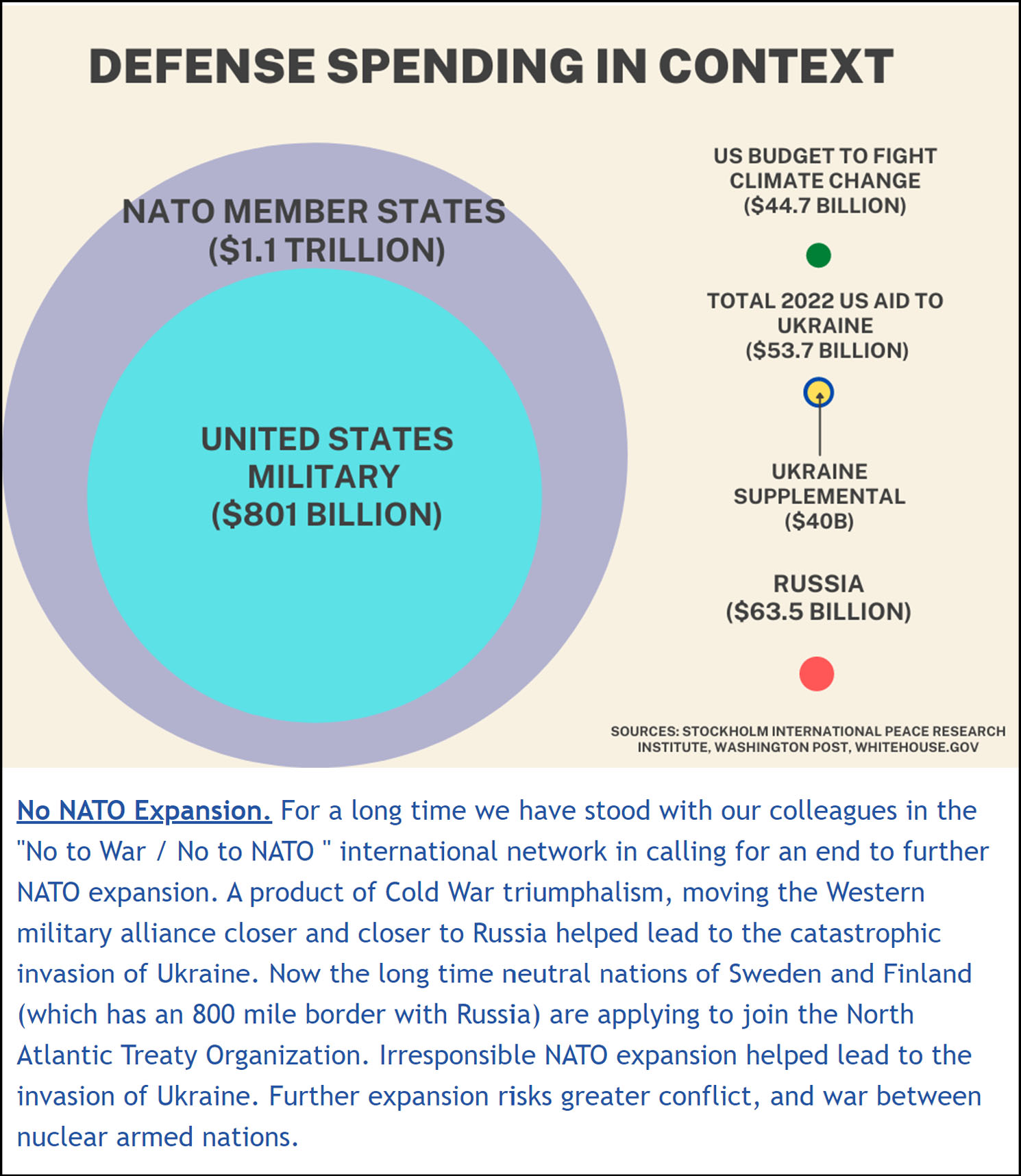
Budget: Record $1 trillion military budget. Now Trump wants a reconciliation bill that adds $350 billion. He also wants the “Save America” voter suppression Act attached to it which is bound to be ruled not proper by the Senate parliamentarian (reconciliation bills are supposed to deal only with the budget). This could lead to a crisis of some kind.
Favorable polling for Trump is going down with the war in Iran and economic impacts. Will voter suppression will be the only thing that keeps Republicans in control of Congress?
There is also talk of $80 billion supplemental appropriation for the war in Iran.
Defense Authorization Act:
- Passed by House, Senate is considering.
- Hard line House congressional Trumpers want the Save America Act attached to the DAA. That would kill its passage in the Senate and probably won’t happen.
- Proposed 180 pits per year by 2050.
- Numerically expands the US nuclear weapons stockpile to deal with the alleged China threat. This will probably result in MIRVing of land-based intercontinental ballistic missiles (ICBM) and more warheads on already MIRVed sub-launched warheads.
- Proposes to more closely integrate US and Israeli military and guarantee $3 billion per year to Israeli military.
Overall trend very bad. Welcome to the new nuclear arms race.
Lawmakers aim to force University of Michigan to follow local zoning rules
The planned computer data center campus is a joint project between the University of Michigan and the U.S. Department of Energy’s Los Alamos National Laboratory on the north side of Textile Road across from the Ford Rawsonville Plant in Ypsilanti Township.
ANN ARBOR, MI – Three Michigan lawmakers introduced legislation that would curb the University of Michigan’s authority to buy land and expand its footprint across the state.
State Reps. Jimmie Wilson Jr., D-Ypsilanti, Jason Morgan, D-Ann Arbor, and Morgan Foreman, D-Ann Arbor, drafted two bills to go in front of the Michigan Legislature.
The new legislation would require any property UM acquires after Jan. 1, 2027 to remain subject to local zoning rules.
Testing the waters: Feds stop paying to sample LANL runoff
Buckman Direct Diversion picks up the cost for testing the Rio Grande
The federal government has also deferred its remediation of a dump site called Material Disposal Area C, citing its proximity to “active facility operations.” The dump resides across the street from the plutonium handling facility, where work is taking place round the clock.
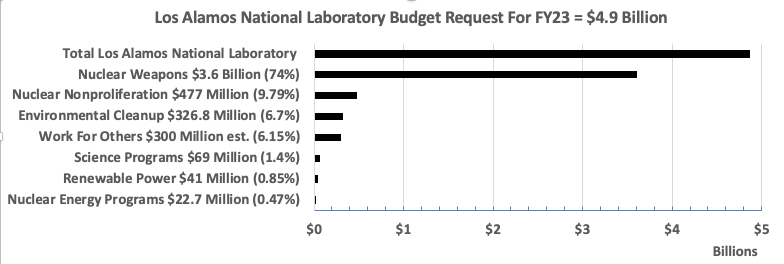
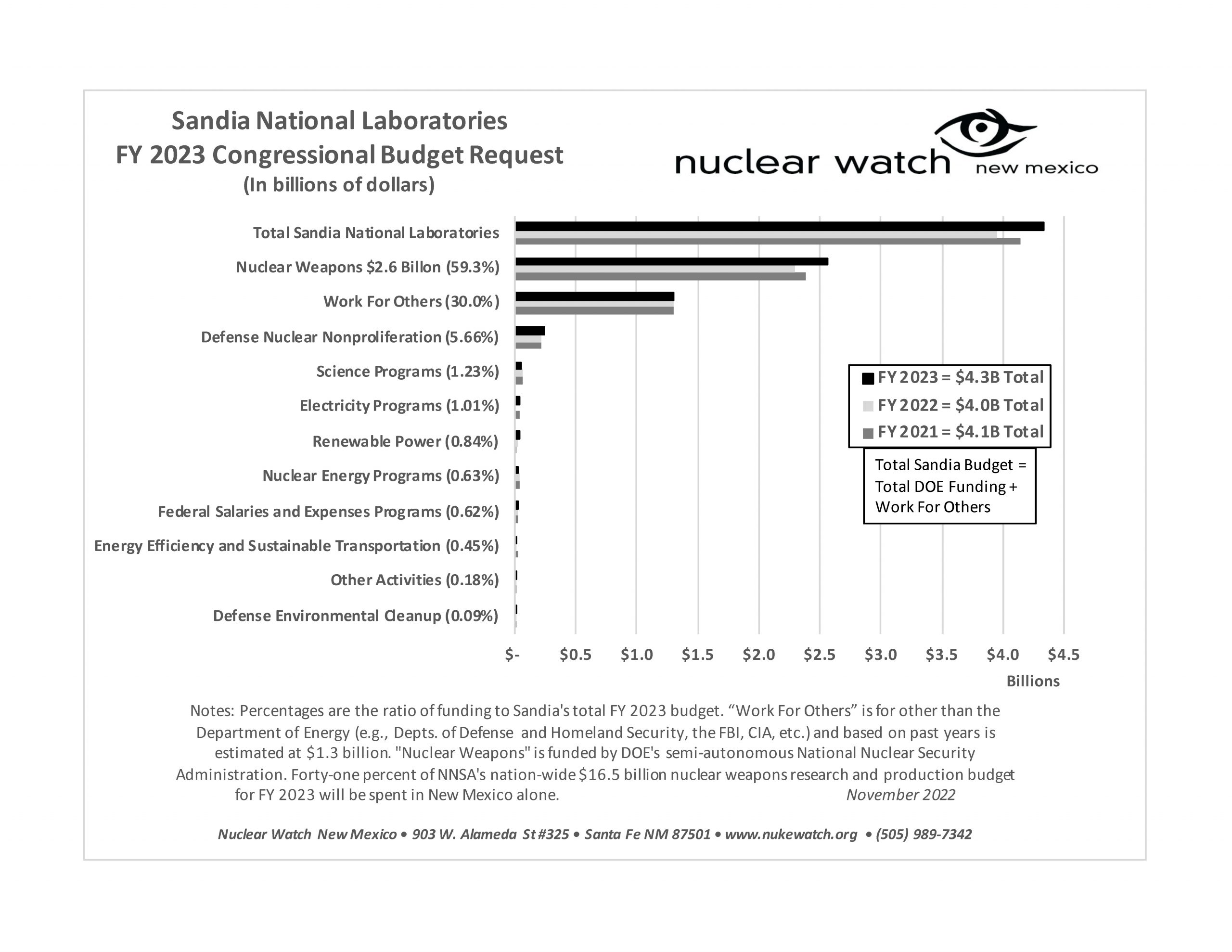
That facility — officially known as PF-4 — is the linchpin in the nation’s modernization of its nuclear arsenal, which is estimated to cost about $1.7 trillion over the next three decades, or about two Manhattan Projects per year. Los Alamos’ budget for 2026 is expected to be around $5.2 billion, much of it for weapons production. Its clean-up budget, meanwhile, is around $281 million.
“There’s no reason in hell we should’ve lost that $96,000,” said Anna Hansen, a former county commissioner and Buckman board chair. “It’s a drop in the bucket.”
With every spring snowmelt or heavy summer monsoon comes the chance that radioactive particles and toxic chemicals could run down the lobed canyons that are etched into the sides of the Pajarito Plateau and outside the boundaries of Los Alamos National Laboratory.
Evidence of Cold War experiments have been detected at high levels in these stormwaters, including traces of high explosives, metals and other radioactive particles, which dispersed across multiple watersheds when scientists tested weapons components in the open air decades ago or were buried in unlined waste pits.
Daniel Ellsberg vs. “Ordinary Insanity”
A new documentary issues an urgent warning about our dangerous nuclear delusions.
Norman Solomon| June 9, 2026 thenation.com
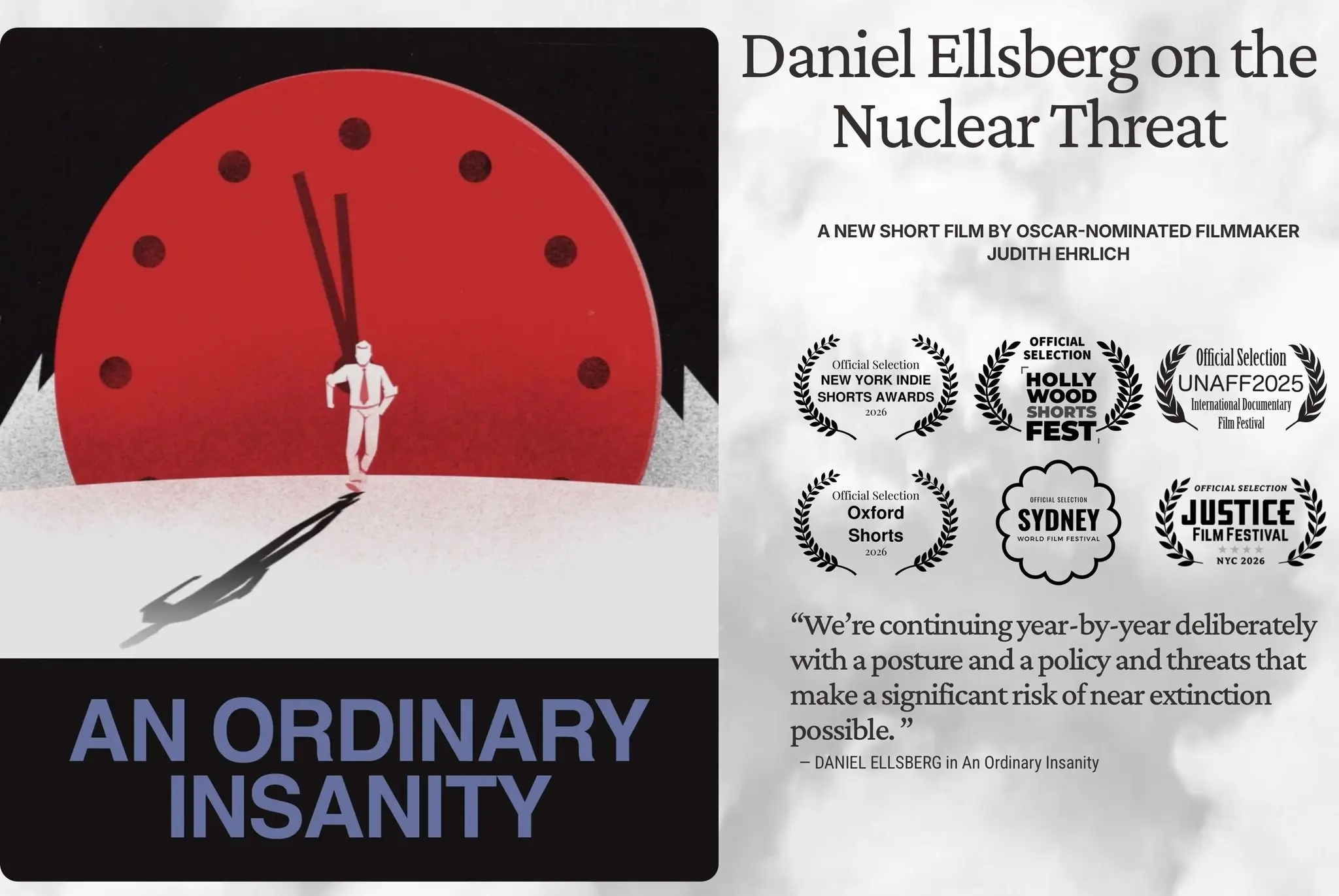
A few days before Thanksgiving in 2021, Daniel Ellsberg looked directly into a camera lens and talked about nuclear preparations for annihilating almost everyone on Earth. “That is insane,” he said. “And you have to call it a kind of ordinary insanity, because it’s so widely shared.”
The new film An Ordinary Insanity condenses Ellsberg’s essential message into a half hour. It follows the acclaimed 2009 documentary The Most Dangerous Man in America: Daniel Ellsberg and the Pentagon Papers. Judith Ehrlich—who codirected that Oscar-nominated movie and is the director of An Ordinary Insanity—says that “as his understanding of nuclear war evolved, Dan confronted it for us and dug deep into its roots.”
When Ellsberg gave the 7,000 pages of the top-secret Pentagon Papers to The New York Times in 1971, he was risking the rest of his life in prison for exposing the official deceptions behind the Vietnam War. That brave act, causing him to be vilified and beloved, began his five decades of tireless antiwar efforts. Through it all, his main preoccupation continued to be reducing the risk of nuclear war.
Early in his professional life, Ellsberg had become a “national security” insider, with expertise in the command and control of nuclear weapons along with strategic planning. Access to official calculations made him aware of scenarios for initiating Armageddon. Some classified plans for starting a nuclear war, with a first strike on the Soviet Union and China, were beyond shocking.
“The Joint Chiefs of Staff estimated in 1961 that the effects of our carrying out those plans, the annual operational plan for which the weapons existed and were on alert, they estimated it would kill 600 million people. A hundred Holocausts,” Ellsberg says in An Ordinary Insanity. “When I saw that estimate in the White House, I thought that was the most evil planning that had ever existed in the history of humanity.”
As scientific research advanced and climate modeling discovered nuclear winter, estimates like 600 million became outdated.


Interfaith Panel Discussion on Nuclear Disarmament - August 9