WHY EXPANDED PLUTONIUM PIT PRODUCTION IS WRONG
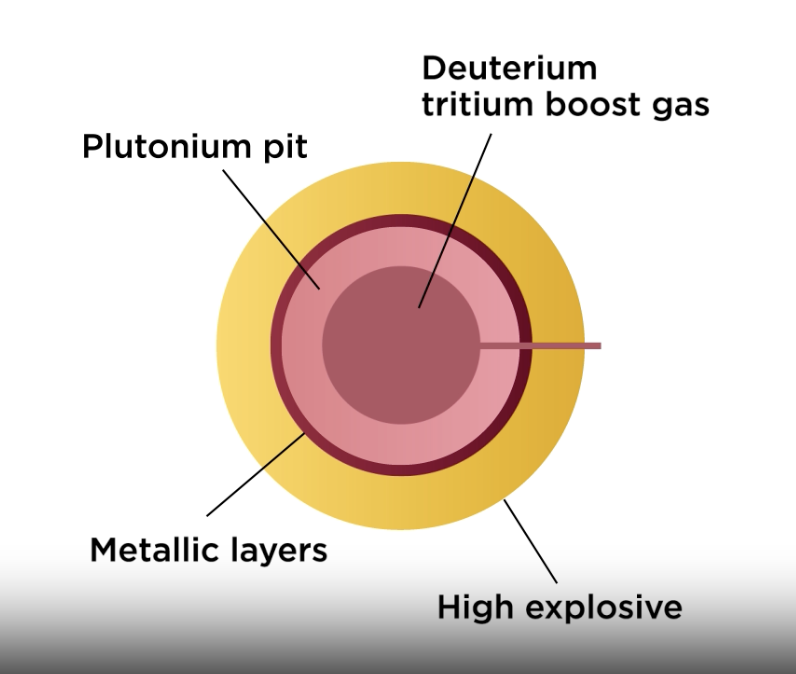
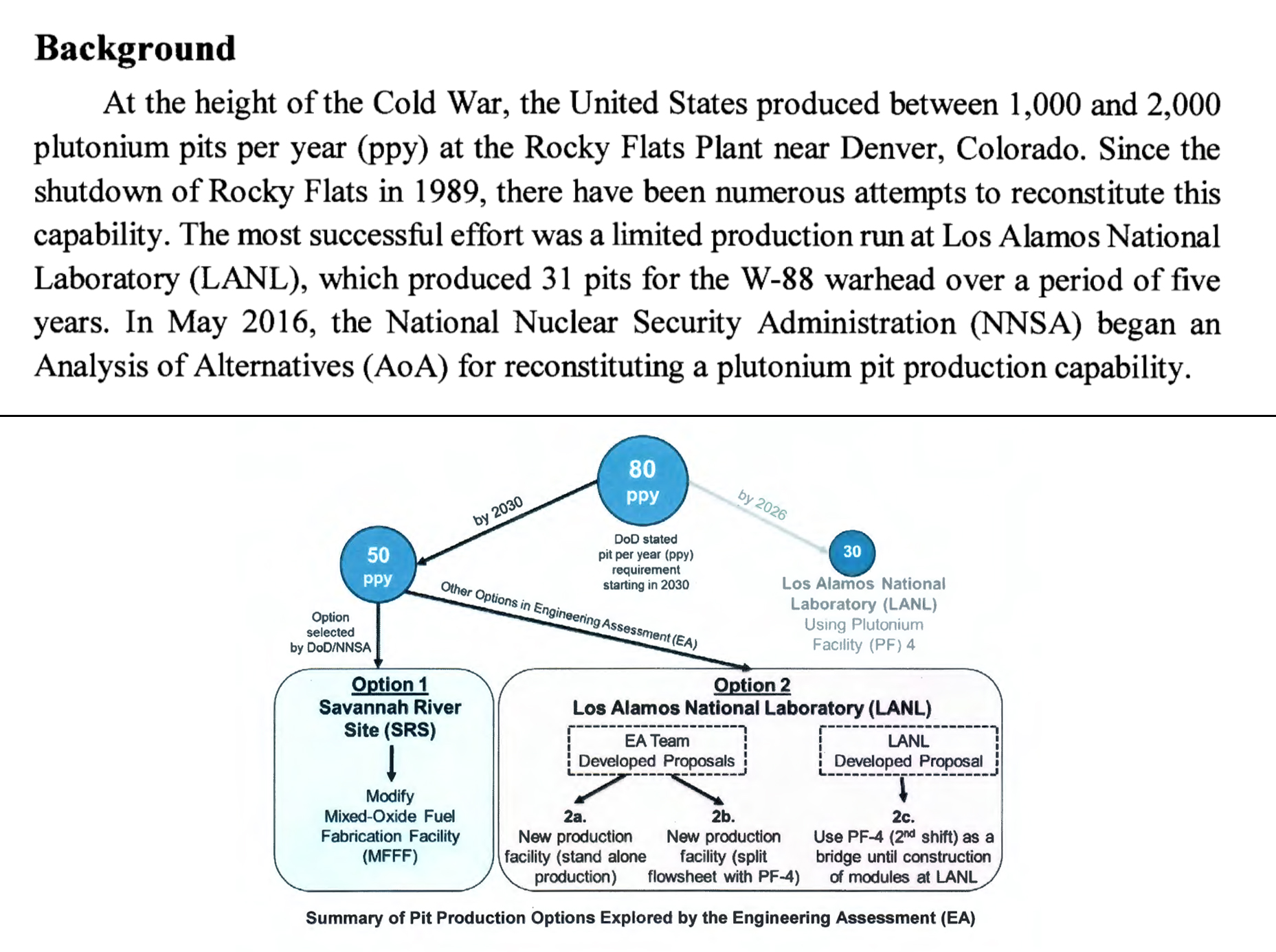
The Department of Energy’s (DOE’s) semi-autonomous National Nuclear Security Administration (NNSA) is aggressively expanding the production of plutonium pits, the radioactive cores or “triggers” of nuclear weapons. Their production has been the choke point of resumed industrial-scale U.S. nuclear weapons production ever since a 1989 FBI raid investigating environmental crimes shut down the Rocky Flats Plant near Denver. In 1996 production was transferred back to the Los Alamos National Laboratory (LANL) in New Mexico, but capped at no more than 20 pits per year. In 2018 NNSA declared it would produce at least 30 pits per year at LANL and 50 per year at the Savannah River Site (SRS) in South Carolina. NNSA now plans to produce up to 205 pits every year for the new arms race.
Expanded plutonium pit bomb core production is wrong because:
- No future production is to maintain the safety and reliability of the existing, tested stockpile. New pits are for new nuclear weapons designs, specifically the W87-1 ICBM and the W93 sub-launched warheads. New designs can’t be tested under the global testing moratorium, thereby perhaps degrading stockpile confidence. Or the U.S. could resume testing, after which other countries would surely follow.
- There are existing, lasting pits. A new expert study states, “The Pu [plutonium] in the stockpile appears to be aging slowly. The degradation issues that have been observed do not call into question present weapons performance.” This directly contradicts NNSA’s assertion that new pits will have to be manufactured “in the coming years” because of aging concerns. This finding reaffirms the 2006 study that showed most pit types have minimum lives over 100 years and those that don’t have clear fixes. Pits are now around 43 years old. More than 15,000 existing pits are already stored at the Pantex Plant in Texas.
- Pit production is NNSA’s most expensive program ever, with $5 billion to be spent over each of the next six years and at least $60 billion over the next 20 years. However, the independent Government Accountability Office has repeatedly found that NNSA has no credible cost estimates.
- The rad waste problem: The New Mexico Environment Department (NMED) is demanding that DOE prioritize LANL’s Cold War wastes for disposal at the Waste Isolation Pilot Plant in southern New Mexico instead of new plutonium pit bomb wastes. NMED is also requiring DOE to look for a new out-of-state dump. In short, there is no certain path for the safe disposal of future radioactive bomb wastes.
- LANL’s existing limited pit production capability should be sufficient should stockpile problems arise in the future. It should not be expanded. Pit production at SRS should be vigorously opposed because it could be scaled up way beyond LANL for the new nuclear arms race. In addition, DOE is legally required to remove plutonium from South Carolina, not add plutonium because of pit production.
- LANL’s pit production facility is outdated and unsafe: Known as “PF-4,” it is 48 years old, not designed for mass production, and has a long history of nuclear safety infractions. Moreover, DOE is “deferring” comprehensive cleanup at the Lab until pit production is done (which in effect means never).
- DOE ordered a “special assessment” of NNSA’s troubled pit production program scheduled for completion in mid-December 2025. It is being covered up, but NukeWatch NM has sued to obtain it.
- Planned plutonium pit production for the next 50 years violates the 1970 NonProliferation Treaty’s requirement for nuclear weapons states to enter into negotiations leading to disarmament.
- NNSA illegally pursued expanded pit production bypassing required National Environmental Policy Act review. However, it is being forced to do so by co-plaintiffs’ (including NukeWatch NM) successful lawsuit.
Concerned citizens can submit supplemental PEIS comments to NNSA via email to PitPEIS@nnsa.doe.gov – For legal and procedural reasons, these comments should be accepted despite being filed after the official comment period ended on July 16, 2026, since NNSA has withheld and is still withholding crucial documents needed for well-informed comment. CLICK HERE for suggested supplemental comments.
IDA Executive Summary on Pit Production