

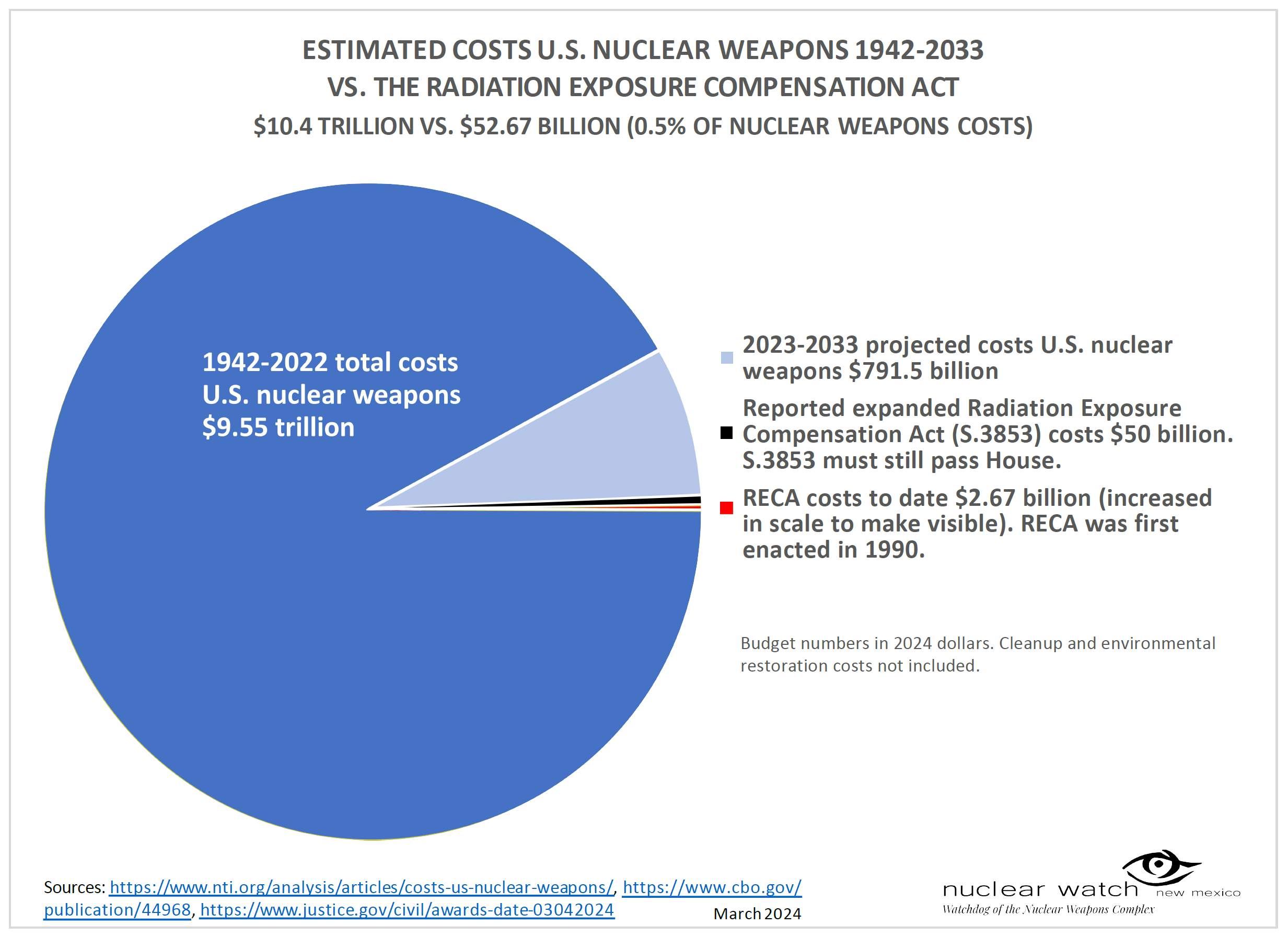
Cost of RECA Chart
QUOTE OF THE WEEK
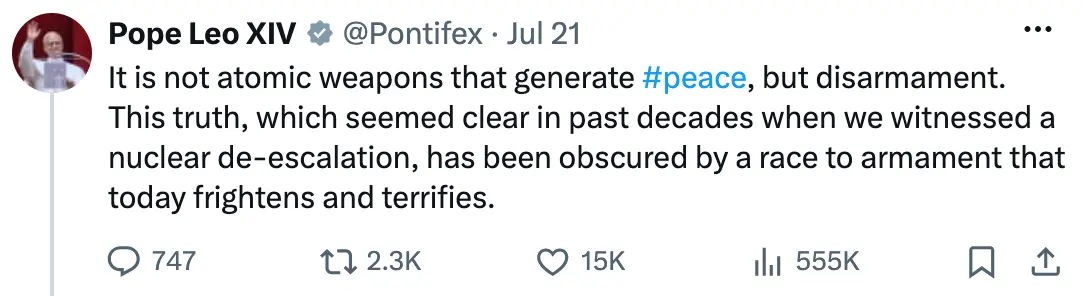
Pope Leo XIV: It is not atomic weapons that generate #peace, but disarmament.
“It is not atomic weapons that generate peace, but disarmament. This truth, which seemed clear in past decades when we witnessed a nuclear de-escalation, has been obscured by a race to armament that today frightens and terrifies.”
– Pope Leo XIV July 21, 2026
“There is nothing comparable in our history to the deceit and the lying that took place as a matter of official Government policy in order to protect this industry. Nothing was going to stop them and they were willing to kill our own people.”

— Stewart Udall, United States Secretary of the Interior under President Kennedy and President Johnson.
He was the father of Senator Tom Udall (who ended up being a vigorous supporter of expanded nuclear weapons “modernization” plans).
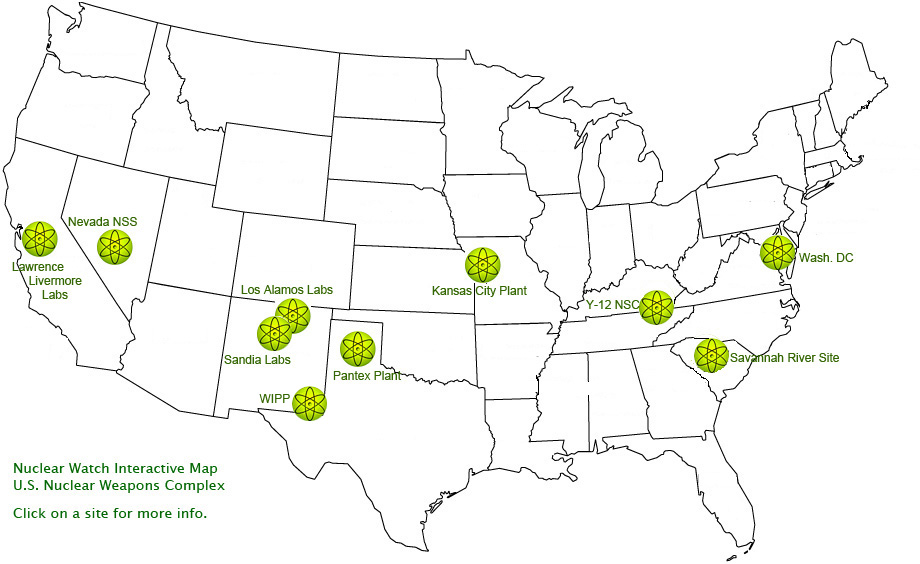
In 1985, US President Ronald Reagan and Russian President Mikhail Gorbachev declared that “a nuclear war cannot be won and must never be fought.”

NEW & UPDATED
DOE Conceals Cost of SRS Plutonium Pit Plant – SRS Watch news, Oct. 19, 2026
DOE Hides Just-Approved, Official Cost Estimate of SRS Plutonium Pit Plant, Keeps Public in the Dark about Size of Escalating Cost for New Nuclear Weapons Facility,
Cost could Soar to Over $30 Billion
New Estimate Likely to Go Higher than 2026 Unofficial Estimate of $18-25 Billion, More than Doubling the 2021 Official Estimate of $7-11 Billion – Just to Refurbish the Terminated MOX Plant, into which $5-8 Billion has already been Sunk
For Release October 19, 2026 – Savannah River Site Watch (SRS Watch), Columbia, SC, www.srswatch.org
Contact: Tom Clements, Director, cell 803-240-7268, tomclements329@cs.com
New release posted on SRS Watch website: https://srswatch.org/wp-content/uploads/2026/10/News-on-CD-2-lack-of-SRS-pit-platn-cost-estimate-October-19-2026-SRS-Watch.pdf
Columbia, SC — The Department of Energy claimed on October 16, 2026 that it approved a new cost estimate for the massive facility to make 50 or more plutonium pits per year – for new nuclear weapons’ cores – at the Savannah River Site (SRS) in South Carolina, but the department has refused to publicly release the estimate. It is believed that the cost for the new facility could soar above a recent unofficial cost estimate of $30 billion.
It was anticipated that the new cost estimate for the plutonium bomb plant, per DOE practice, would be publicly released. That the cost has not been released raises suspicion that the skyrocketing cost to refurbish the partially finished, terminated plutonium fuel (MOX) building is being hidden from both the public and Congress.
“DOE must immediately reveal what the cost to the taxpayer will be to produce new, unneeded plutonium pits at SRS for new nuclear warheads,” said Tom Clements, director of the public interest group Savannah River Site Watch, based in Columbia, SC. “It’s clear that the cost of the unnecessary plutonium pit project continues to soar while the schedule slips, which is the way DOE works, and it’s time for Congress to place a hold on construction while the cost and need for the facility are assessed. Suppression of the cost estimate by DOE is a mistake that will backfire as it smacks of a cover-up,” added Clements.
Golden Dome Is Technologically and Financially Infeasible
“There is no prospect of deploying a missile defense system within the next 15 years that could reliably protect against even a limited but effective raid intended to coerce the United States, let alone a substantial attack by an emerging ballistic missile state such as North Korea or a major attack by Russia or China.
Current ground-based systems struggle against even relatively small and unsophisticated missile threats. Increasing the number of interceptors (or kill vehicles) to attempt to address more sophisticated missile threats, including more sophisticated countermeasures, would be costly and unlikely to stay ahead of the offensive capability. Space-based interceptors will not solve this problem, given their extremely unfavorable cost-exchange ratio and the many straightforward countermeasures an adversary could use. The conclusion of the 2012 National Research Council study that the United States should not invest any more money or resources in systems for boost-phase missile defense remains valid.
…midcourse intercept is and will remain ineffective against limited but sophisticated missile attacks. The United States should shift resources and attention to diplomatic efforts to reduce the nuclear threat, the only approach that has been successful in the past.”
By: Frederick Lamb and Laura Grego, WAR ON THE ROCKS | October 15, 2026 warontherocks.com
For as long as nuclear-armed, intercontinental ballistic missiles and submarine-launched ballistic missiles have existed, strategists and engineers have pursued a seductive idea: a shield effective enough to diminish — or even block — a ballistic missile attack. The appeal is obvious. A state that could reliably intercept ballistic missiles could protect its cities from these terrifying weapons and reduce its adversaries’ leverage.
But defenses against strategic ballistic missiles have a long history of disappointments. Over roughly seven decades, the United States has spent more than $500 billion (in 2025 dollars) on missile defenses, much of it to defend against intercontinental ballistic missiles. And yet, the ability of any of these systems to intercept even a single missile or warhead under the conditions expected during a nuclear attack has not been demonstrated.
Most recently, the Trump administration has proposed “Golden Dome” — an ambitious proposal for a comprehensive, layered defense with ground, sea, and space-based elements…
The Human and Moral Costs of the New Nuclear Arms Race
The U.S. is in the midst of a massive nuclear “modernization” program, to the tune of $1.7 trillion. Meanwhile, programs for those most in need at home and abroad are being cut or eliminated, along with support for diplomacy, conflict resolution, and peacebuilding.
“The Human and Moral Costs of the New Nuclear Arms Race,” part of the Institute’s year-long 40th anniversary celebration, focused on the Catholic Church’s opposition to the vast sums being spent on nuclear weapons and the moral imperative to reverse course and negotiate arms control treaties that can lead toward global nuclear disarmament.
Asher Kaufman, the John M. Regan, Jr. director of the Kroc Institute, offered introductory comments, followed by a panel discussion with leaders working in arms control, higher education and Catholic nonprofits. Archbishop Wester of the Archdiocese of Santa Fe provided remarks virtually. Kelsey Davenport, director for Nonproliferation Policy for the Arms Control Association and a member of the Kroc Institute’s advisory board, moderated.

Nuclear Weapons Issues & The Accelerating Arms Race: October 2026 Updates
Nuclear Weapons:
John Pope, Chief Audience Officer at Bulletin of the Atomic Scientists:
Some interesting polling on existential risk from the well respected “America Speaks” poll from NORC at UChicago. One question really stood out for nuclear work – when asked about global threats nuclear war was the most commonly ranked “greatest risk” by participants: [54% said nuclear war]
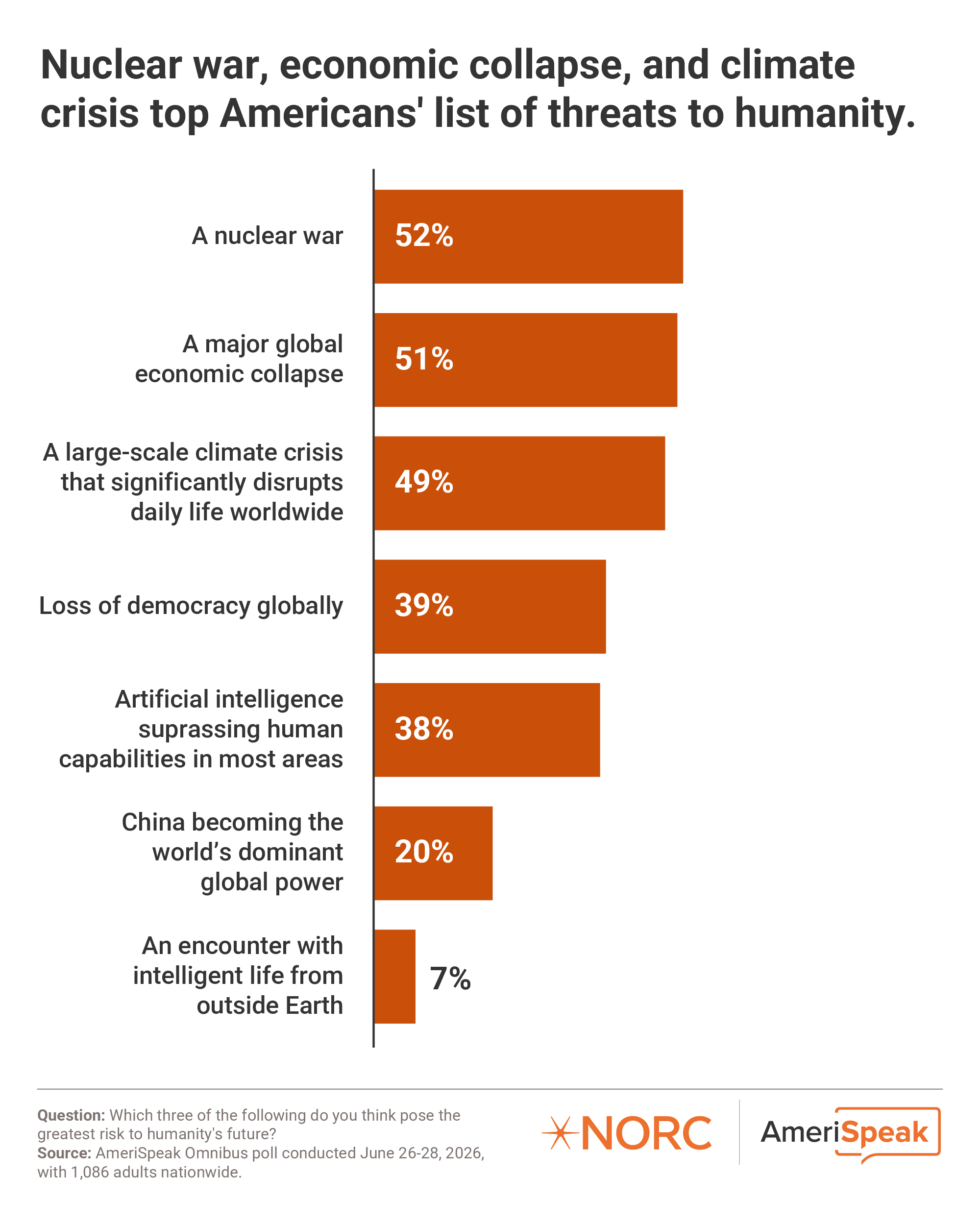
And drilling into the cross tabs younger audiences were most likely to see it as a threat: [61% of younger adults]:
The nuclear paradox: Why the world wants both deterrence and disarmament
“These apparent inconsistencies are not reflective of some small, confused minority. Instead, the majority of individuals we surveyed have at least some views on nuclear weapons that seem contradictory. Understanding what drives this paradox and how it plays out is essential for formulating policy to navigate an increasingly complex and dangerous nuclear landscape.”
By: Lauren Sukin, Luis Rodriguez, Stephen Herzog Kristen Thomason The Bulletin of Atomic Scientists | October 6, 2026 thebulletin.org
In the summer of 2023, as Russia threatened nuclear strikes against Ukraine, we conducted the most comprehensive academic survey of global attitudes toward nuclear weapons ever undertaken. Across 24 countries on six continents—from nuclear powers like France, the United Kingdom, and the United States to non-nuclear-armed states like Brazil, Nigeria, and Poland—we asked more than 27,000 people what they thought of the bomb.
Our research challenges decades of assumptions about nuclear politics. Contrary to conventional wisdom that views possessing and abolishing nuclear weapons as irreconcilable, our data reveal something far more complex: Many people around the world embrace both views simultaneously. They support maintaining nuclear arsenals for deterrence, but they also desire their complete elimination. They endorse the taboo against using nuclear weapons, but they also approve of nuclear strikes under certain circumstances.
Nuclear Watch New Mexico Presentation to Indivisible Albuquerque – September 21, 2026
Recording of Nuclear Watch New Mexico Presentation to Indivisible Albuquerque, Jay Coghlan and Sophia Stroud – September 21, 2026:


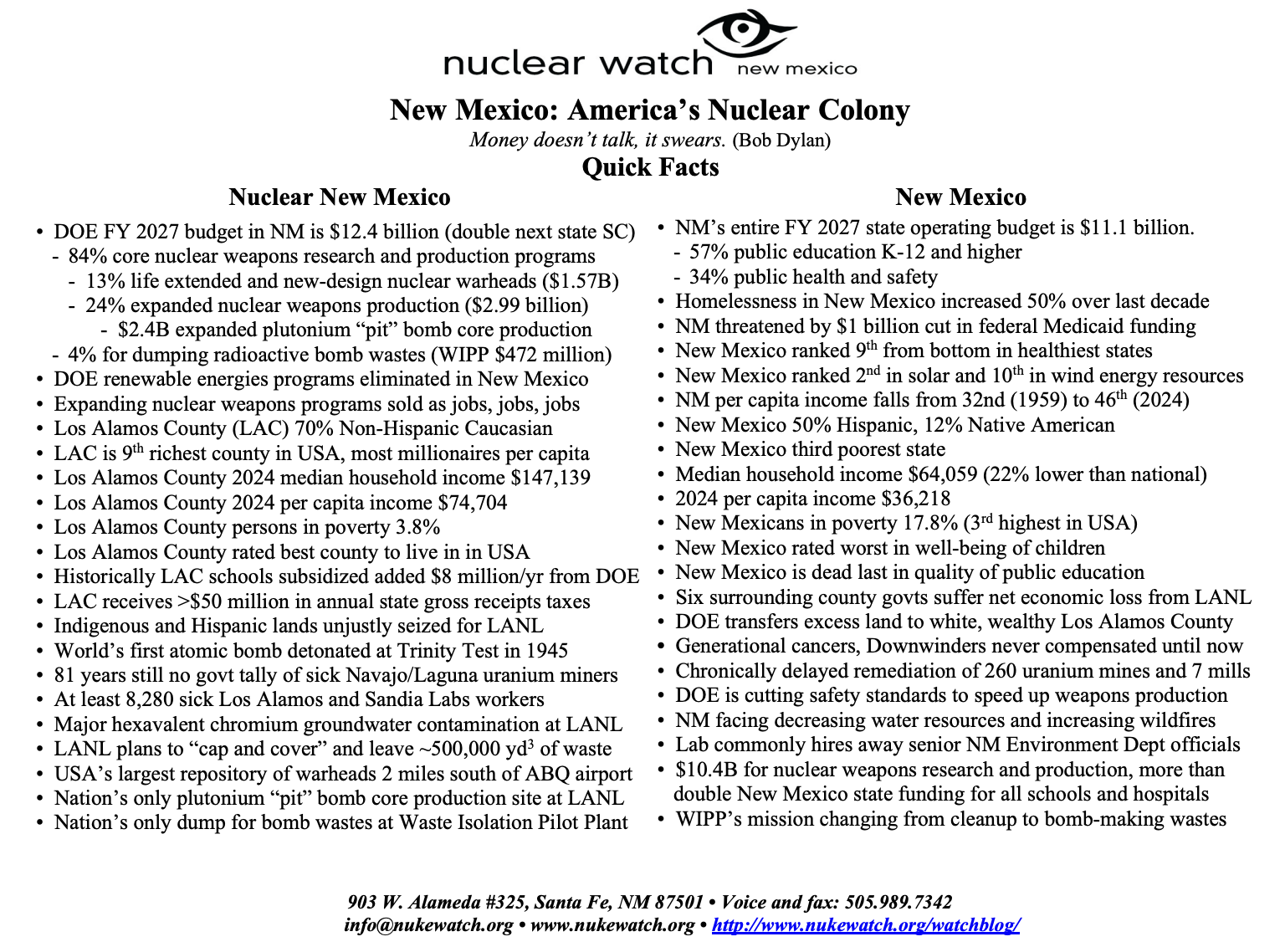
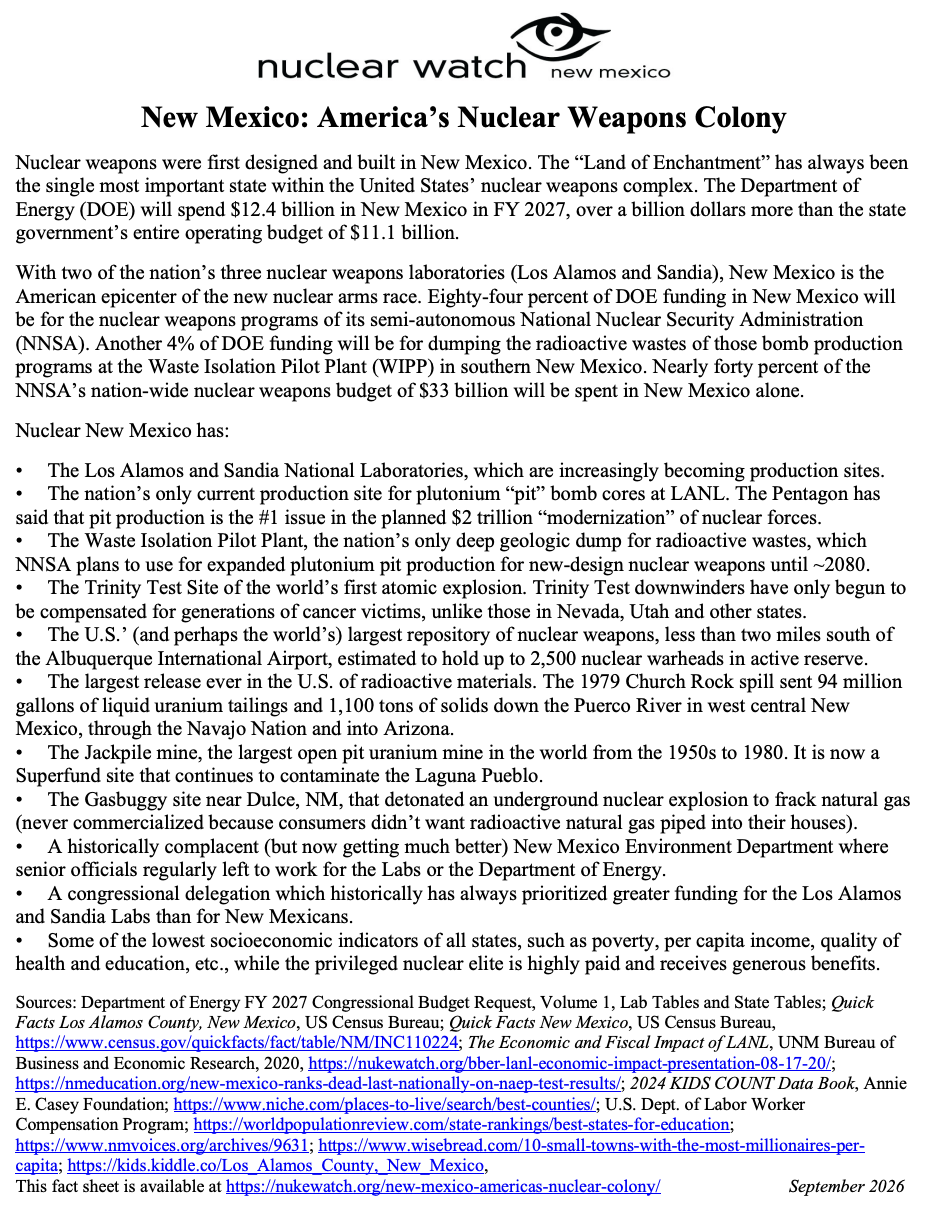
There IS NO need for speed.
That is no need for speed other than the National Nuclear Security Administration’s and LANL’s aggressive agenda to get unneeded plutonium “pit” bomb core production established as a fait accompli by stripping safety standards and blocking independent oversight before the lack of true need and the astonishing costs are publicly recognized.
There is no need for speed because no future pit production is to maintain the safety and reliability of the existing nuclear weapons stockpile. Instead, it is all for new-design nuclear weapons for the new nuclear arms race that threatens us all. Further, these new-design nuclear weapons could prompt the U.S. to resume nuclear weapons testing, which Trump has already threatened. This would have disastrous international proliferation consequences (Putin has already said Russia will test if the U.S. does).
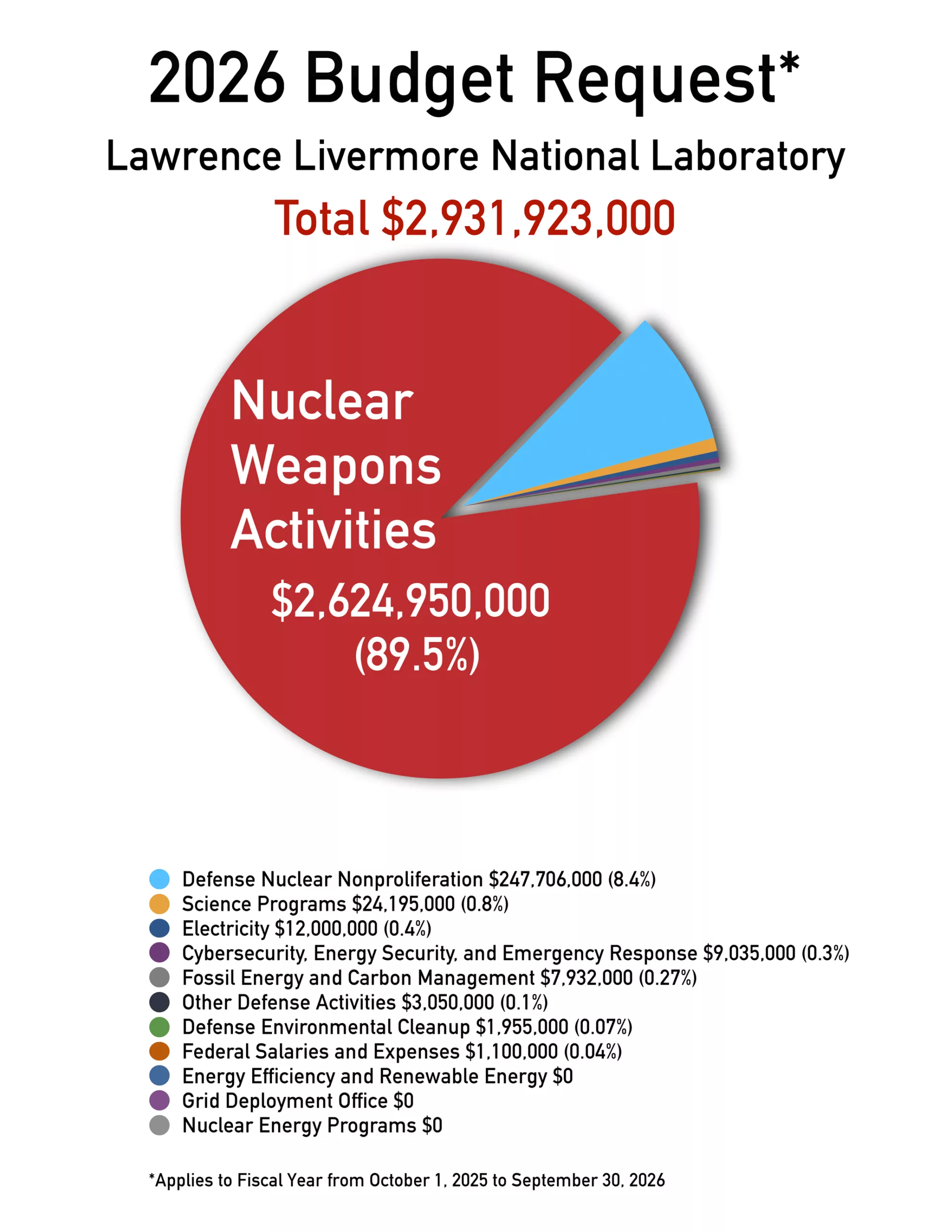
The Department of Energy and the NNSA have been on the independent Government Accountability Office’s High Risk List for project mismanagement and waste of taxpayers’ dollars ever since the GAO started the List in 1991. The NNSA is going to spend $4 billion at LANL and the Savannah River Site (SRS) in South Carolina for pit production over each of the next six years. Yet the GAO has repeatedly stated that NNSA has no credible cost estimates for its most expensive and complex program ever.
Plutonium pit production at LANL will cause more contamination and radioactive wastes.
Value safety over speed when handling nukes
Project Velocity: The name alone should be enough to strike terror into the hearts of New Mexicans, After, of course, they understand that it is a call for, among other things, speeding up Los Alamos National Laboratory’s production of devices that trigger nuclear weapons.
Santa Fe New Mexican | September 24, 2026 santafenewmexican.com
The Trump administration and the Department of Energy apparently feel the need. The need for speed. Even in a situation where extreme caution should be a top priority.
A particularly troubling symptom of the administration’s disregard for public safety is the status of an organization called the U.S. Defense Nuclear Facilities Safety Board. The body, created by Congress to oversee the safety of nuclear operations managed by the federal government, is supposed to have five members. It has one.
That one, Patricia Lee, has told Congress that her agency’s operations are being stonewalled on at least two fronts. The president has not nominated anyone to fill the vacancies on the board and, without a quorum of at least three members, it has no power to act.
Even if the board’s seats were full, it can’t do its job without more information from DOE, LANL and other federal agencies that handle, produce and dispose of nuclear devices and materials.
It seems clear that the administration is keen to push LANL and other federal nuclear labs to work faster.
The New Mexico facility, particularly, is being tasked with making more so-called plutonium pits, the internal triggers for thermonuclear weapons. And one way to do anything faster is to decide that safety protocols are for wimps.
Members of the New Mexico Legislature are appropriately worried and angry.
State Sen. Jeff Steinborn, D-Las Cruces, is chair of the Legislature’s Radioactive and Hazardous Materials Committee. He recently called the lack of concern for safety at LANL a “four-alarm fire moment,” a situation that is “putting New Mexicans’ lives directly at risk.”
Steinborn is rightly concerned, and he could use some help from New Mexico’s congressional delegation, from the governor and the next one with a push from constituents.
What the government has not explained is why there is a need for haste in the creation of new nuclear weapons. Don’t we already have enough of those to destroy the world many times over?
Even if we need more, or better weapons, there’s no need to set aside reasonable safety concerns in the process.
The last time the Trump administration created a project with such an accelerationist name, it was Operation Warp Speed, the push to create and distribute a vaccine for the COVID-19 pandemic.
Given that millions were dying of that disease all over the world, the metaphor of a faster-than-light vehicle was appropriate. And successful.
And, of course, the origin story of LANL is the Manhattan Project, a rush to create the world’s first atomic weapon, with what would now be considered far too little concern for safety. But that made sense, as some of the smartest people on the planet were then reasonably worried that, without haste, the Nazis would get to the bomb first.
No such threat exists today. We are smart enough to deliberate over whether the United States really needs more thermonuclear triggers. And, if so, to figure out how to make them with proper concern for the safety of those working at the lab, and all the rest of New Mexico. No need for speed.
Independent nuclear safety agency says it’s being stonewalled by Department of Energy
An independent federal agency created to provide oversight of safety at nuclear security sites around the country has for months been denied access to federal records and meetings its officials have previously used in the course of their work.
Santa Fe New Mexican | September 23, 2026 santafenewmexican.com
Officials from the U.S. Defense Nuclear Facilities Safety Board have raised alarm over what they’ve called “stonewalling” by the U.S. Department of Energy of their efforts, particularly amid a range of changes to the department’s safety requirements — referred to as “Project Velocity” — which officials have characterized as weakening the agency’s safety protocols and requirements in connection with national laboratories.
New Mexico legislators from the Radioactive and Hazardous Materials Committee recently signed a letter calling on federal officials to “bring the [Department of Energy] back into compliance with federal law” and to restore access to the oversight agency. Another letter expressed concern for the safety-related directives issued in connection with Project Velocity and urged department leaders to explain how the changes could affect safety for workers and the public.
State Sen. Jeff Steinborn, D-Las Cruces, called the safety outlook a “four-alarm fire moment” for the state’s national laboratories — including Los Alamos National Laboratory, the only facility that produces plutonium pits for the nation’s nuclear arsenal — saying the status quo is “putting New Mexicans’ lives directly at risk.”
[CNN] Exclusive: US military had close call after using AI for false intelligence report, sources say
“‘AI allows you to get to a bad idea faster,’ one of the sources said.”
CNN | September 18, 2026 cnn.com
The intelligence report, circulated across the US military this spring in the midst of the war with Iran, immediately set off alarm bells: A Chinese ship in the Middle East was transporting components of a nuclear weapons program.
The US military swung into action with plans to intercept the vessel, according to four sources familiar with the episode. According to two of the sources, armed members of the US military were preparing to board the ship. Military planes were in the air, one of those sources and another source familiar with the incident said.
It was only just before the planned operation that officials dug deeper into the report put together by a special operations command analyst and found it had been generated with the help of artificial intelligence (AI) — and that a chatbot the analyst had used inaccurately identified the material the ship was carrying. CNN was not able to learn what the misidentified cargo was.
The report, according to one of the sources, was “entirely false.” But it also “almost started a war,” the source said. Any US operation against a Chinese vessel could have risked spiraling into an armed conflict between the two nations.
CRITICAL EVENTS

WIPP Community Forum – Wednesday, November 4, 2026 3 – 4:30pm (MST)
| Date | Time |
|---|---|
| Wednesday, November 4, 2026 | 3 – 4:30pm (MST) |
| Location | … |
|---|---|
| Virtual Registration | Click for Event Info – English / Spanish |
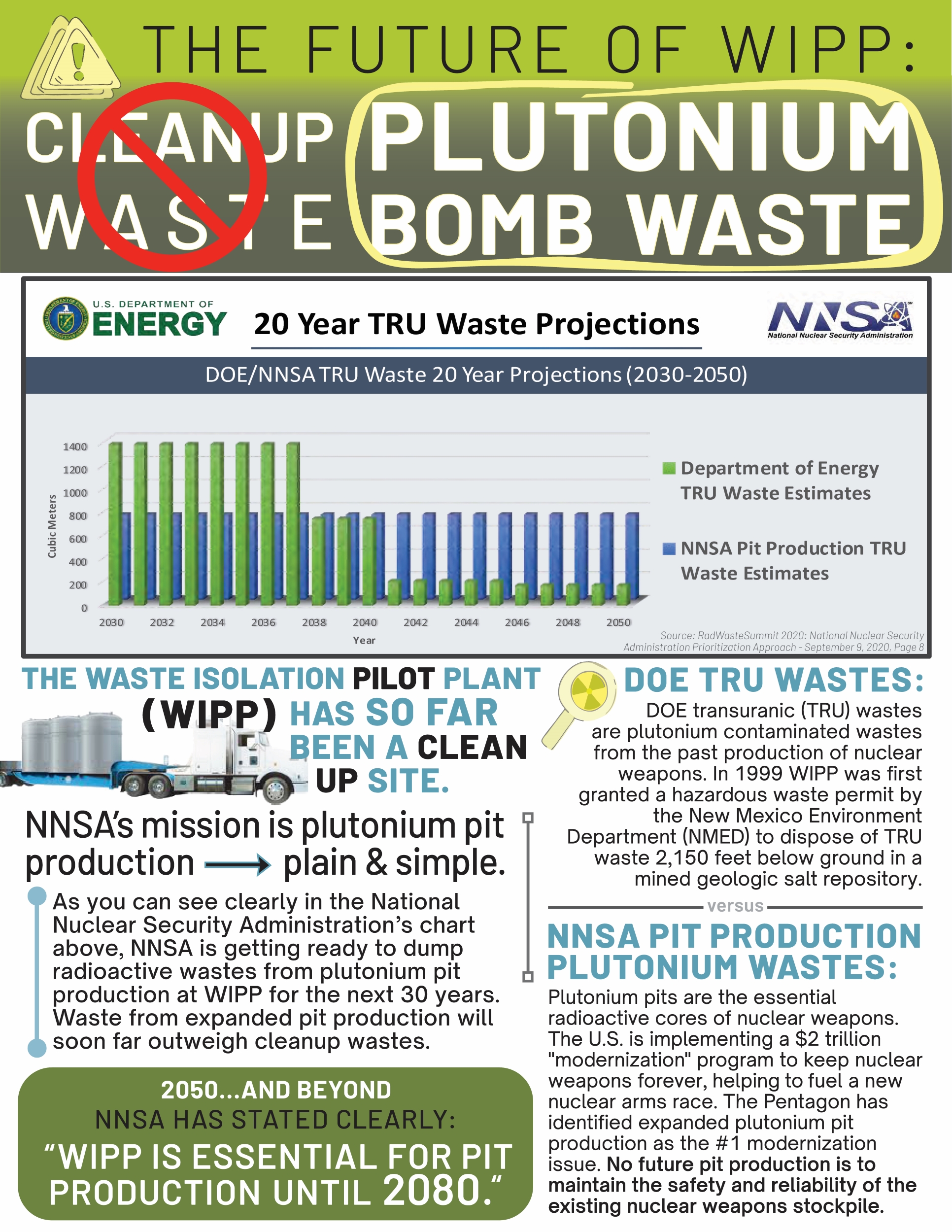
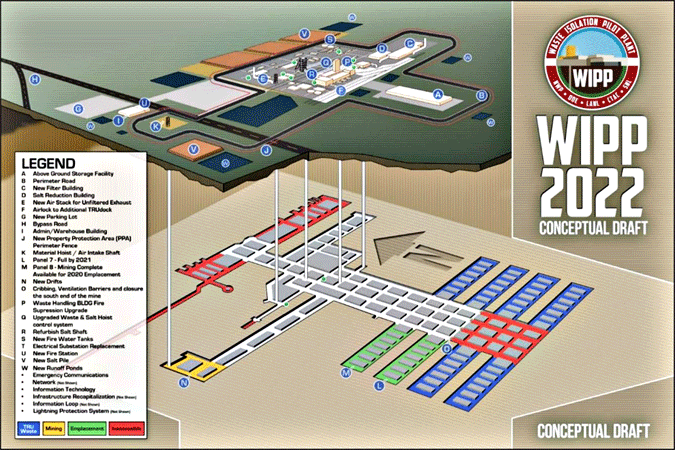
Endless Nuclear Waste Storage in NM?? Not On Our Watch…
Keep up with the Stop Forever WIPP Coalition to learn how to take action against the Federal Government’s Plan to Expand WIPP and keep it open indefinitely.
Visit the Stop Forever WIPP Coalition’s website and social media:
Website: www.StopForeverWIPP.org
Facebook: facebook.com/StopfvrWIPP
Twitter: twitter.com/stopforeverwipp
Instagram: instagram.com/stopfvrwipp
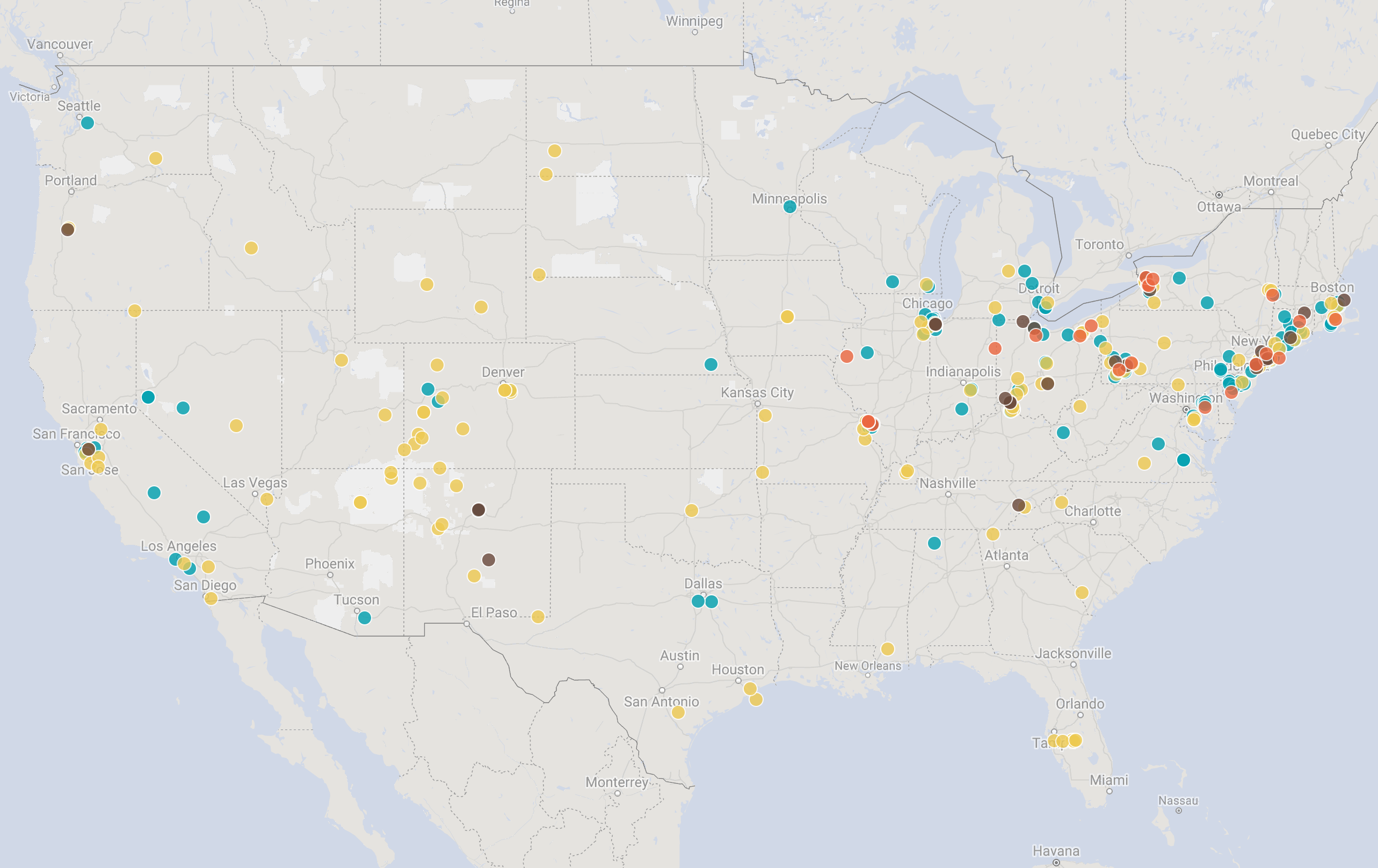
Stay Informed of All Permit-Related Happenings at WIPP! Sign Up for Updates:
The New Mexico Environment Department maintains a Facility Mailing List to which you can add your name and address to get the latest information – just email Ricardo Maestas at the New Mexico Environment Department at ricardo.maestas@state.nm.us and ask to be added to the list. Or mail your request with your mailing address to:
Continue reading



New Nuclear Media: Art, Films, Books & More
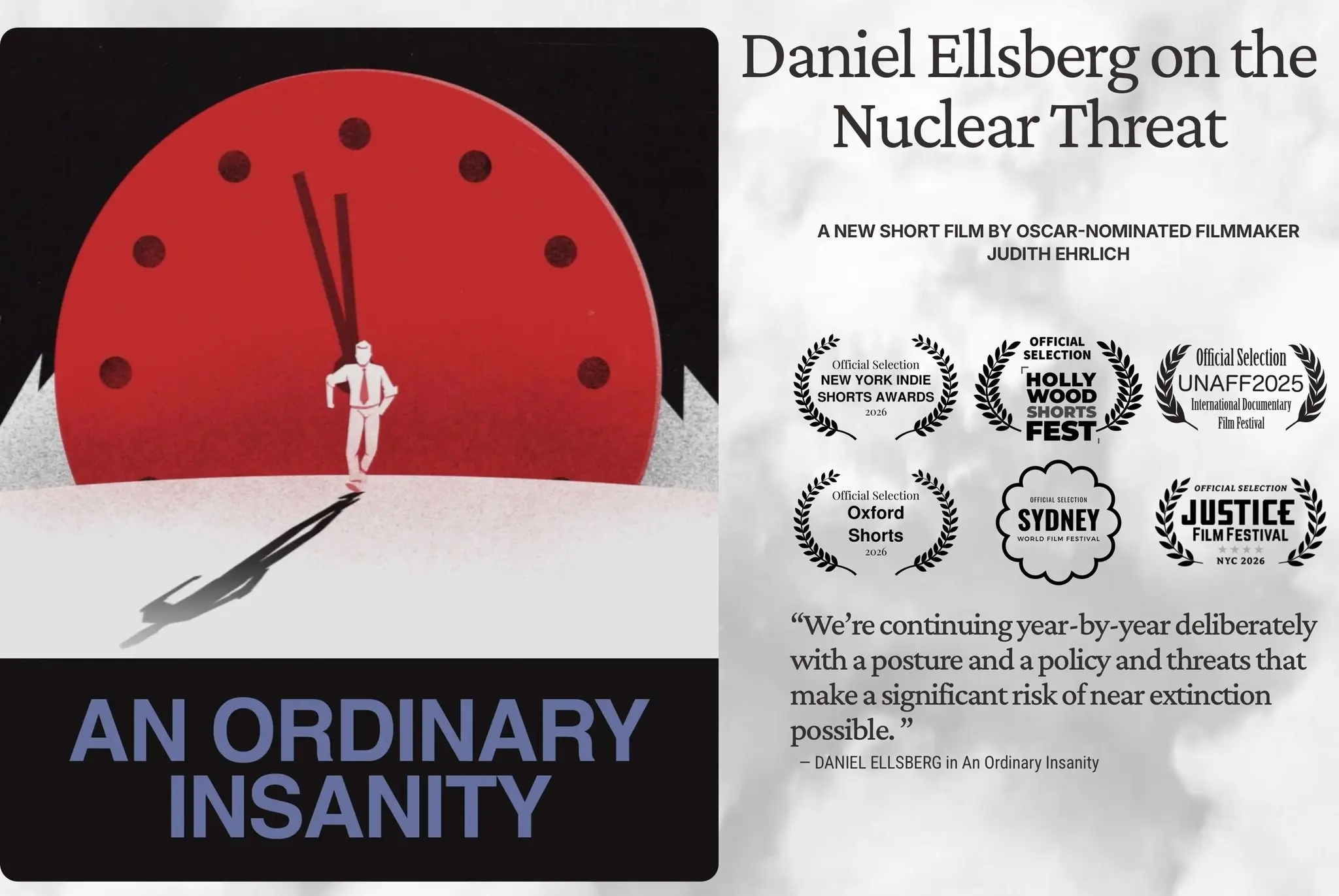
Daniel Ellsberg vs. “Ordinary Insanity”
A new documentary issues an urgent warning about our dangerous nuclear delusions.
Norman Solomon| June 9, 2026 thenation.com
A few days before Thanksgiving in 2021, Daniel Ellsberg looked directly into a camera lens and talked about nuclear preparations for annihilating almost everyone on Earth. “That is insane,” he said. “And you have to call it a kind of ordinary insanity, because it’s so widely shared.”
The new film An Ordinary Insanity condenses Ellsberg’s essential message into a half hour. It follows the acclaimed 2009 documentary The Most Dangerous Man in America: Daniel Ellsberg and the Pentagon Papers. Judith Ehrlich—who codirected that Oscar-nominated movie and is the director of An Ordinary Insanity—says that “as his understanding of nuclear war evolved, Dan confronted it for us and dug deep into its roots.”
When Ellsberg gave the 7,000 pages of the top-secret Pentagon Papers to The New York Times in 1971, he was risking the rest of his life in prison for exposing the official deceptions behind the Vietnam War. That brave act, causing him to be vilified and beloved, began his five decades of tireless antiwar efforts. Through it all, his main preoccupation continued to be reducing the risk of nuclear war.
Early in his professional life, Ellsberg had become a “national security” insider, with expertise in the command and control of nuclear weapons along with strategic planning. Access to official calculations made him aware of scenarios for initiating Armageddon. Some classified plans for starting a nuclear war, with a first strike on the Soviet Union and China, were beyond shocking.
“The Joint Chiefs of Staff estimated in 1961 that the effects of our carrying out those plans, the annual operational plan for which the weapons existed and were on alert, they estimated it would kill 600 million people. A hundred Holocausts,” Ellsberg says in An Ordinary Insanity. “When I saw that estimate in the White House, I thought that was the most evil planning that had ever existed in the history of humanity.”
As scientific research advanced and climate modeling discovered nuclear winter, estimates like 600 million became outdated.
The Plutonium Circus Comes to Town
AC: How did the idea of doing a documentary about Pantex come
up?
GR: Just growing up around it, I’d always wanted to do something about Pantex, really. It’s a very eerie feeling to grow up with that sort of thing there. Of course, I didn’t consider it eerie growing up, I considered it sort of… comforting. It was sort of an easy way out, if and when the world ended. I grew up always thinking the world was about to end, and I think that’s a pretty common belief for everyone in Amarillo. And that’s a very good excuse, a
very powerful reasoning to not keep up with what’s going on out at Pantex anyway. I think most of the United States, and Amarillo, as far as the religious thinking, feels that the world is going to be over any time anyway,
so why worry? They’ve watched Nostradamus a few too many times, I think.
| October 20, 1995 austinchronicle.com
George Whittenburg Ratliff is not the kind of guy you would peg for one of the most talented filmmakers around these days. Tall and lanky, with an unruly shock of dirty-blond hair and large piercing blue eyes that seem to take in everything and everyone at once without alarming you, he’s soft-spoken and speaks almost shyly of the documentary film he’s made – The Plutonium Circus.
Set in the Texas Panhandle town of Amarillo, The Plutonium Circus focuses on the gargantuan Department of Energy Pantex plant, which looms over the sprawling North Texas Plains like some evil, radioactive monarch. Since the 1950s, Pantex has been the final assembly point for every nuclear weapon made in America. This is the place where the gadgets, gizmos, priming devices, and
plutonium cores arrived, by unmarked train, to be finessed into the country’s arsenal of democracy. Sort of like a General Motors plant headed not by Lee Iacocca, but by the military industrial devil himself.
Amarillo, a hometown I share in common with Ratliff, has always been behind the plant 110 percent. The Pantex plant (or death factory, according to a few observers) is now engaged in the business of dismantling our nuclear stockpile and storing the deadly plutonium on-site, despite the fact that the plant rests directly above the precious Ogallala Aquifer, which is the largest fresh water
aquifer in North America and the primary source of drinking water for the people of Amarillo and surrounding towns such as White Deer and Claude (site of the film Hud), as well as eight neighboring states, and the land and animals that supply 70 percent of the wheat, corn, and beef grown in the United States. The people of Amarillo have wholeheartedly embraced the plant with open
arms because employment and the local economy are the issues here (the plant is said to be responsible for a total of 11,000 jobs, a figure that includes all the local businesses that service the plant), not lymphoma statistics and the perpetual possibility of disaster. It’s a mindset that’s hard to swallow, but then, so are most Panhandle politics.
Literally a world unto itself, Amarillo exists on the periphery of anarchy…
Our work is made possible by a generous grant from 