

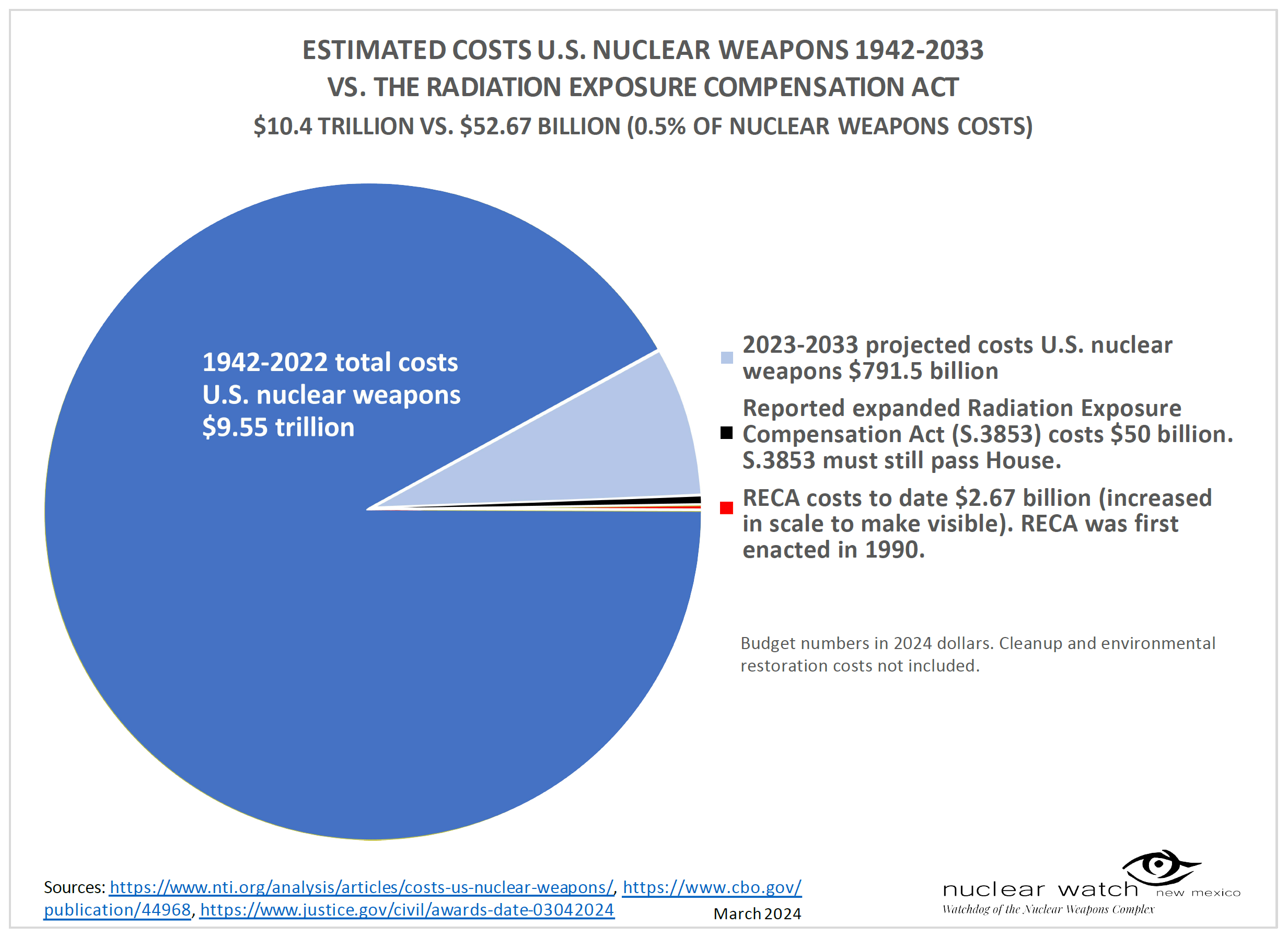
Cost of RECA Chart
In 1985, US President Ronald Reagan and Russian President Mikhail Gorbachev declared that “a nuclear war cannot be won and must never be fought.”

 NukeWatch NM Google News Feed
- UNM faculty featured in USA Today documentary on NM's nuclear legacy - UNM Newsroom October 28, 2026UNM faculty featured in USA Today documentary on NM's nuclear legacy UNM Newsroom
- Trinity test fallout haunts New Mexico as US expands nuclear plans - Kansas City Star October 23, 2026Trinity test fallout haunts New Mexico as US expands nuclear plans Kansas City Star
- Secret nuclear weapons report released amid SC, NM factory fight. Here’s what to know - The State August 17, 2026Secret nuclear weapons report released amid SC, NM factory fight. Here’s what to know The State
- Once secret report on atomic weapons production released as greens fight plans in SC, NM - The State August 14, 2026Once secret report on atomic weapons production released as greens fight plans in SC, NM The State
- Nuclear Watch New Mexico sues Department of Energy for plutonium pit report - Santa Fe New Mexican August 5, 2026Nuclear Watch New Mexico sues Department of Energy for plutonium pit report Santa Fe New Mexican
- Nuclear weapons pit study kept secret, groups say. Here’s what to know - The State July 14, 2026Nuclear weapons pit study kept secret, groups say. Here’s what to know The State
- Hidden study casts doubt on need for nuclear weapons factories in SC, NM, critics say - The State July 11, 2026Hidden study casts doubt on need for nuclear weapons factories in SC, NM, critics say The State
- Plaintiffs in SRS plutonium pit lawsuit demand documents, extension of public comment period - Post and Courier July 10, 2026Plaintiffs in SRS plutonium pit lawsuit demand documents, extension of public comment period Post and Courier
- New Mexico environment officials mandate more legacy nuclear waste at WIPP - Source New Mexico April 24, 2026New Mexico environment officials mandate more legacy nuclear waste at WIPP Source New Mexico
- Rare tour of Savannah River plutonium facility stokes opponents fears of 'new nuclear arms race' - Post and Courier April 23, 2026Rare tour of Savannah River plutonium facility stokes opponents fears of 'new nuclear arms race' Post and Courier
- A major environmental decision is now locked in, with lingering questions about the process behind it - Federal News Network April 22, 2026A major environmental decision is now locked in, with lingering questions about the process behind it Federal News Network
- Nuclear watchdogs toured a planned SC plutonium plant. Here’s what they saw. - South Carolina Daily Gazette April 22, 2026Nuclear watchdogs toured a planned SC plutonium plant. Here’s what they saw. South Carolina Daily Gazette
- WATCH: Vasquez Presses Administration Officials on Their Openness to Resuming Above-Ground Nuclear Testing, Jeopardizing American Health and Safety - Representative Gabe Vasquez | (.gov) April 22, 2026WATCH: Vasquez Presses Administration Officials on Their Openness to Resuming Above-Ground Nuclear Testing, Jeopardizing American Health and Safety Representative Gabe Vasquez | (.gov)
NEW & UPDATED
New Mexico Rebukes Federal Agency Over Nuclear Waste at Los Alamos
State environmental regulators will also fine the Energy Department up to $16 million for exceeding safe groundwater standards near the nuclear lab.
Alicia Inez Guzmán, The New York Times| February 12, 2026 nytimes.com
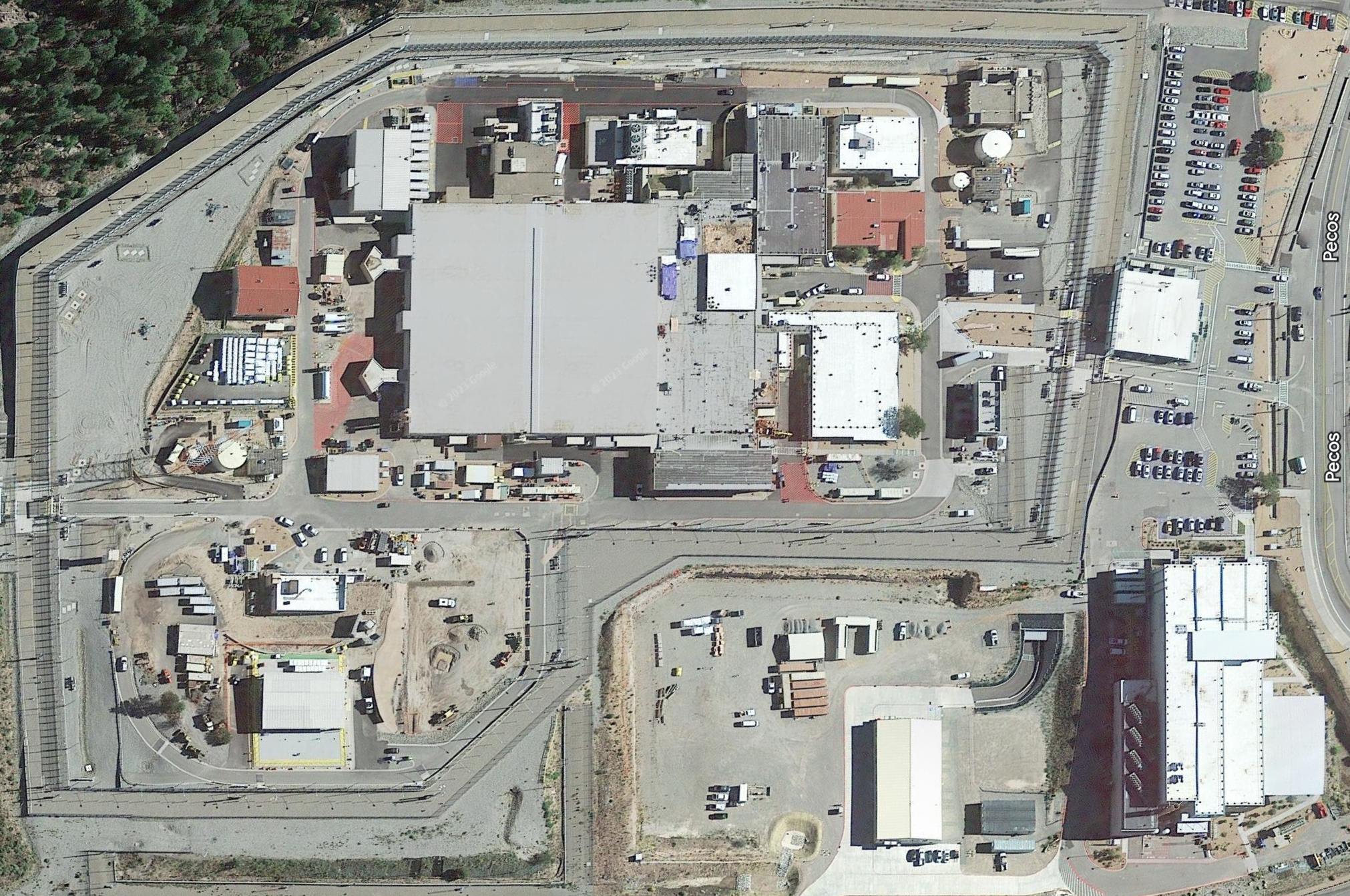
[*The image above differs from the featured image in the original NYT article due to usage rights. / Of note – the original article photo caption: The Los Alamos National Laboratory is the linchpin of a current federal effort to upgrade the nation’s nuclear arsenal. ]
After years of missed deadlines, New Mexico is demanding that the Energy Department expedite the cleanup of so-called legacy nuclear and hazardous waste at the Los Alamos National Laboratory, the birthplace of the atomic bomb, state environmental regulators announced on Wednesday.
The state will also fine the agency up to $16 million for violating groundwater safety standards near the lab, civil penalties outlined by the New Mexico Environment Department in a series of regulatory enforcement actions.
“The continued presence of a large volume of unremedied hazardous and radioactive waste demonstrates a longstanding lack of urgency by the U.S. Department of Energy,” regulators wrote in a statement, “and elevates the risk of waste storage failures” at the lab, in northern New Mexico.
The regulators’ action comes amid rising fears of a new global arms race. Just days ago, the only remaining nuclear arms control treaty between the United States and Russia expired, lifting limits on their arsenals. Today, Los Alamos is producing plutonium bomb cores, making the lab the linchpin of a $1.7 trillion federal effort to modernize the nation’s nuclear weapons.
New Mexico Environment Department takes sweeping action over LANL waste
Takeaways:
– The Environment Department issued three compliance orders against the Department of Energy regarding hazardous and legacy wastes at Los Alamos National Laboratory.
– The department also is seeking to modify the Waste Isolation Pilot Plant’s permit in an effort to make sure that legacy waste from LANL is prioritized for disposal.
– The three compliance orders address hexavalent chromium contamination and the status of cleanup of Material Disposal Area C.
Nuclear Watch New Mexico Executive Director Jay Coghlan cast Area C as a crossroads.
“It presents a clear choice between more unneeded nuclear weapons or cleanup,” Coghlan said, speaking on Tuesday’s enforcement actions. “The other aspect is that we think that successful cleanup at Area C should be the model for cleanup of the rest of the lab, including the much larger Area G.”
ByAlaina Mencinger amencinger@sfnewmexican.com | February 12, 2026 santafenewmexican.com
The New Mexico Environment Department on Wednesday issued three compliance orders with a combined $16 million in penalties against the U.S. Department of Energy over its delayed cleanup of radioactive and hazardous waste stemming from nuclear weapons production.
The state agency also informed the federal government it intends to take the rare action of overhauling a permit for the Waste Isolation Pilot Plant in Southern New Mexico to better prioritize the disposal of radioactive waste from the Los Alamos lab.
The actions underscore a growing frustration with a “longstanding lack of urgency” to clean up legacy waste and contamination, according to a statement from the Environment Department.
“We’re escalating because they’re not meeting the moment that immediately preceded it,” Environment Secretary James Kenney said in an interview.
Two of the orders center on a decades-old, toxic underground plume of hexavalent chromium, a known carcinogen that was used as an anti-corrosive in pipes at LANL. In the early 2000s, the 1.5-mile plume was discovered stretching from the national laboratory.

The Future of Los Alamos Lab: More Nuclear Weapons or Cleanup? New Mexico Environment Department Issues Corrective Action Order
FOR IMMEDIATE RELEASE, February 11, 2026
Contact: Jay Coghlan, 505.989.7342, c. 505.470.3154 | Email
Scott Kovac, 505.316.4148 | Email
Santa Fe, NM – In its own words, “The New Mexico Environment Department [NMED] issued several actions today to hold the U.S. Department of Energy accountable for failing to prioritize the cleanup of Los Alamos National Laboratory’s “legacy waste” for disposal at the Waste Isolation Pilot Plant.”
Amongst these actions is an Administrative Compliance Order designed to hasten cleanup of an old radioactive and toxic waste dump that should be the model for Lab cleanup. Nuclear Watch New Mexico strongly supports NMED’s aggressive efforts to compel comprehensive cleanup given Department of Energy obstruction.
This Compliance Order comes at a historically significant time. On February 5 the New Strategic Arms Reduction Treaty expired, leaving the world without any arms control for the first time since the middle 1970s. The following day the Trump Administration accused China of conducting a small nuclear weapons test in 2020, possibly opening the door for matching tests by the United States.
NMED’s Compliance Order comes as LANL’s nuclear weapons production programs are radically expanding for the new nuclear arms race. The directors of the nuclear weapons laboratories, including LANL’s Thom Mason, are openly talking about seizing the opportunity provided by the Trump Administration’s deregulation of nuclear safety regulations to accelerate nuclear warhead production.
As background, in September 2023 NMED released a groundbreaking draft Order mandating the excavation and cleanup of an estimated 198,000 cubic meters of radioactive and toxic wastes at Material Disposal Area C, an old unlined dump that last received wastes in 1974. However, in a legalistic maneuver to evade real cleanup, DOE unilaterally declared that Area C:
“…is associated with active Facility operations and will be Deferred from further corrective action under [NMED’s] Consent Order until it is no longer associated with active Facility operations.”
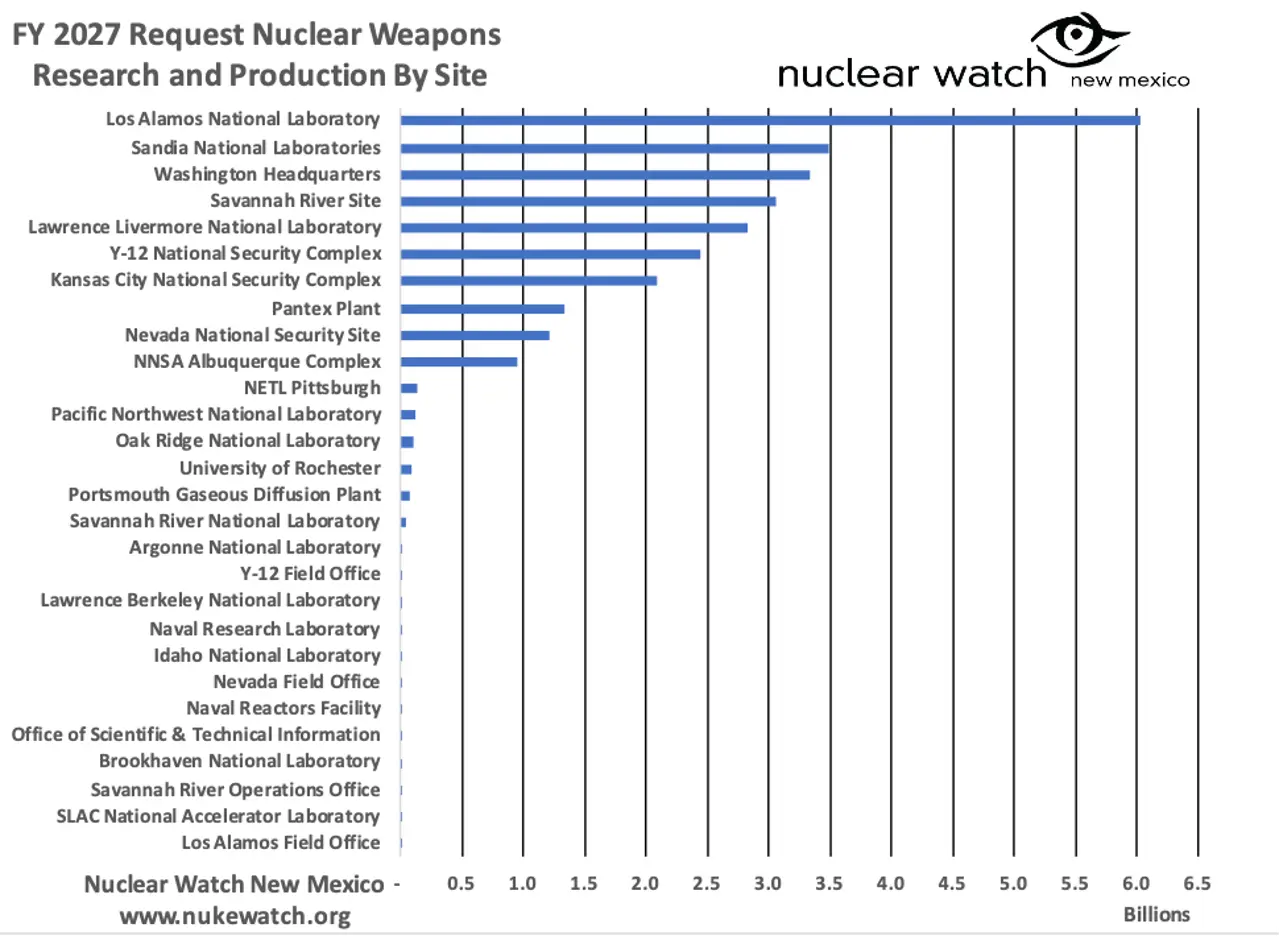
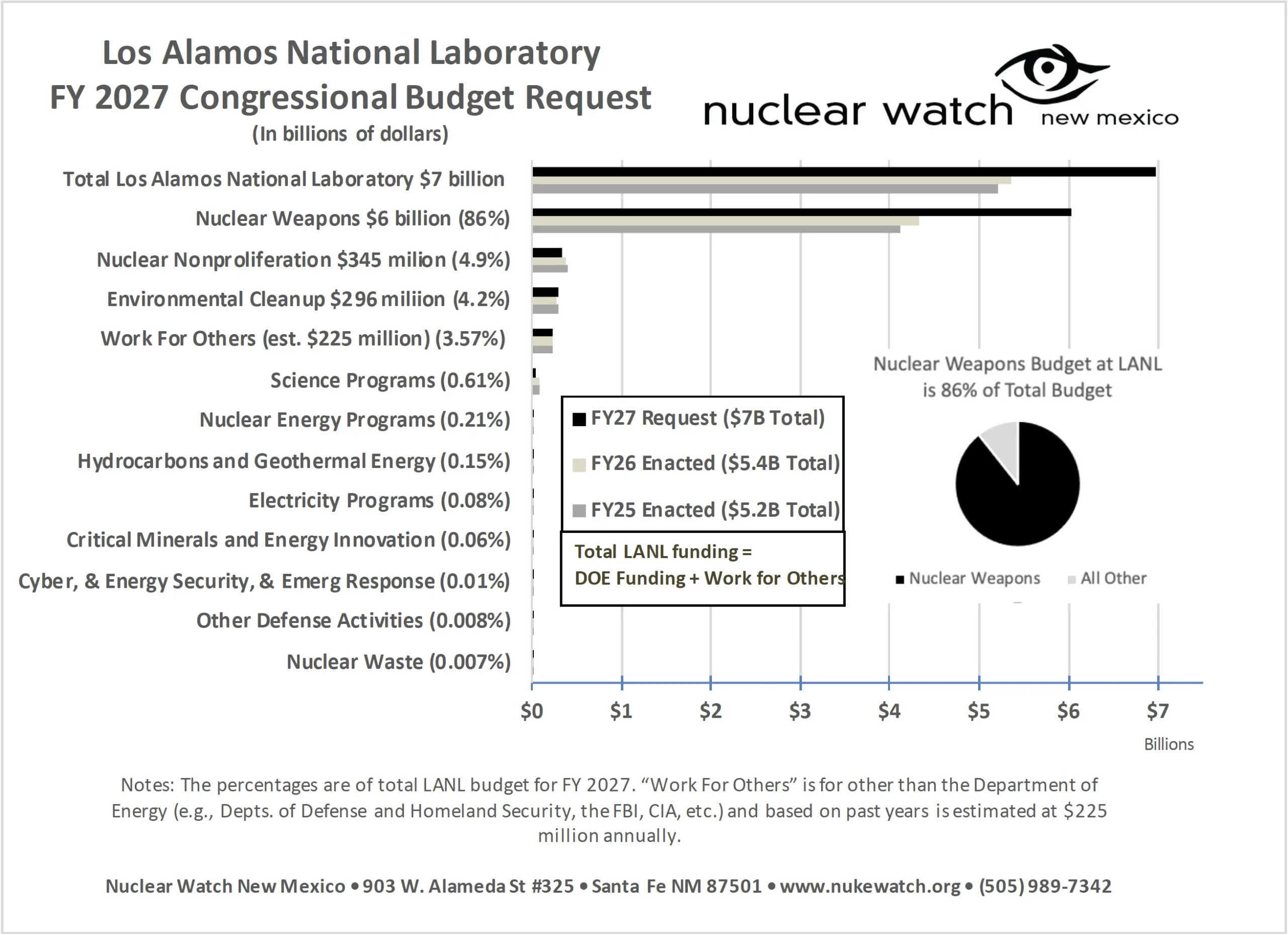
The rationale of DOE’s semi-autonomous nuclear weapons agency, the National Nuclear Security Administration (NNSA), is that Area C is within a few hundred yards of the Lab’s main facility for plutonium “pit” bomb core production. LANL is prioritizing that production above everything else while cutting cleanup and nonproliferation programs and completely eliminating renewable energy research. DOE’s and NNSA’s unilateral deferment of Area C until it “is no longer associated with active Facility operations” in effect means that it will never be cleaned up. No future plutonium pit production is to maintain the safety and reliability of the U.S.’ existing nuclear weapons stockpile. Instead, it is all for new design nuclear weapons for the new arms race that the NNSA intends to produce until at least 2050. Further, new-design nuclear weapons could prompt the United States to resume full-scale testing, which would have disastrous international proliferation consequences.
China conducted ‘secret nuclear test’ days after Galwan clash, says US
Synopsis: The US has accused China of conducting a secret nuclear explosive test in June 2020, shortly after the deadly Galwan Valley clashes. This allegation, revealed at a global disarmament forum, heightens India’s strategic concerns over China’s military posture amidst ongoing border tensions. China denies the claims, accusing the US of exaggerating threats and fueling an arms race.
ECONOMIC TIMES | February 8, 2026 economictimes.indiatimes.com
The United States has accused China of carrying out a secret nuclear explosive test in June 2020–an allegation that places Beijing’s suspected activity just a week after the deadly Galwan Valley clashes in eastern Ladakh, where 20 Indian soldiers were killed in action while defending the nation and more than 30 Chinese troops were reported dead in intelligence assessments.
The timing of the alleged test, revealed by Washington at a global disarmament forum, is likely to sharpen strategic concerns in New Delhi over China’s military posture during one of the most volatile phases of the India-China border crisis in decades.
Nuclear Weapons Issues & The Accelerating Arms Race: February 2026
American imperialism:
Recommended listening: Canadian Prime Minister Mark Carney’s Davos speech at https://www.youtube.com/watch?v=JnE2HTfDivQ
Talking about Trump’s impacts, he said, “This not a transition, it is a rupture.” Speaking on American imperialism (without explicitly calling it that) to “Middle Powers” such as Canada, he said “We are either at the table, or we on the menu.”
Recommended reading concerning pending dictatorship: Robert Kagan’s interview at https://www.npr.org/2026/02/04/nx-s1-5699388/is-the-u-s-heading-into-a-dictatorship
Nuclear Weapons
Trump is proposing to increase the military budget from $1 trillion this FY 2026 to $1.5 trillion next year. The largest single component in this will probably be his ill-conceived Golden Dome. In the Alice in Wonderland upside down world of nuclear weapons policies, defense is offense and offense is defense. Unrealistic ballistic missile defenses have always the enemy of nuclear disarmament, starting with Edward Teller’s lies to Reagan that kept him from signing a nuclear weapons ban treaty with Mikhail Gorbachev in 1986.
The New Strategic Arms Reduction Treaty (START) expired yesterday (Feb 5), the first time the word is without any arms control treaties since the mid-1970s. The US and Russia are now likely to upload more warheads since the 1,550 numerical cap is now gone. Multiple warheads is regarded as particularly dangerous and destabilizing, inviting preemptive strikes and use them or lose them scenarios.
Today (Feb 6) the Trump Administration accused China of conducting a hydronuclear test in 2020, just above the Comprehensive Test Ban Treaty’s no yield threshold. This may be a prelude to the US resuming testing.
Plutonium pit production:
DOE’s “special assessment” was scheduled for completion mid-December 2025 — It is still not publicly available. Sen. Warren and Rep. Garamendi demanded its release on January 9.
At Nuclear Deterrence Summit, Lab Directors Frame Regulatory Reform As Key To Modernization
“The Department of Energy (DOE) is pursuing one of its most ambitious deregulation efforts in decades. Known as Project Velocity, the initiative—outlined alongside other reform measures in an Oct. 17 memo—rewrites dozens of safety, construction and oversight rules to accelerate warhead modernization…”
“The NNSA is no longer defined solely as a scientific stewardship organization. We are focused on weapons production, delivering real capabilities and innovations at speed to meet today’s threats,” Williams said.
By MARLENE WILDEN marlene@ladailypost.com, Submitted by Carol A. Clark, | February 5, 2026 ladailypost.com
Statement of the Ministry of Foreign Affairs of Russia Concerning the Expiration of the Russia-US New START Treaty
On February 5, 2026, the life cycle of the Russian-US Treaty on Measures for the Further Reduction and Limitation of Strategic Offensive Arms (New START) finally comes to an end; it was signed by the parties on April 8, 2010, entered into force on February 5, 2011, and was extended for a five-year period in February 2021 on the basis of a relevant one-time option provided for in this agreement.
mid.ru/en/foreign_policy/news/2076815/ February 5, 2026
In February 2023, the Russian Federation suspended the New START Treaty against the backdrop of the unsatisfactory state of affairs with the implementation of certain aspects of the Treaty, as well as due to the absolutely unacceptable steps by the United States running counter to the fundamental principles and understandings of the agreement enshrined in its preamble. It was a compelled measure and an inevitable response of the Russian side to the extremely hostile policy of the Biden administration which resulted in the fundamental change in the security situation, as well as to a number of illegitimate steps taken by Washington in the context of specific provisions of the New START Treaty, which together constituted a material breach incompatible with the Treaty being further implemented in a full-fledged manner.
Among the key negative factors, it is worth to highlight the destabilizing actions of the United States in the field of missile defense, contrary to the inseparable interrelationship between strategic offensive and strategic defensive arms enshrined in the New START Treaty. This contradicted the Treaty’s objectives in terms of maintaining the balance of powers, put significant pressure on its viability, and created grounds for Russia to take compensatory measures outside the scope of the New START Treaty in order to maintain strategic equilibrium.
Despite some obvious problematic moments, basically the New START Treaty used to fulfill its key functions. The conclusion of the Treaty and the years of its initially successful implementation helped to discourage the strategic arms race, allowing for significant reductions in the parties’ arsenals. At the same time, due to the restrictions applied in this area a sufficient level of predictability was ensured on a long-term basis.
4 things to know about the end of the U.S.-Russia nuclear arms treaty
“For the first time in decades, there are no limits on the world’s largest nuclear arsenals. Congress must act now.”
By Austin Headrick, American Friends Service Committee | February 4, 2026 afsc.org
The world changed forever in August 1945, when the United States dropped atomic bombs on Hiroshima and Nagasaki, killing an estimated 110,000 to 210,000 people. Scientists, activists, policymakers, and peacebuilders—including organizers at AFSC—have spent the decades since calling for disarmament and an end to all nuclear threats. One crucial result of that work was arms control treaties that limited nuclear arsenals.
But now, that work is being unraveled. On Feb. 5, 2026, the last remaining U.S.-Russia nuclear arms reduction treaty, expired. The New Strategic Arms Reduction Treaty (New START) had placed limits on deployed nuclear weapons and created channels for inspections and monitoring.
With the end of the treaty, the guardrails that create transparency and prevent a nuclear arms race end.
Here is what you need to know:
1. The U.S. and Russia hold nearly all the world’s nuclear weapons.
The United States and Russia together possess almost 90% of the world’s nuclear weapons. That is why New START matters even to people far from Washington and Moscow. A world with no limits on the two largest nuclear stockpiles is a more dangerous world.
Without New START, there would be no legally binding guardrails on the two countries’ long-range nuclear weapons for the first time since the first U.S.-Soviet arms control agreements in the early 1970s.
And the risk is not only long-term nuclear development. Without limits, either side could increase the number of nuclear weapons ready to launch relatively quickly by “uploading” additional warheads onto existing missiles, which can fuel pressure for the other side to respond.
2. Arms control makes everyone safer.
New START capped the U.S. and Russia at 1,550 deployed nuclear weapons and limited deployed delivery systems, with an overall limit on launchers and bombers. Those numbers are more than technical details. They limit how many weapons can be used quickly in a crisis.
Continue reading


New Nuclear Media: Art, Films, Books & More

Art and “un-forgetting”: How to honor the atomic dead
“The hibakusha narrative has expanded over time to include victims beyond the city limits of Hiroshima and Nagasaki—and as far away as the Navajo Nation, which still suffers the radiation effects of uranium mining; the Marshall Islands, where the United States conducted so many nuclear tests that, on average, the equivalent of 1.6 Hiroshima-size bombs was detonated every day for 12 years; Kazakhstan, where the Soviet Union tested its nuclear weapons for four decades; and other places around the world adversely affected by the development and maintenance of nuclear weapons.”
Noguchi himself considered the term hibakusha to include the victims of nuclear weapons worldwide; he changed the name of his proposed “Memorial to the Dead of Hiroshima” to the more inclusive “Memorial to the Atomic Dead.”
 By Molly Hurley | November 26, 2021 thebulletin.org
As I eagerly await Spotify’s year-end report on my most-played songs of 2021, I wonder which ones will remind me of my summer in New York City—of off-pitch Karaoke Television with friends, or the distinct “popping” sound of a pigeon being run over by a taxi not more than two feet in front of me. Though I thrived amid the frenzied surprises of the city, I also found sudden moments of quiet solemnity while sketching inside the many art museums of the Big Apple. One of those museums was the Noguchi Museum, established in 1985 by its namesake Isamu Noguchi, a Japanese-American sculptor who is also well known for his landscape architecture and modern furniture designs such as the iconic Noguchi table.Continue reading
Newly Released Documentary Film on Santa Susana Field Lab Airing Nationwide Nov. 14 at 10 pm ET

In the Dark of the Valley is the first feature film to focus on the Santa Susana Field Laboratory, a former nuclear and rocket-engine testing site near Los Angeles. The film is an in-depth exploration into the site’s long history of cover-ups and negligence by site owners Boeing, NASA, and the Department of Energy. It also tells the harrowing story of how a community of mothers, led by Melissa Bumstead, have dealt with the struggles of childhood cancer and their new found life of environmental advocacy.
Our work is made possible by a generous grant from 