

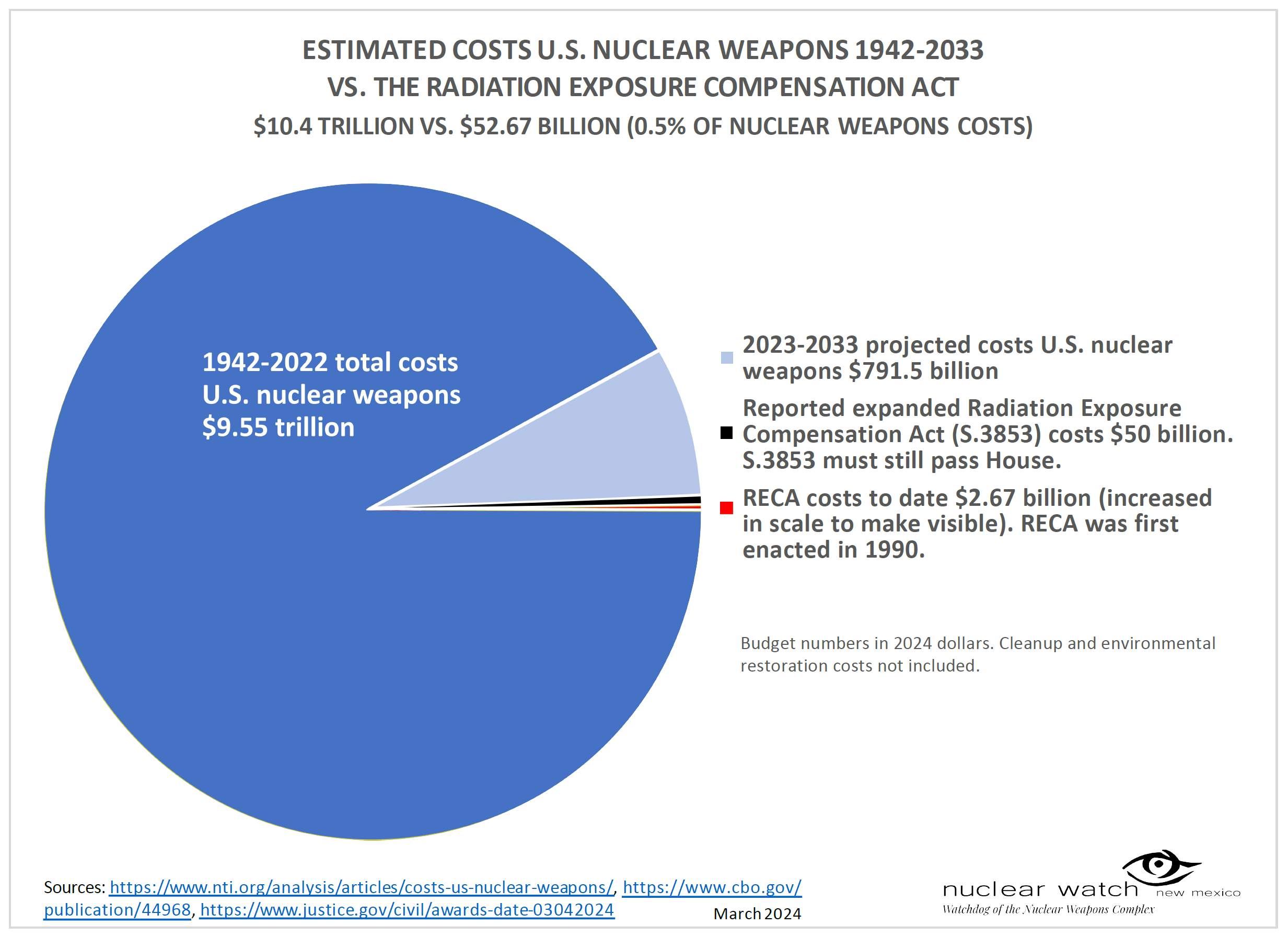
Cost of RECA Chart
In 1985, US President Ronald Reagan and Russian President Mikhail Gorbachev declared that “a nuclear war cannot be won and must never be fought.”

NEW & UPDATED
Biden Releases Record NNSA Nuclear Weapons Budget
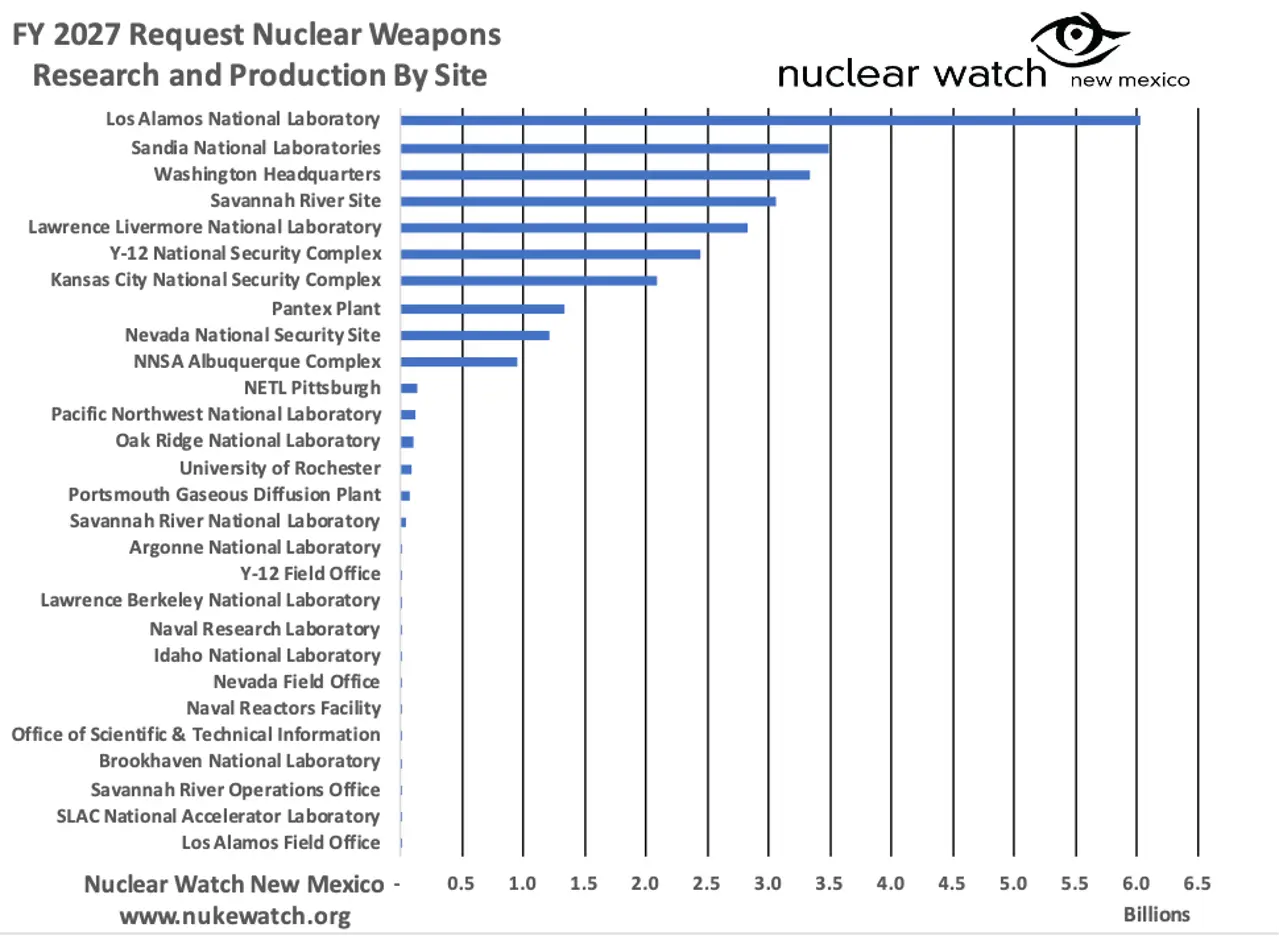
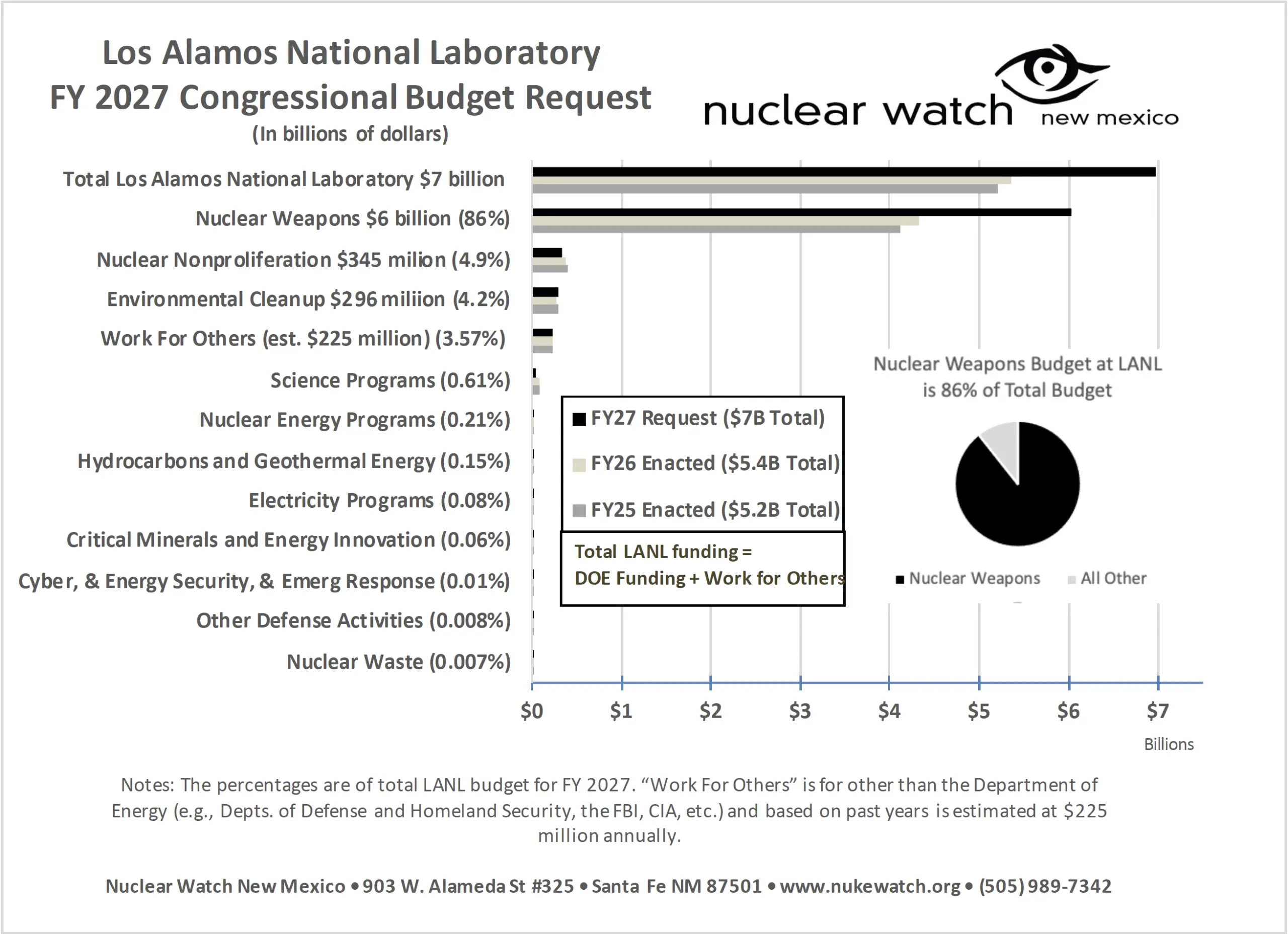
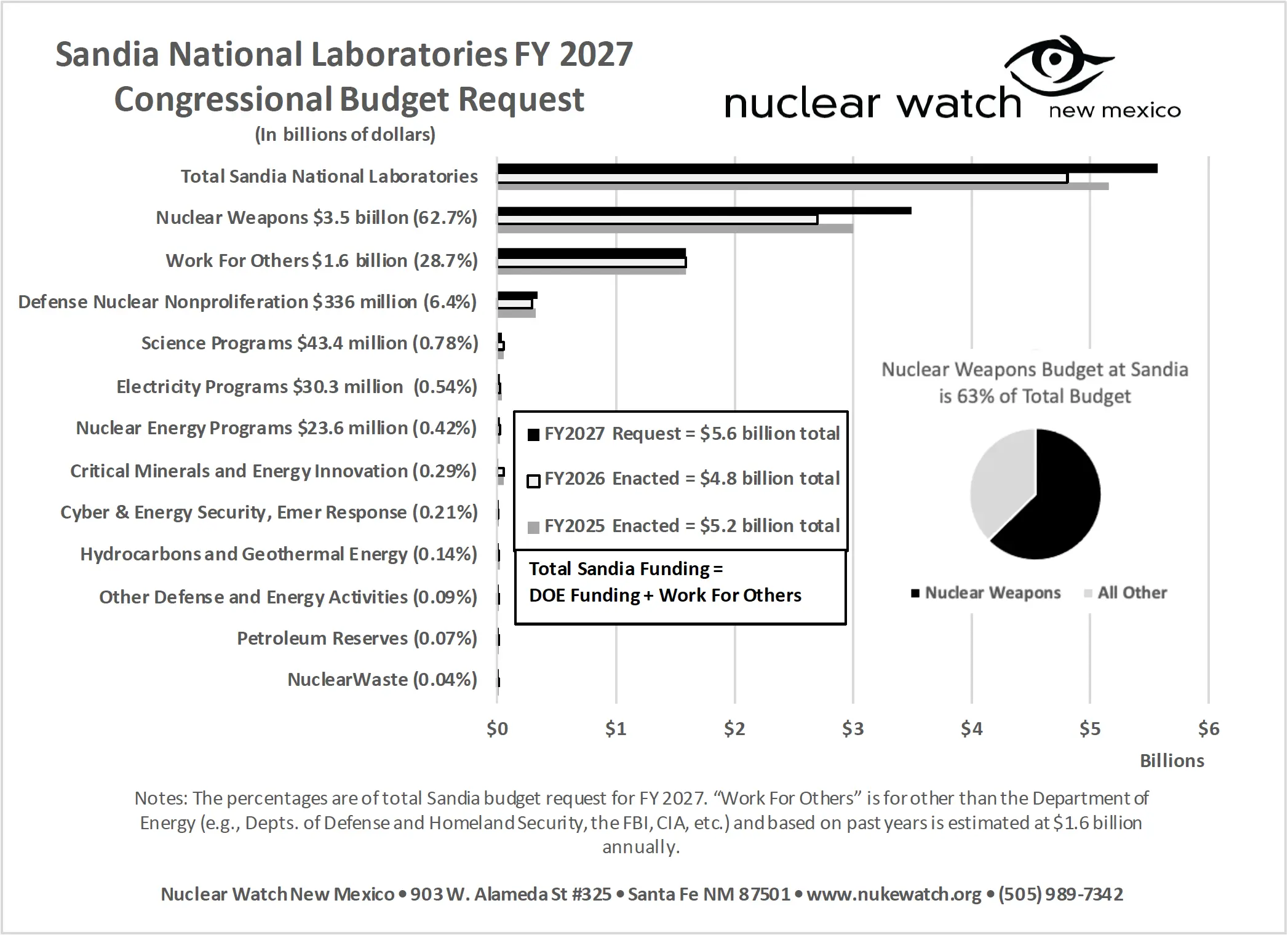
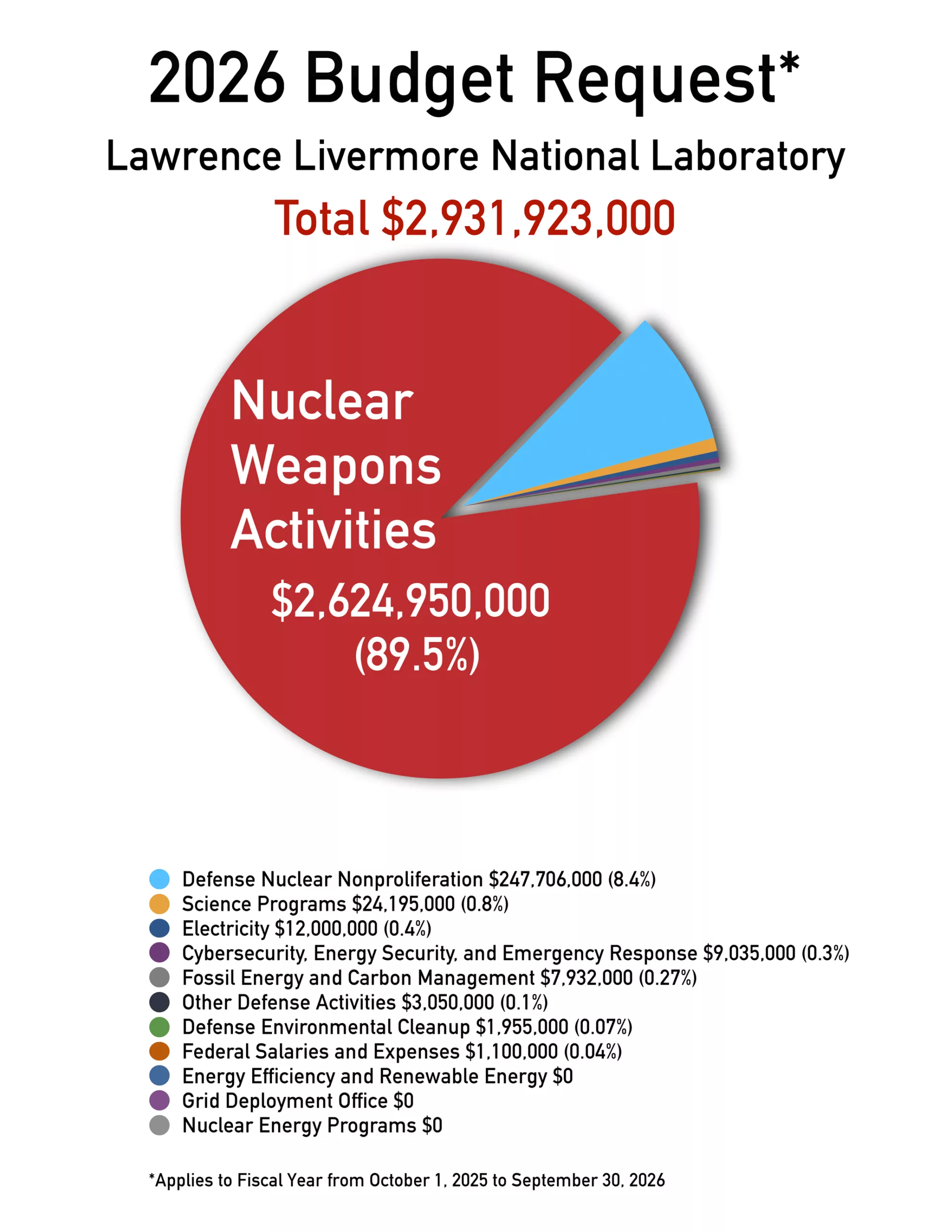
President Biden has released his proposed FY 2024 budget for the Department of Energy’s semi-autonomous nuclear weapons agency, the National Nuclear Security Administration (NNSA). The budget for NNSA’s “Total Weapons Activities” for nuclear weapons research and production programs is slated to increase by 10% to $18.8 billion.
Of that $18.8 billion requested for FY 2024, over $3 billion is devoted to “Life Extension Programs” or “Alterations” that extend the service lives of existing nuclear weapons by decades while giving them new military capabilities. It also includes two new-design nuclear weapons, the W87-1 ICBM warhead (increased 50% to $1 billion) and the sub-launched W93 warhead (increased 62% to $390 million). Meanwhile, funding for dismantlements that provide a good nonproliferation example and save taxpayers’ money by eliminating long-term security costs is decreased by 4% to $53.7 million. That is a small fraction of one percent of NNSA’s Total Weapons Activities.
Two bright spots, yet still small relative to the U.S.’ planned $2 trillion nuclear weapons “modernization” program, are the zeroing out of funding for the Sea-Launched Cruise Missile (SLCM) warhead and stronger language on the retirement of the 1.2 megaton B83 bomb. Trump proposed to bring back nuclear-armed sea-launched cruise missiles, which were retired by President George H. Bush after the end of the Cold War. Biden’s 2022 Nuclear Posture Review canceled the SLCM, but Congress insisted on funding it, which will only grow stronger with Republican control the House.
In Response to Lawsuit, NNSA Releases FY 2022 Performance Evaluation Reports as “Frequently Requested Documents” as Required by FOIA; Reveals Pit Production Schedule is Likely Increasingly Delayed
Today, the National Nuclear Security Administration[1] (NNSA) finally posted its FY 2022 Performance Evaluation Reports to its electronic “FOIA Reading Room.” These reports are “Frequently Requested Documents” as defined by the Freedom of Information Act (meaning three or more requests) and are therefore required to be posted under the law. The catalyst for this was a lawsuit filed by Nuclear Watch New Mexico in September 2022.
 NNSA’s Performance Evaluation Reports for its eight nuclear weapons research and production sites[2] grade annual contractor performance and award performance fees accordingly. Approximately 57,000 people are employed by the NNSA nuclear weapons complex, 95% of them contractor personnel. The Department of Energy and NNSA (or its predecessor DOE Defense Programs) have been on the independent Government Accountability Office’s “High Risk List” for project mismanagement and waste of taxpayers’ dollars since 1992.
Nuclear Watch New Mexico’s Follow-up to News about the Chromium Plume: Santa Fe New Mexican article, “San Ildefonso governor says halt of plume cleanup will lead to spread onto pueblo”
“Nuclear Watch New Mexico believes that it is past time that this dangerous contaminant is cleaned up at the source.
Extracted treated groundwater should be pumped or trucked uphill to flush out the remaining 90% of the chromium so that it can be decisively dealt with instead of with only marginally effective “pump and treat” for a few centuries…”
By Jay Coghlan
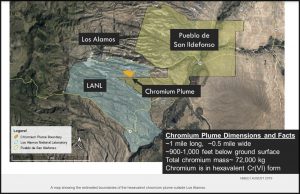 The real shame is how ineffective Lab cleanup of the hexavalent chromium plume is. First, even after 18 years, LANL and DOE still don’t know the boundaries of the plume, all the while claiming it’s not on San Ildefonso Pueblo Land (maybe LANL should deprioritize expanded nuclear weapons production and focus on that). Second, this is our common “sole source” (EPA special designation) aquifer that is one of the primary sources of drinking water for the cities of Santa Fe, Española, and Los Alamos, eleven Pueblos and all of the Española Basin’s rural areas. Third, hex chromium is the carcinogen made notorious in the popular movie Erin Brockovich. Fourth, it is estimated that 160,000 pounds of chromium were released up until 1972, but only 10% (i.e. ~16,000 pounds) has been recovered through extraction and treatment. When the head of DOE Environmental Management Los Alamos Office was asked where’s the rest of the chromium, Michael Mikolanis demurred and said that he would have to get back on that question.
San Ildefonso governor says halt of plume cleanup will lead to spread onto pueblo
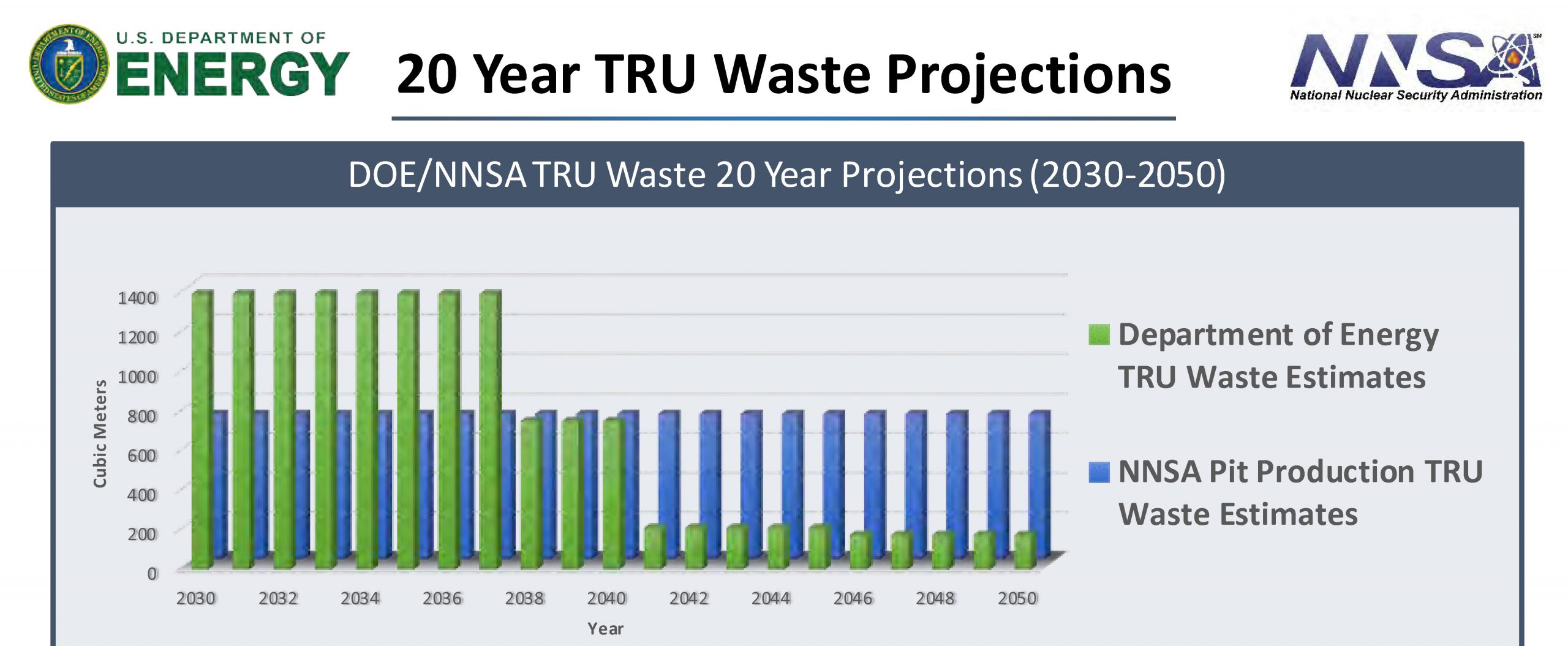
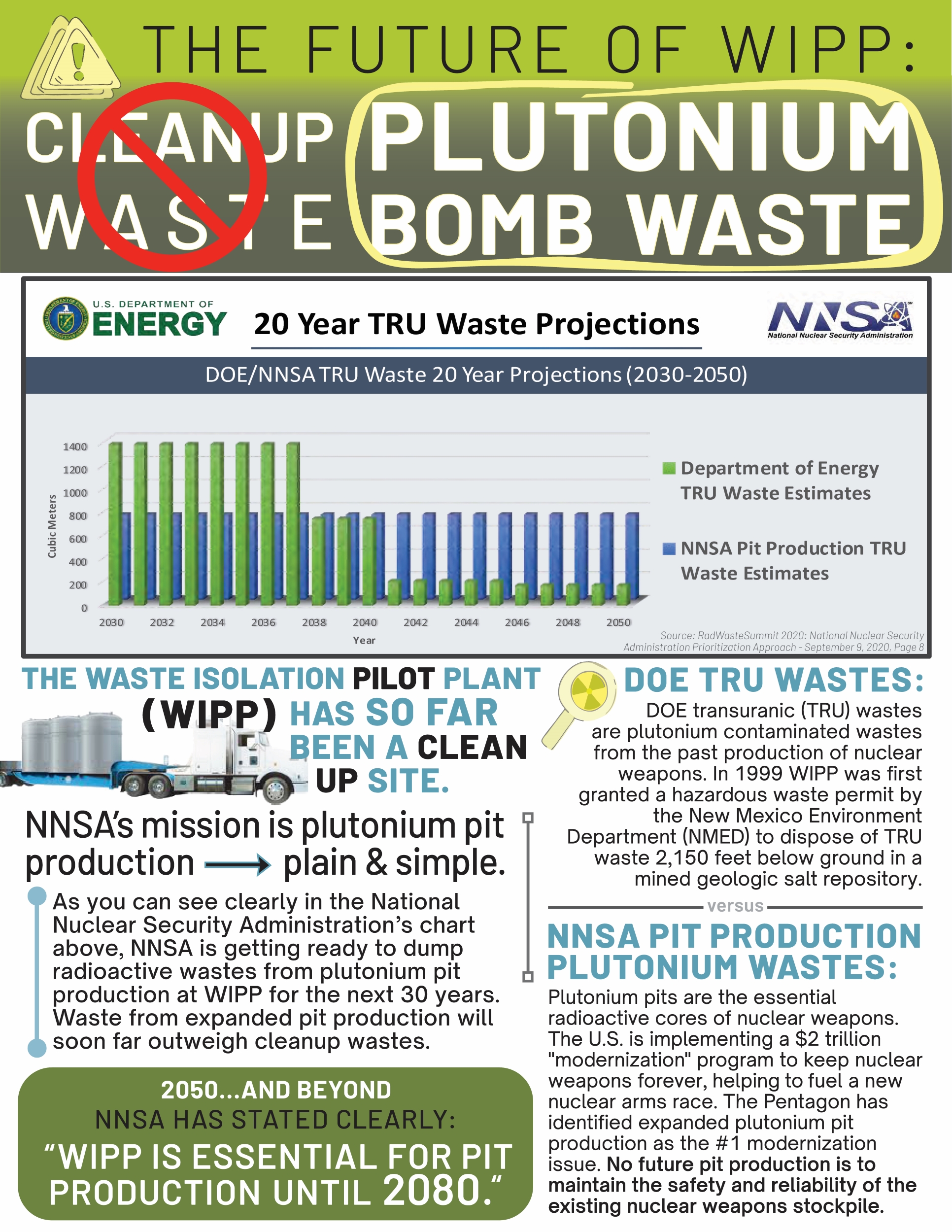
THE FUTURE OF WIPP: PLUTONIUM BOMB WASTE
NNSA’s mission is plutonium pit production…for the next 30 years and beyond.
NNSA HAS STATED CLEARLY: “WIPP IS ESSENTIAL FOR PIT PRODUCTION UNTIL 2080.”
As you can see clearly in the National Nuclear Security Administration’s chart above, NNSA is getting ready to dump radioactive wastes from plutonium pit production at WIPP for the next 30 years.
Waste from expanded pit production will soon far outweigh cleanup wastes.
Despite being located in New Mexico, out-of-state sites have been given priority over radioactive wastes from Los Alamos Lab.
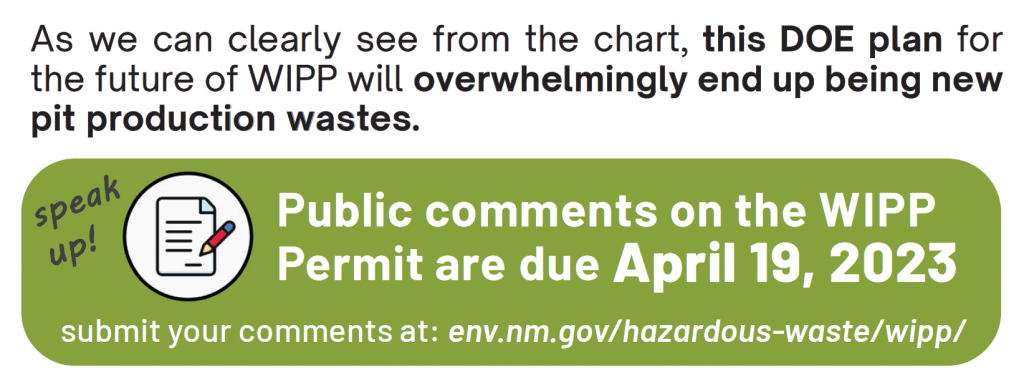
ALL FUTURE PIT PRODUCTION is for speculative new designs that can’t be tested because of the international testing moratorium, thereby perhaps eroding confifidence in the stockpile. Or, alternatively, these new designs could push the U.S. into resuming testing, which would have severe proliferation consequences.
Pit production will add an estimated 57,550 cubic meters of radioactive plutonium wastes over 50 years, more than half of WIPP’s projected future capacity. The National Academy of Sciences has already concluded that WIPP doesn’t have sufficient capacity for all of DOE’s planned radioactive wastes.
State Environment Department Begins to Rein in Work On LANL’s Chromium Plume Given Major Differences With DOE
At a February 9, 2023 public community forum hosted by the Department of Energy’s Environmental Management Los Alamos Office, there were strong indications that the New Mexico Environment Department (NMED) is convinced that DOE’s plans to remediate the chromium groundwater contamination plume under Los Alamos National Laboratory (LANL) is not working. Kimberly Lebak, program manager for N3B, the LANL cleanup contractor, described how it is finalizing the 2023 milestones under the Consent Order that governs cleanup, despite the fact that the NMED Groundwater Bureau has requested that DOE stop injecting treated water by April 1, 2023. DOE and NMED are not seeing eye-to-eye concerning the “Interim Measure” that N3B is using to contain the chromium plume.
The two agencies disagree on the Interim Measure, originally designed to prevent chromium from migrating across the San Ildefonso Pueblo border while DOE tries to figure out a final remedy.
Top Environment Official Takes Inside Info to Nuclear Weapons Agency, Gets Puny Slap-on-Wrist for Ethical Violation; Governor Should Enforce State Code of Conduct
Santa Fe, NM – The Department of Energy (DOE) will spend $9.4 billion dollars in New Mexico during this fiscal year 2023, 10% more than the State’s entire operating budget of $8.5 billion. To help enable its agenda of expanding nuclear weapons production that will cause more radioactive wastes and contamination, the DOE’s semi-autonomous National Nuclear Security Administration (NNSA) or its contractors often go head hunting for top State officials.
The New Mexico Environment Department (NMED) has sued DOE over the slow pace of cleanup at the Los Alamos National Laboratory (LANL). Stephanie Stringer, former Deputy Cabinet Director (the number two position at NMED), applied to work for NNSA in August 2022, and resigned to take that job in November. During that time, she was privy to NMED litigation strategy against DOE and chaired the New Mexico Water Quality Control Commission that denied a citizens’ motion against one of LANL’s most crucial facilities for expanding plutonium pit production, the Radioactive Liquid Waste Treatment Facility. As a result, the New Mexico Ethics commission fined Stringer a paltry $250. Assuming that Stringer is earning at least $100,000 base salary in her new position, that fine would have cost her approximately five hours of her time.
Independent Government Accountability Office Releases Scathing Report on Expanding Plutonium Pit Production; Pressure Mounts on Los Alamos Lab to Increase Production
Santa Fe, NM – Today, the independent Government Accountability Office (GAO) released a scathing report entitled NNSA Does Not Have a Comprehensive Schedule or Cost Estimate for Pit Production Capability. The National Nuclear Security Administration (NNSA) and its parent Department of Energy have been on the GAO’s High Risk List for project mismanagement since 1991.
Plutonium pits are the essential radioactive cores of nuclear weapons. There has been only limited production at the Los Alamos National Laboratory (LANL) since 1989 when a FBI raid investigating environmental crimes abruptly shut down production at the Rocky Flats Plant near Denver. NNSA now plans to spend $2.9 billion in FY 2023 alone to establish production of at least 30 pits per year at LANL and 50 pits per year at the Savannah River Site (SRS) in South Carolina.
The two main findings of GAO’s report are:
- NNSA’s Plutonium Pit Production Scope of Work Includes Dozens of Programs, Projects, and Other Activities Managed by Multiple NNSA Offices at Multiple Sites (p 19)
RE: The Santa Fe New Mexican “GAO: Cost, time estimates for making nuclear bomb cores flawed” – Underneath it All is the Nuclear Elephant in the Room: Future Pit Production is Actually Unnecessary.


BY JAY COGHLAN
Good article indeed. Kudos to Scott Wyland.
But to add to it:
The National Nuclear Security Administration (NNSA) cannot do, or rather will not do, good governance 101 for its largest program ever (i.e., expanded plutonium pit production), which is credible cost estimates and schedules. Why won’t NNSA do that? Because of PR and political concerns when their flaky cost estimates (such as they are) get blown up by inevitable escalating costs. NNSA knows that if it gave accurate projected costs Congress and the public would balk. Thus, the agency goes in lowballing costs, which always inevitably rise. I could rattle off a dozen NNSA projects over the last 15 years in which costs have exploded, wasting tens of billions of taxpayers’ dollars.
But get this, future pit production is also unnecessary and may actually degrade national security. To begin with, independent experts have found that pits have serviceable lifetimes of at least a century (their average age is now around 40). And we already have at least 15,000 existing pits stored at the Pantex Plant near Amarillo, TX.
New Mexico’s Revolving Nuclear Door: Top Environment Officials Sell Out to Nuclear Weapons Labs
As part of a long, ingrained history, senior officials at the New Mexico Environment Department (NMED) have repeatedly resigned to go to work for the nuclear weapons labs, the Department of Energy, or DOE contractors. In a number of cases that is where they came from to begin with.
The hierarchy of leadership at NMED starts with the Secretary, Deputy Secretaries and then Division Directors. The position of Resource Protection Division Director is particularly critical because it oversees the two NMED bureaus most directly involved with DOE facilities in New Mexico, the Hazardous Waste Bureau and the DOE Oversight Bureau.
FULL PRESS RELEASE [PDF]
Biden’s Nuclear Posture Review Fuels the New Nuclear Arms Race
Santa Fe, NM– Today, the Biden Administration has released its long awaited unclassified Nuclear Posture Review. It headlines a “Comprehensive, balanced approach to defending vital national security interests and reducing nuclear dangers.” It also declares that “deterrence alone will not reduce nuclear dangers.”
“Deterrence” against others has always been the publicly sold rationale for the United States’ nuclear weapons stockpile. First, there is the inconvenient fact that the U.S. was the first and only to use nuclear weapons in war. But secondly, the United States and the USSR (now Russia) never possessed their huge stockpiles for the sole purpose of deterrence anyway. Instead, their nuclear weapons policies have always been a hybrid of deterrence and nuclear war fighting, which threatens global annihilation to this very day.
FULL PRESS RELEASE [PDF]
/cdn.vox-cdn.com/uploads/chorus_image/image/71550878/GettyImages_515016314a.0.jpg)
Watchdogs File Suit for NNSA’s Performance Evaluation Reports

 Santa Fe, NM – Today, Nuclear Watch New Mexico has once again filed a lawsuit to pry loose the National Nuclear Security Administration’s (NNSA’s) full and complete Performance Evaluation Reports that evaluate contractor performance at its eight nuclear weapons sites. Approximately 57,000 people are employed by NNSA’s nuclear weapons production complex, 95% of them contractor personnel. NNSA and its parent Department of Energy have been on the independent Government Accountability Office’s “High Risk List” for project mismanagement and waste of taxpayers’ dollars since 1992.
NNSA’s Performance Evaluation Reports grade contractor performance, award performance fees and contain no classified information. Nevertheless, NNSA seeks to hide how taxpayers’ money is spent from the public, issuing only terse three page summaries instead of the full and complete Reports. Nuclear Watch sued in 2012 to obtain the full and complete Performance Evaluation Reports, after which NNSA started releasing them within three working days. But NNSA has again been releasing only summaries since 2019, despite a Freedom of Information Act request by Nuclear Watch that the agency never responded to.
To illustrate the importance of these Performance Evaluation Reports, in its FY 2021 Los Alamos Lab summary NNSA noted that the contractor “[s]ucessfully made advances in pit production processes…” Plutonium “pits” are the fissile cores of nuclear weapons whose expanded production the Pentagon has identified as the number one issue in the United States’ $2 trillion nuclear weapons “modernization” program. NNSA has directed the Los Alamos National Laboratory (LANL) to begin producing at least 30 pits per year by 2026 and the Savannah River Site (SRS) in South Carolina to begin producing at least 50 pits per year by 2030.


New Nuclear Media: Art, Films, Books & More
Nuclear Colonialism in the Age of the Ban Treaty January 25, 2022
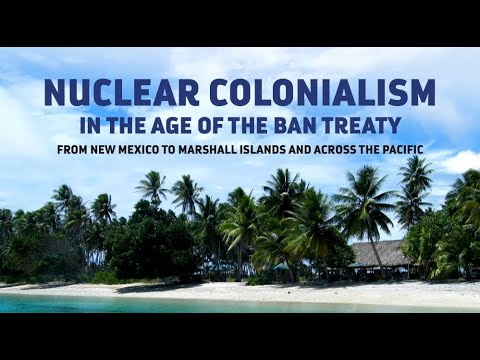
The Affected Communities Working Group of the Nuclear Ban Treaty Collaborative hosted a discussion marking the one-year anniversary of the entry into force of the nuclear ban treaty on January 25, 2022.
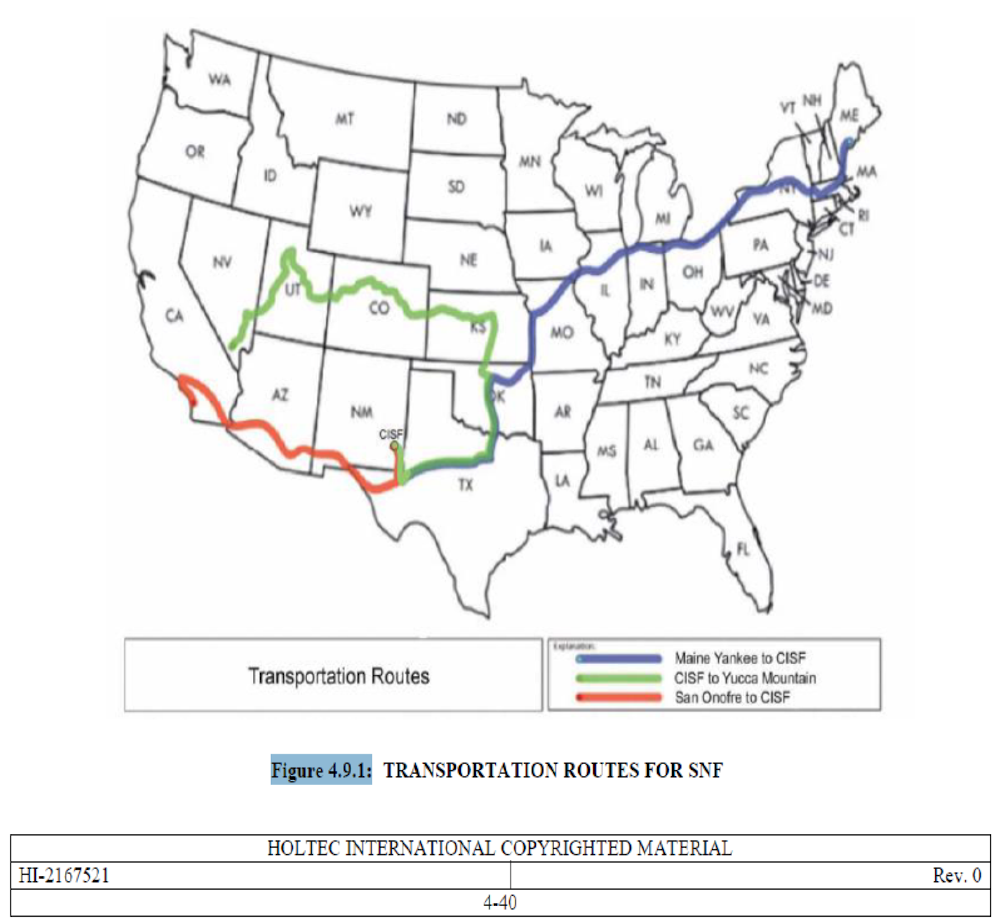
“…That’s how the NRC operates – they want to just run the script and get it done and they’ll answer all your questions “later.” So the next step for us is to go into higher court and see if we can at least get some attention drawn to the very fact that giving them a license is illegal.
The National Waste Policy Act does not allow private organizations to move commercial waste from commercial facilities.
So there’s that problem, and then of course we have to consider that they don’t have all our questions answered yet, like: Who owns the waste? Where is it going to go and who is going to own it? And on the transportation route who is going to own it? And when it gets to the site? There’s no telling, there’s no answer – we don’t know yet. So we have all these questions that haven’t been answered.”
“My question is: Will this #nuclearwaste ever leave? Part of NEPA says that these consolidated interim storage (CIS) sites are temporary. For how long? 30? 40? 50? 100 years? We have to be careful,”
– Rose Garnder with the Alliance for Environmental Strategies in Eunice, New Mexico
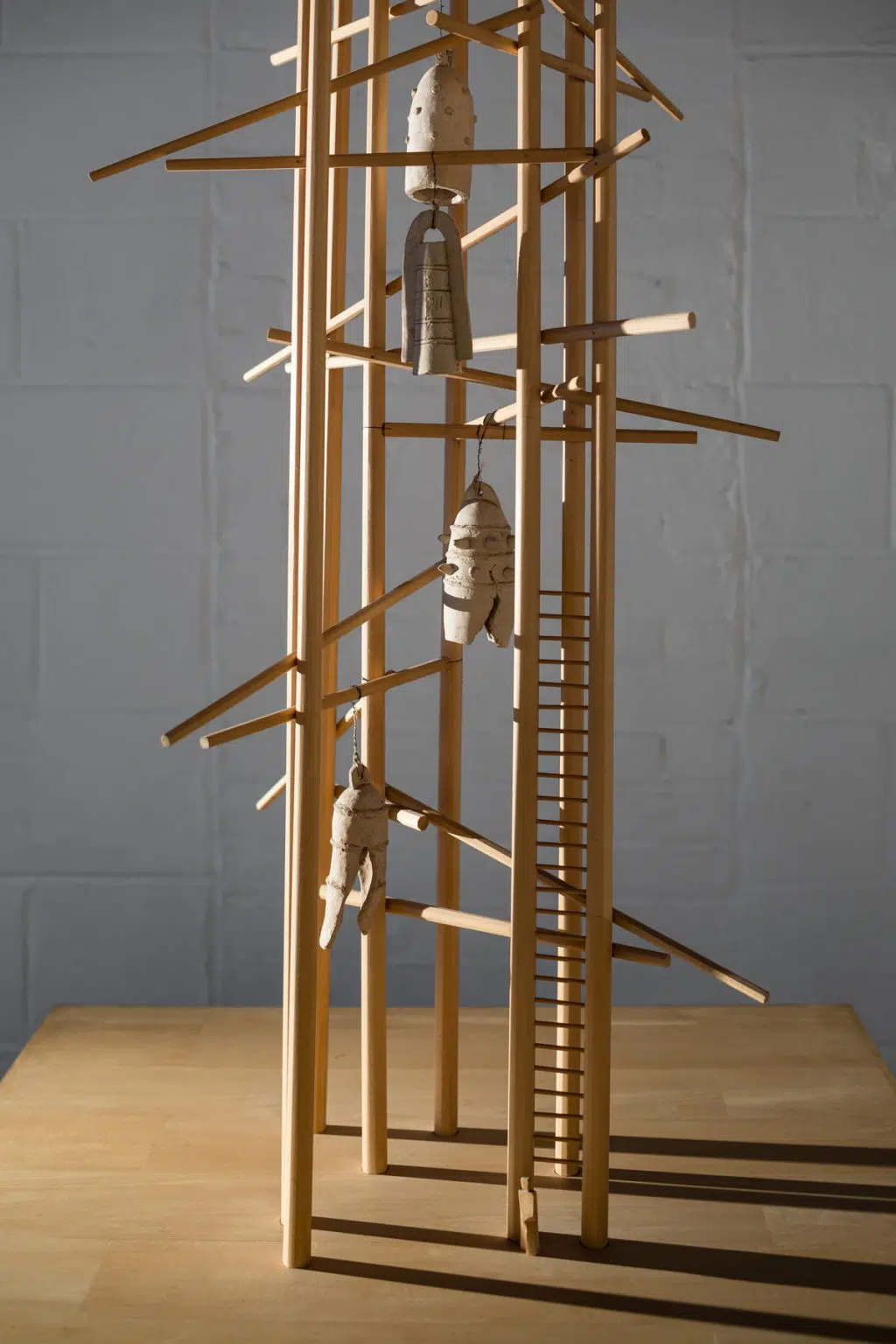
Art and “un-forgetting”: How to honor the atomic dead
“The hibakusha narrative has expanded over time to include victims beyond the city limits of Hiroshima and Nagasaki—and as far away as the Navajo Nation, which still suffers the radiation effects of uranium mining; the Marshall Islands, where the United States conducted so many nuclear tests that, on average, the equivalent of 1.6 Hiroshima-size bombs was detonated every day for 12 years; Kazakhstan, where the Soviet Union tested its nuclear weapons for four decades; and other places around the world adversely affected by the development and maintenance of nuclear weapons.”
Noguchi himself considered the term hibakusha to include the victims of nuclear weapons worldwide; he changed the name of his proposed “Memorial to the Dead of Hiroshima” to the more inclusive “Memorial to the Atomic Dead.”
 By Molly Hurley | November 26, 2021 thebulletin.org
As I eagerly await Spotify’s year-end report on my most-played songs of 2021, I wonder which ones will remind me of my summer in New York City—of off-pitch Karaoke Television with friends, or the distinct “popping” sound of a pigeon being run over by a taxi not more than two feet in front of me. Though I thrived amid the frenzied surprises of the city, I also found sudden moments of quiet solemnity while sketching inside the many art museums of the Big Apple. One of those museums was the Noguchi Museum, established in 1985 by its namesake Isamu Noguchi, a Japanese-American sculptor who is also well known for his landscape architecture and modern furniture designs such as the iconic Noguchi table.Continue reading